
Red Valley
Dwellings
红谷屋舍
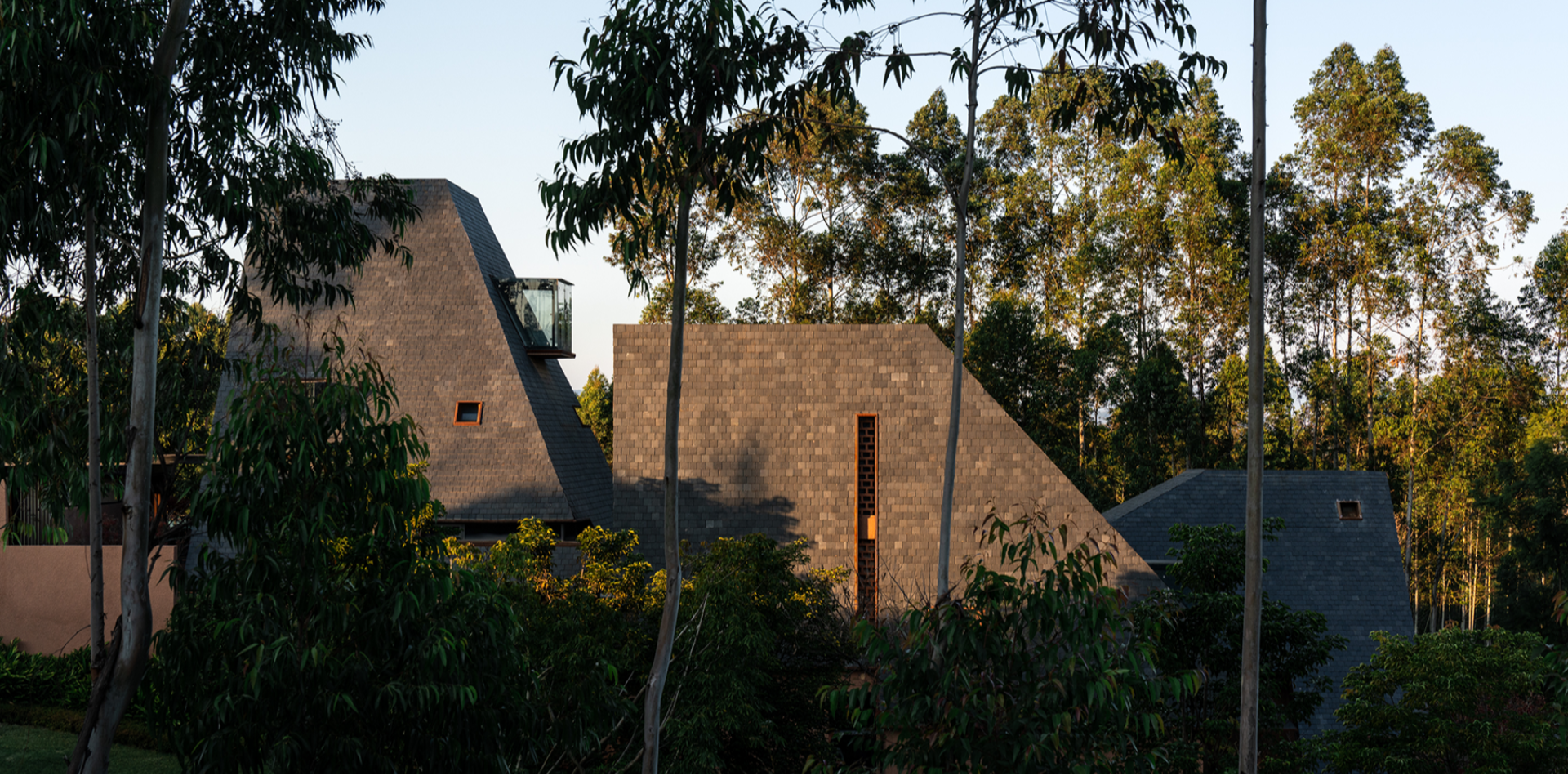
“A building should not be conceived as an isolated object placed in nature, but as something embedded within the landscape and shaped over time. Rather than dissolving boundaries, it seeks a restrained and quiet presence—forming its own interior world between light, shadow, and the forest.”
——Fanhao Meng
Project Name: Red Valley Dwellings
Architecture Firm: line+ studio
Chief Architect / Project Principal: Fanhao Meng
Design Team: Hao Xu, Jun Zhu, Xiaoxiao Fan, Li Yang, Shangyang Li, Jun Li
Drawings: Zhuolu Tong, Fanlin Gou
Client: Mile Blue City Urban & Rural Development Co., Ltd.
Construction Drawings: Yunnan Design Institute Group Co., Ltd.
Location: Mile, Yunnan, China
Gross Built Area: 939.76 m²
Design Period: April 2020– November 2020
Construction Period: May 2020 – April 2024
Materials: Granular Elastic Coating, Aluminum Panels, Slate Tiles
Photography: Ce Wang, line+
Mile, a county-level city in Yunnan’s Honghe Hani and Yi Autonomous Prefecture, sits at the intersection of central Yunnan’s urban network and the cultural territories of southern Yunnan. In recent years, with the emergence of artist communities and cultural facilities, the area has gradually developed into an art-oriented settlement.
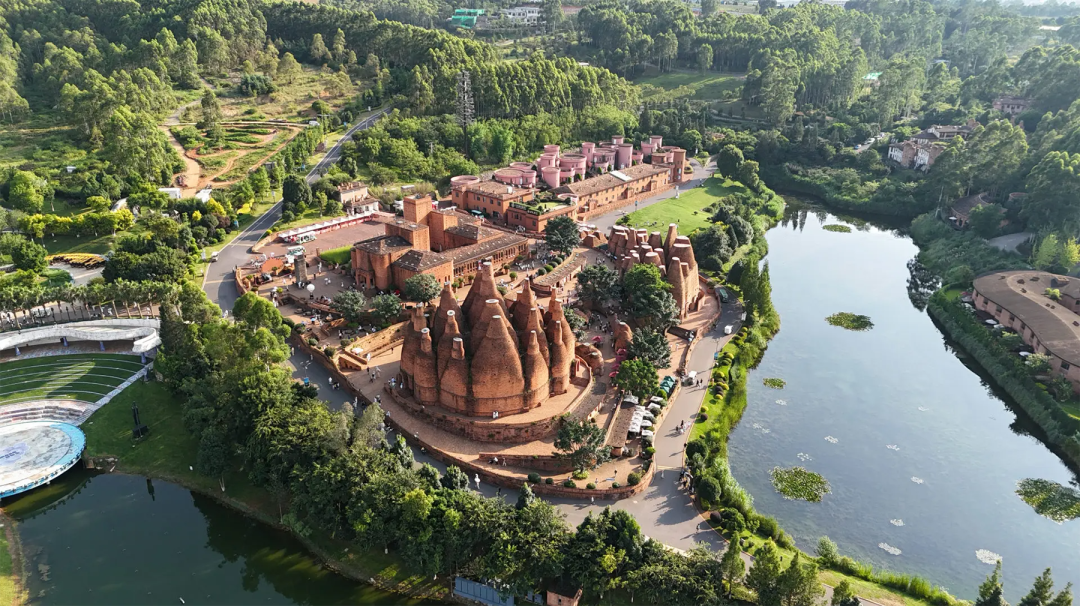
The project extends line+’s ongoing exploration of the Dongfengyun context following the completion of the Art Center, introducing a group of buildings carefully embedded within the valley landscape. Originally conceived as artist studios, the project was envisioned as a place for residency, creation, and exchange. The brief called for a spatial framework capable of accommodating multiple artists simultaneously while allowing flexible transitions between individual retreat and collective use over time.
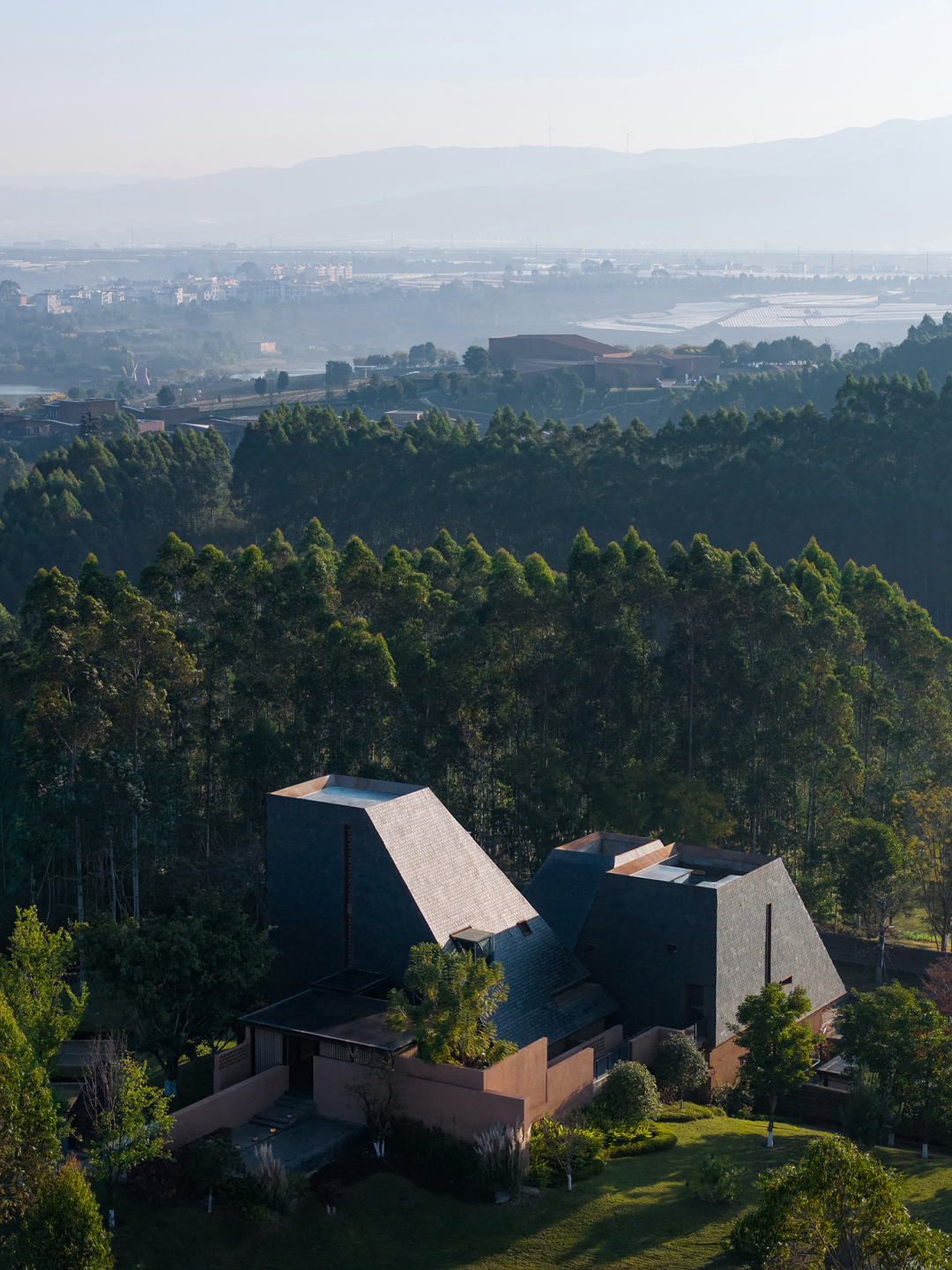
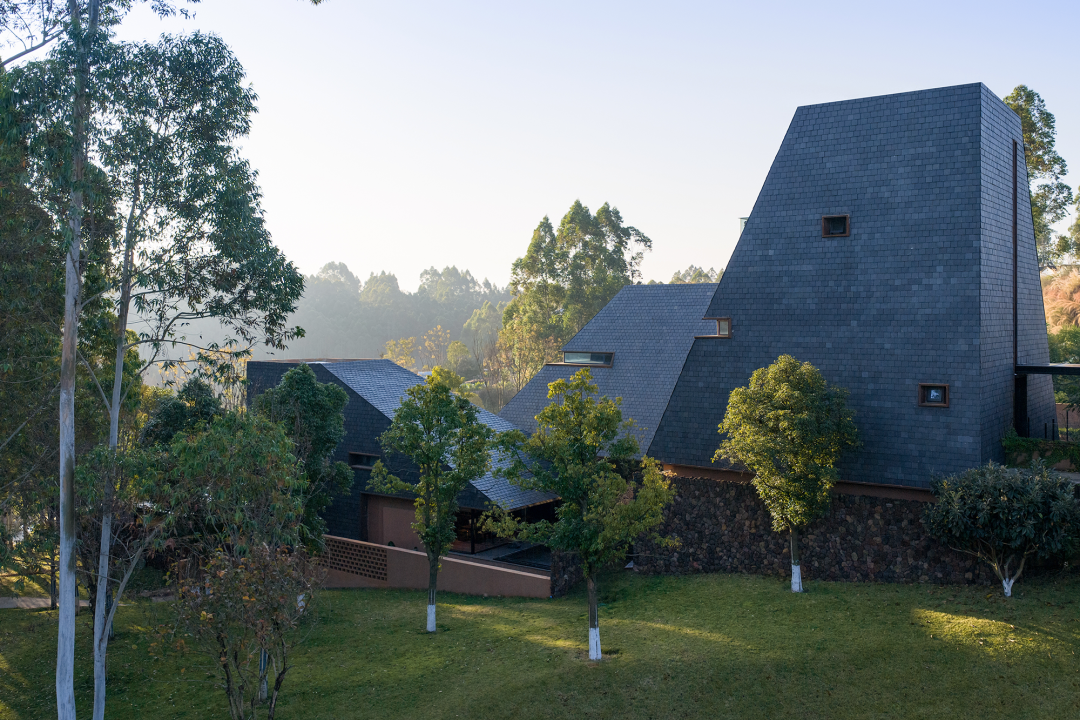
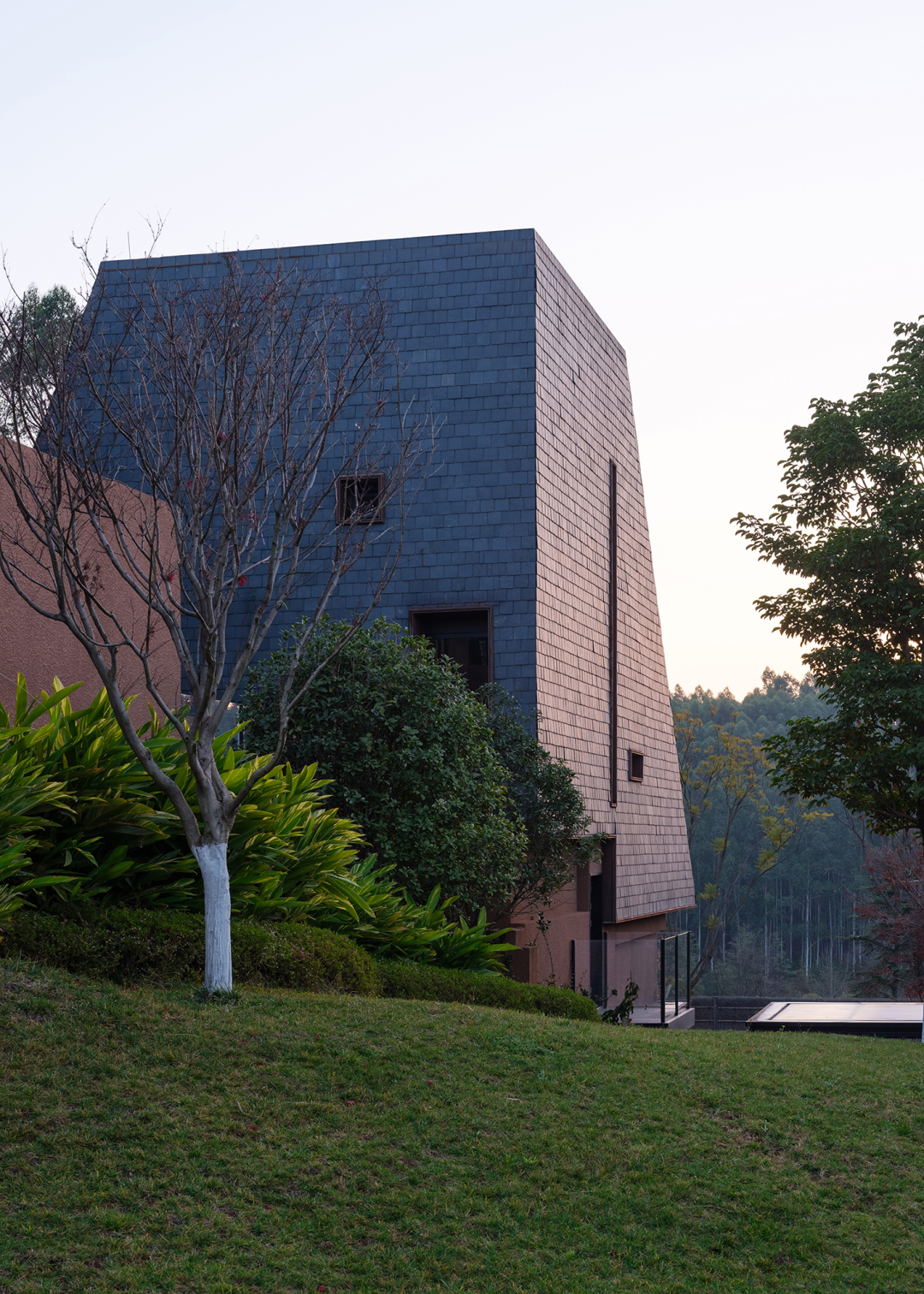
Starting from the relationship between local dwelling typologies and the mountainous terrain, the design reinterprets the Hani “mushroom house” as a spatial reference. Its underlying logic is embedded into the red-earth hillside and eucalyptus forest, allowing the project to establish a continuous relationship between nature, artistic activity, and everyday life.
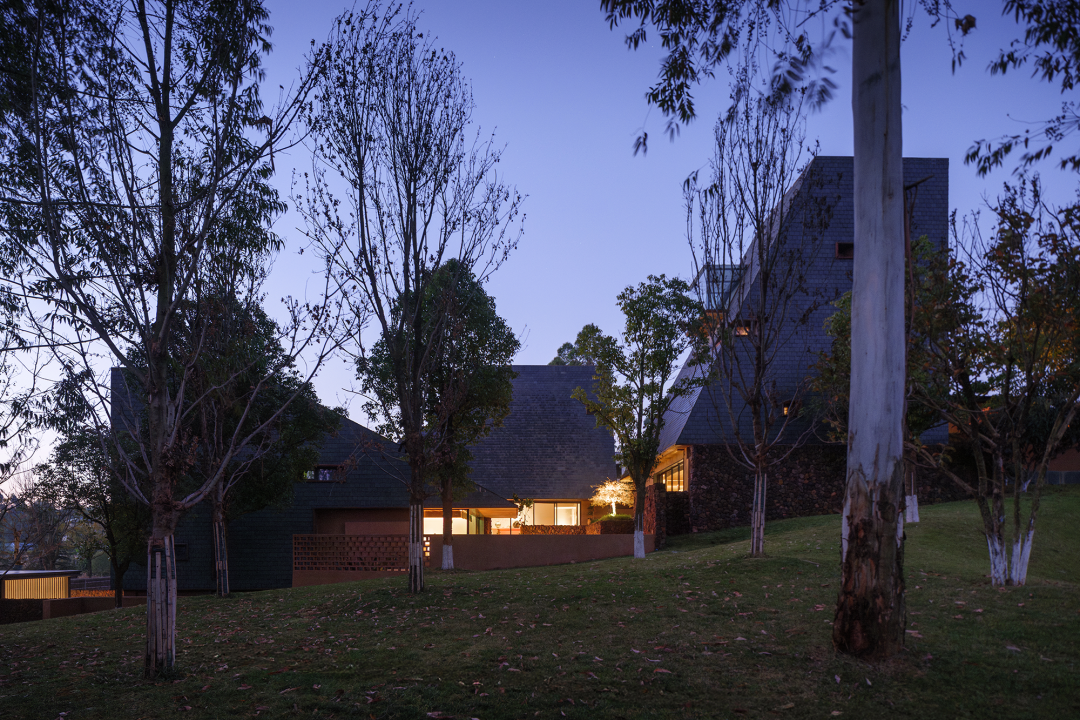
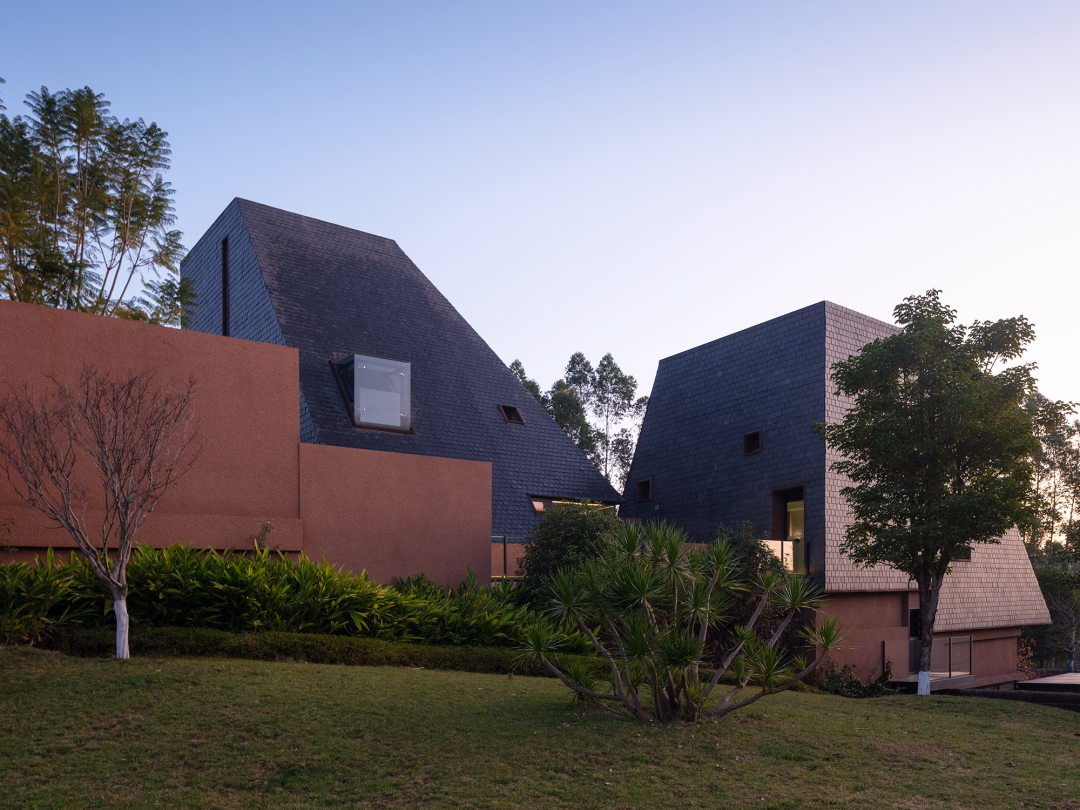
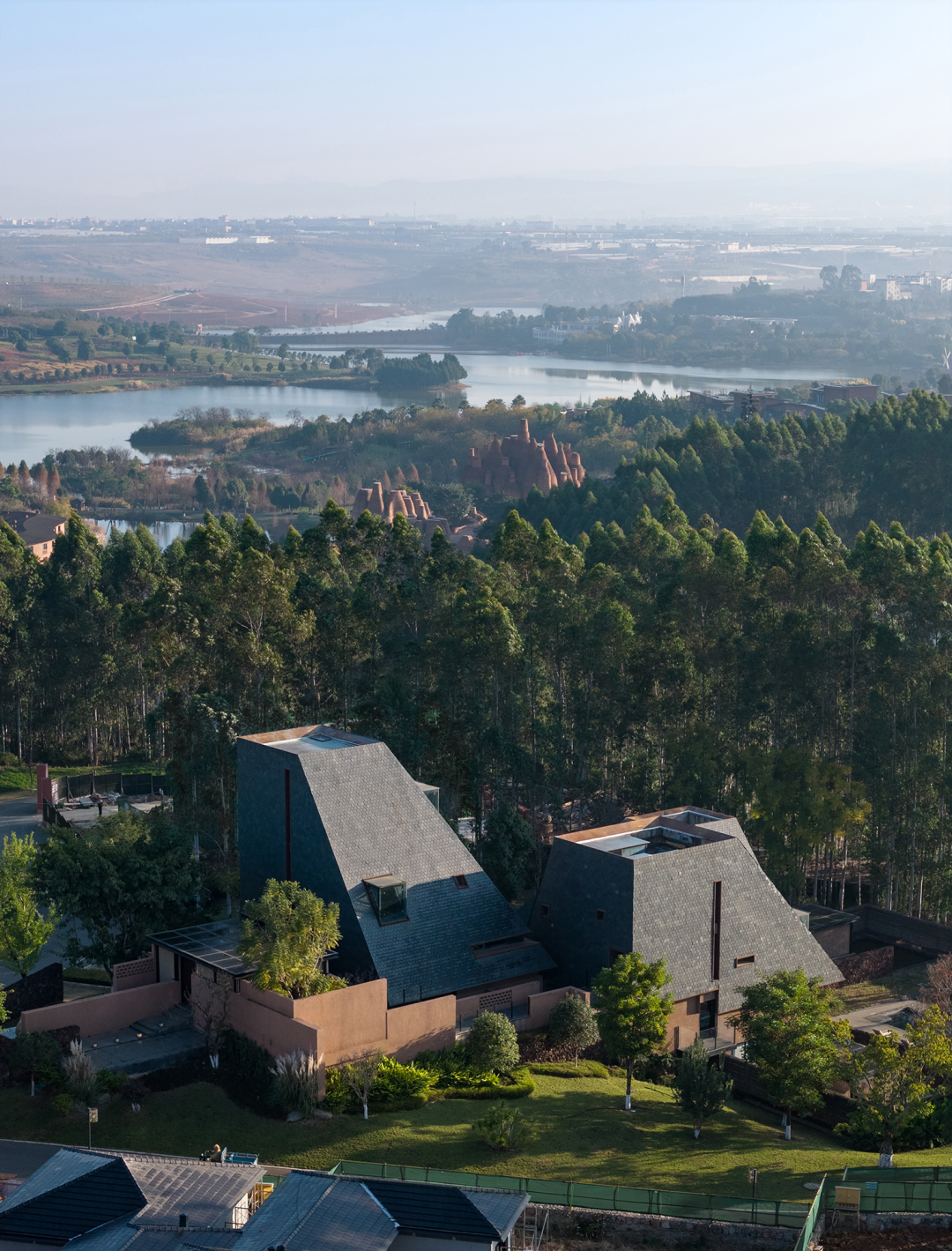
The site occupies a one-mu valley plot on the western edge of Dongfengyun Innovation Park. A gentle slope of Yunnan’s characteristic red earth unfolds through eucalyptus woods, descending from a high western edge toward the east and creating distinct topographic variations within a compact site.
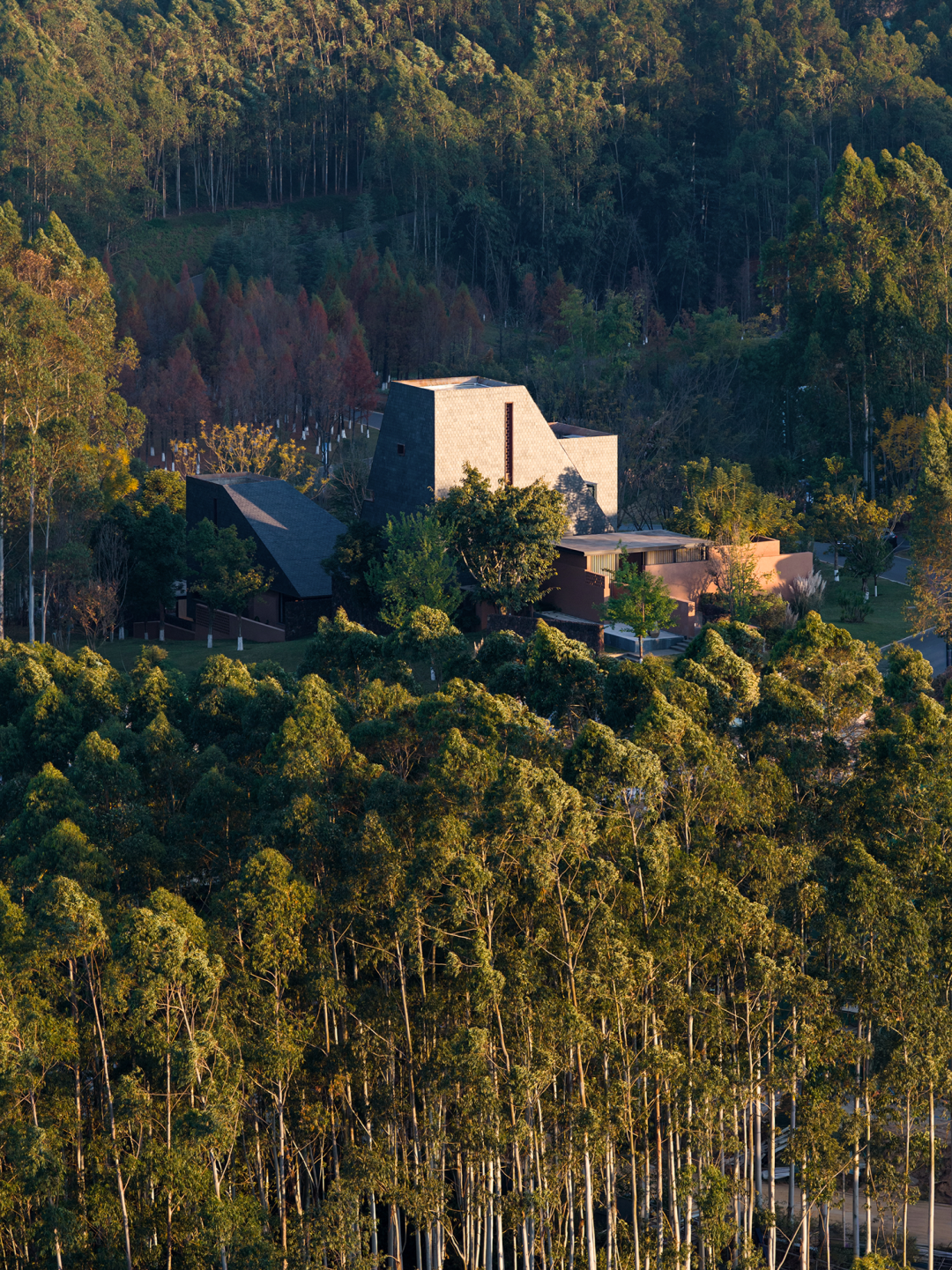
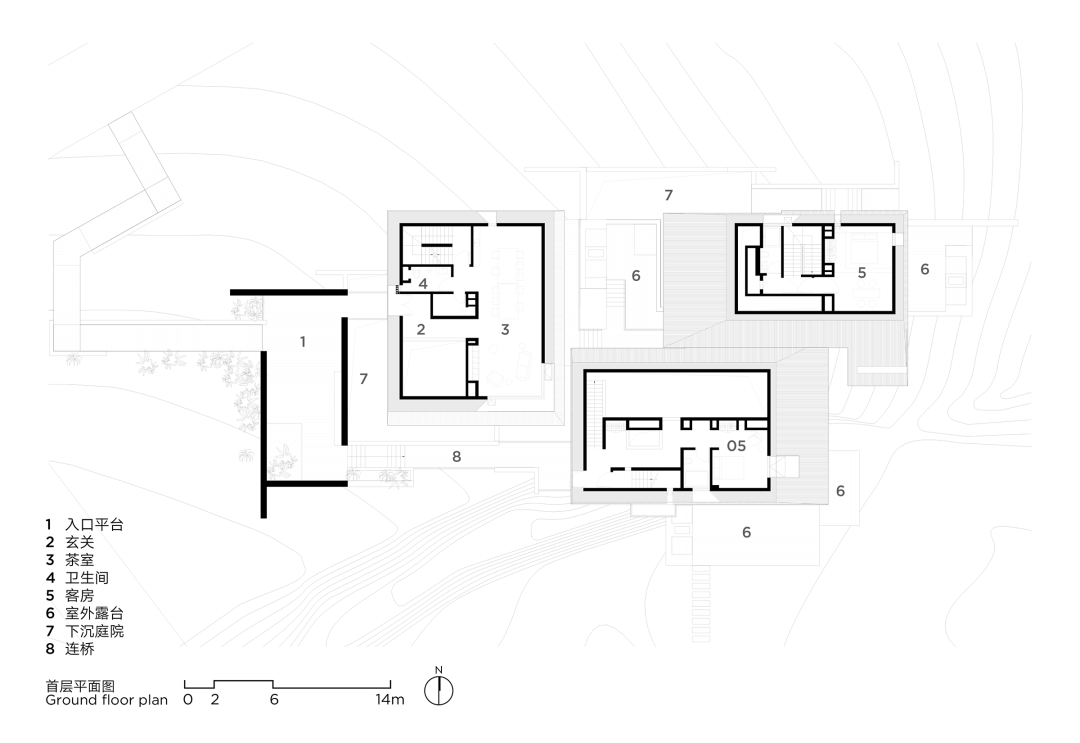
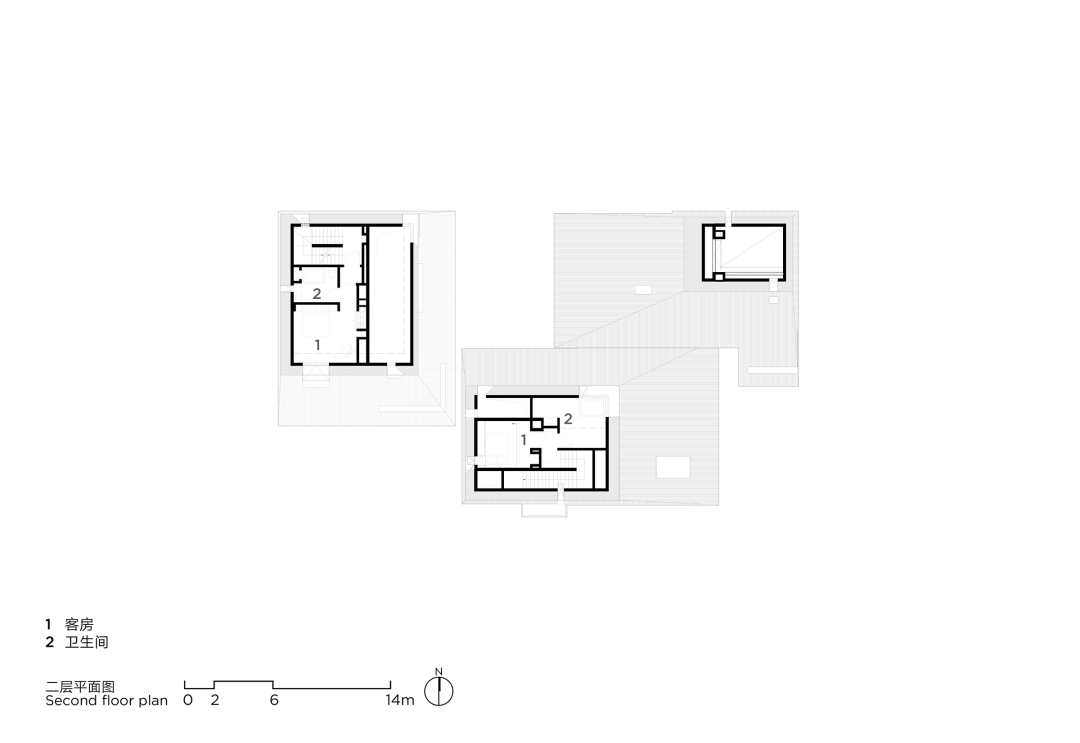
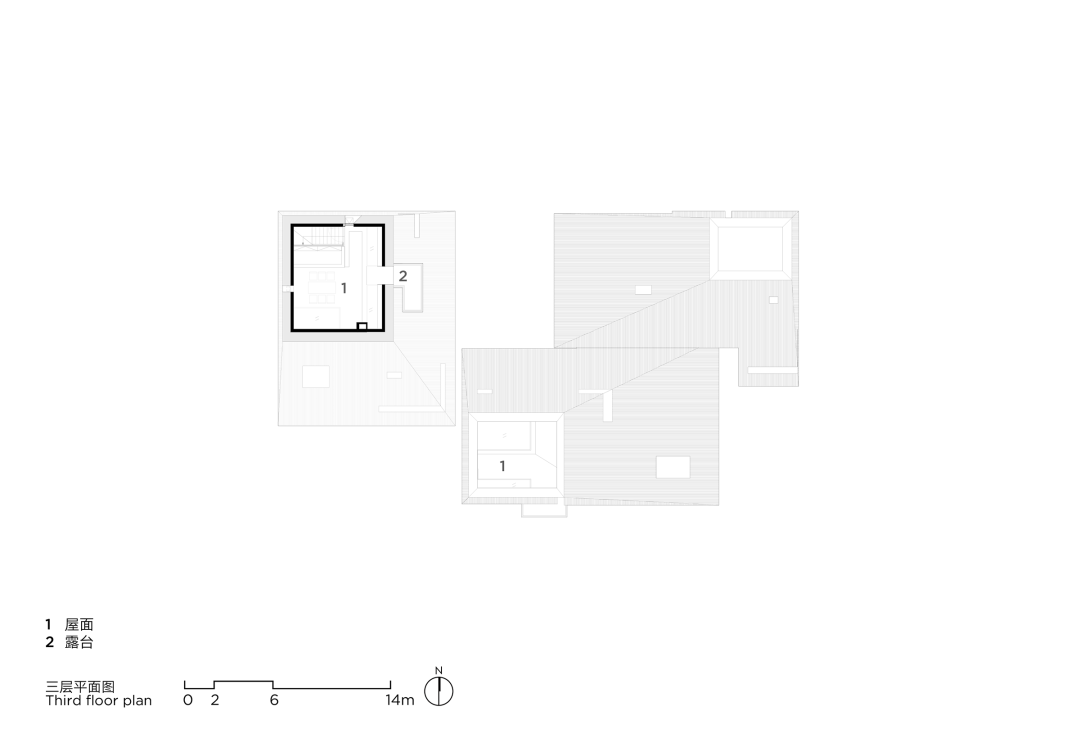
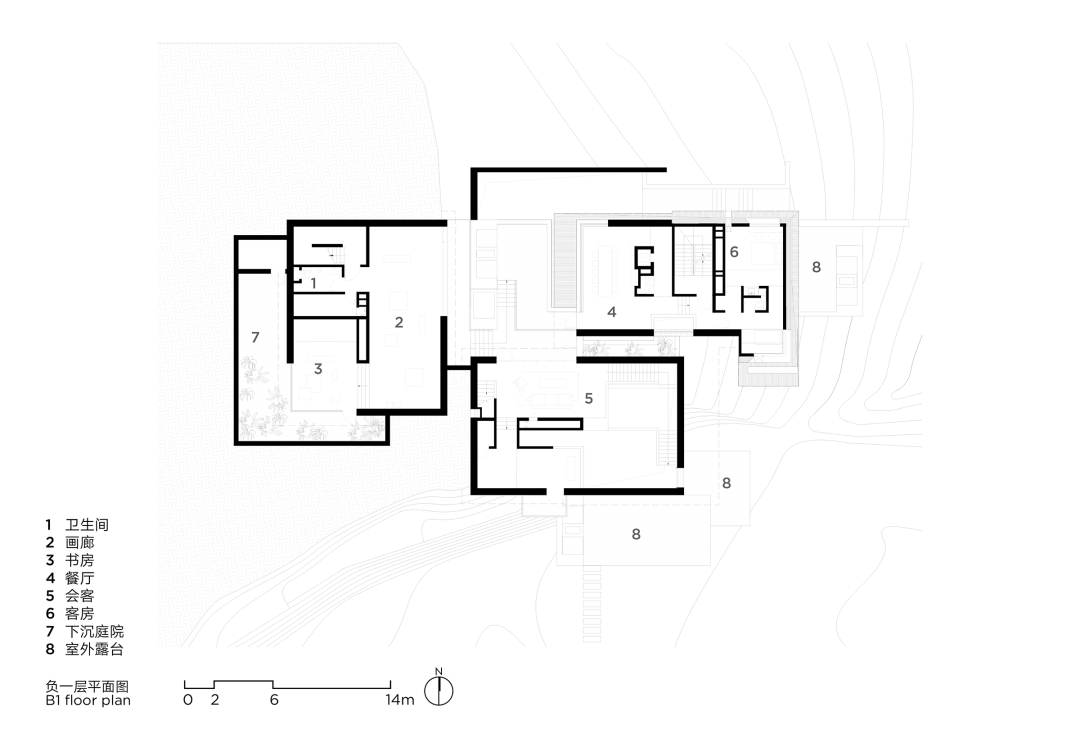
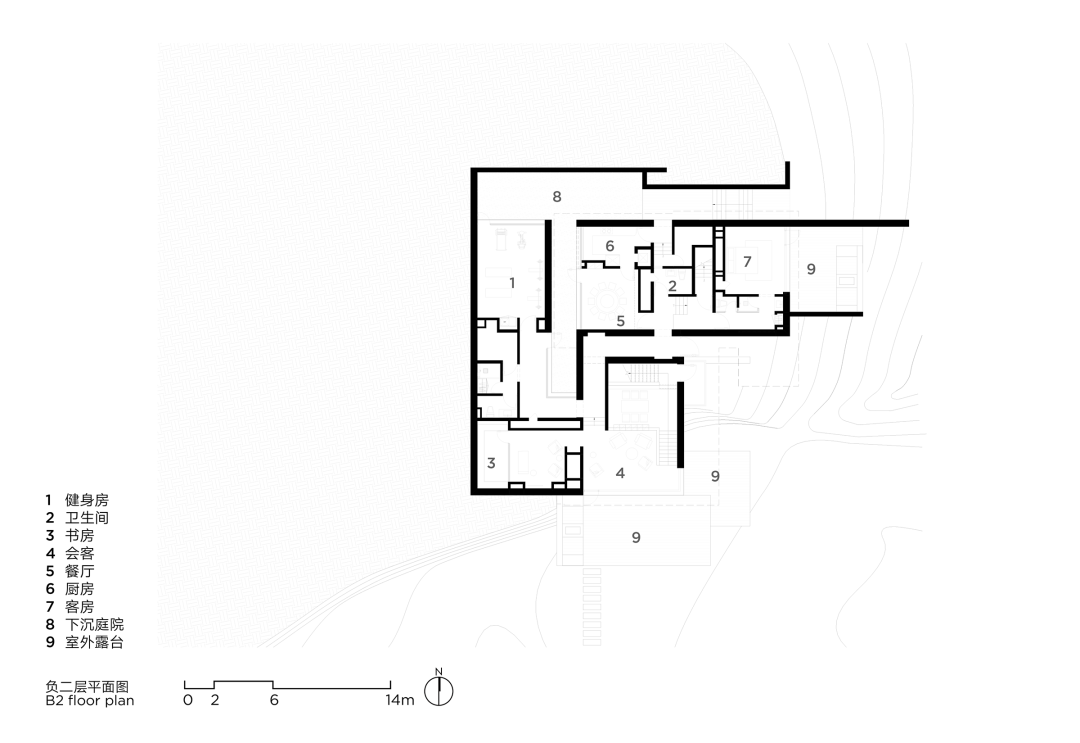
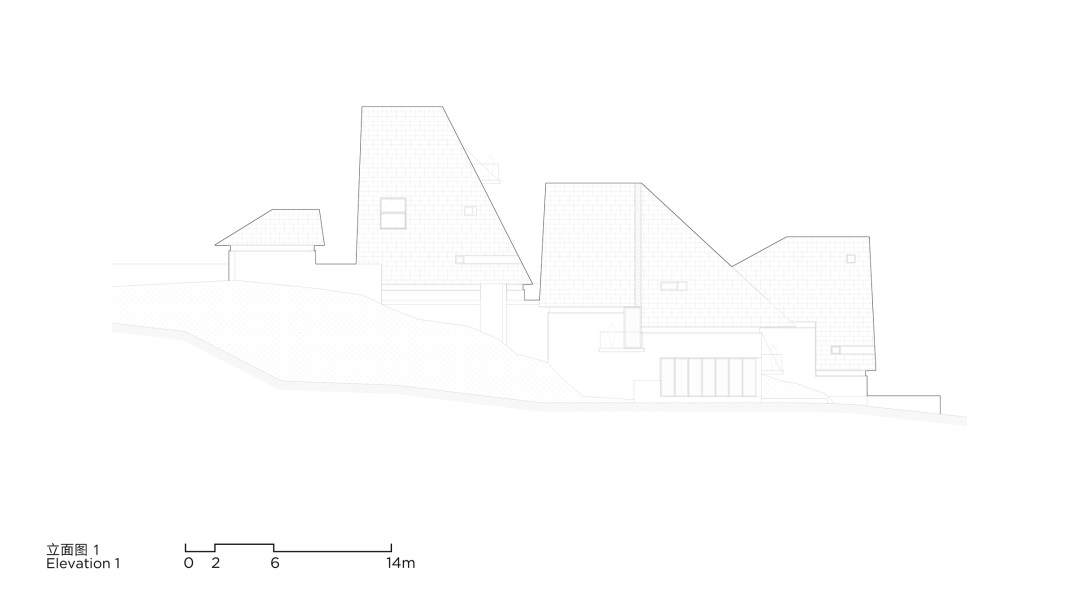
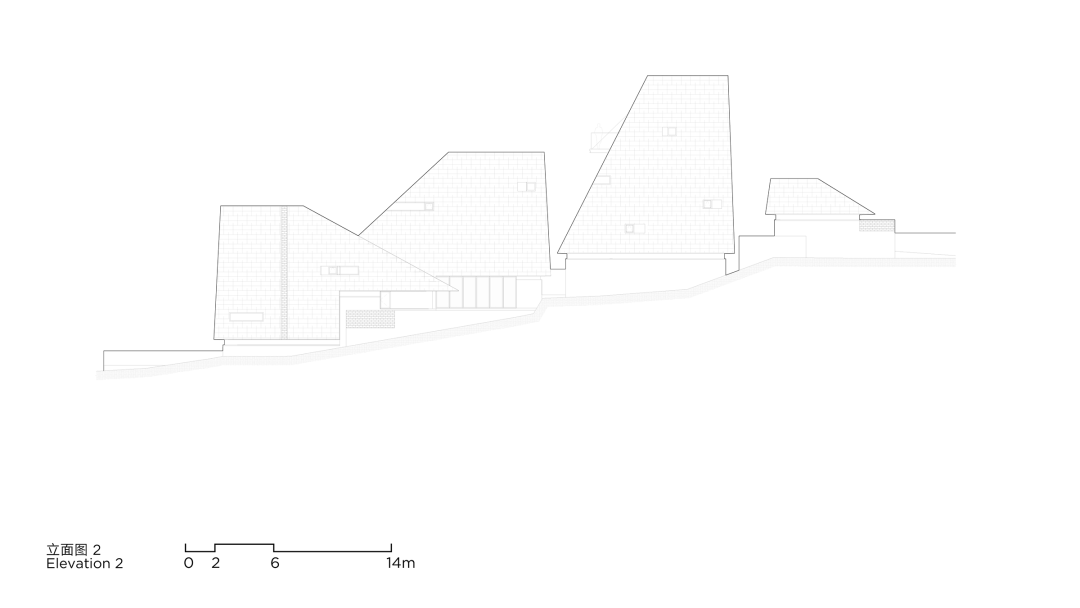
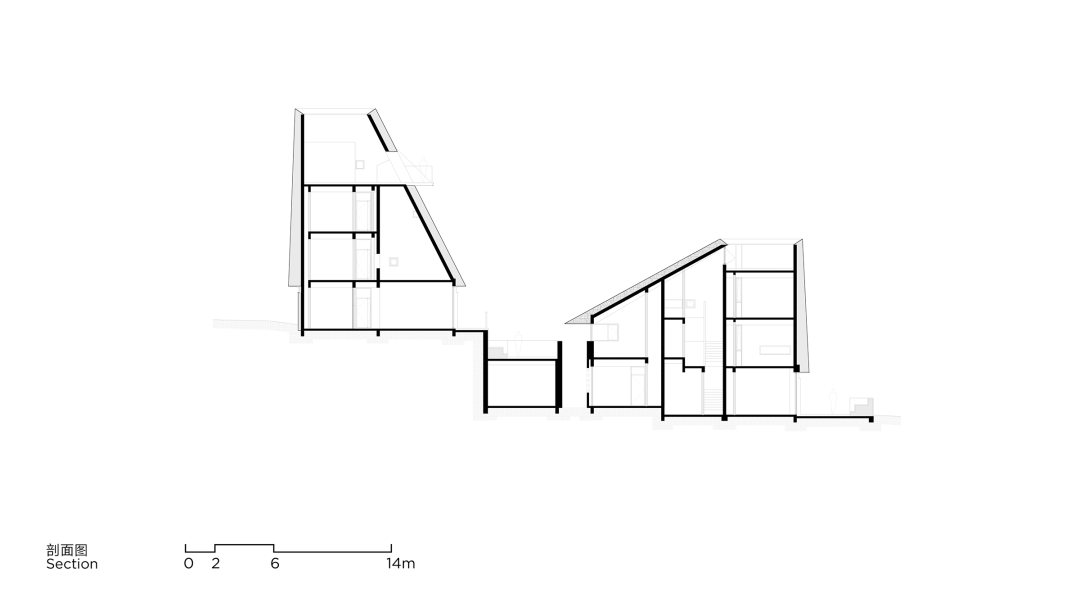
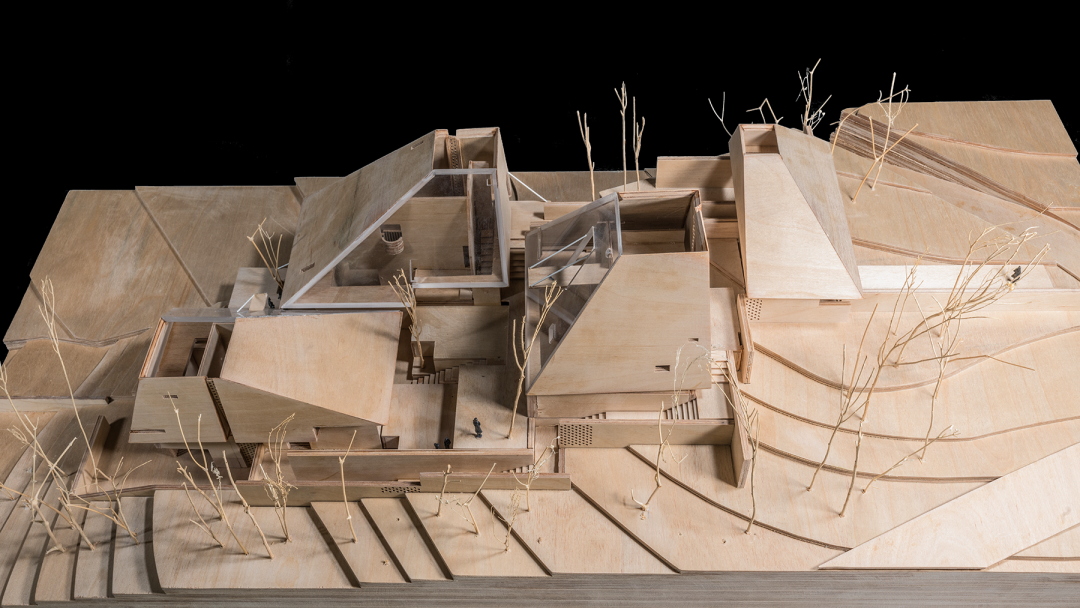
Rather than imposing a singular building mass onto the landscape, the design breaks the program into several interconnected volumes that step down with the terrain. Buildings and courtyards unfold eastward along the hillside, establishing a scale and rhythm that resonate with the surrounding forest.
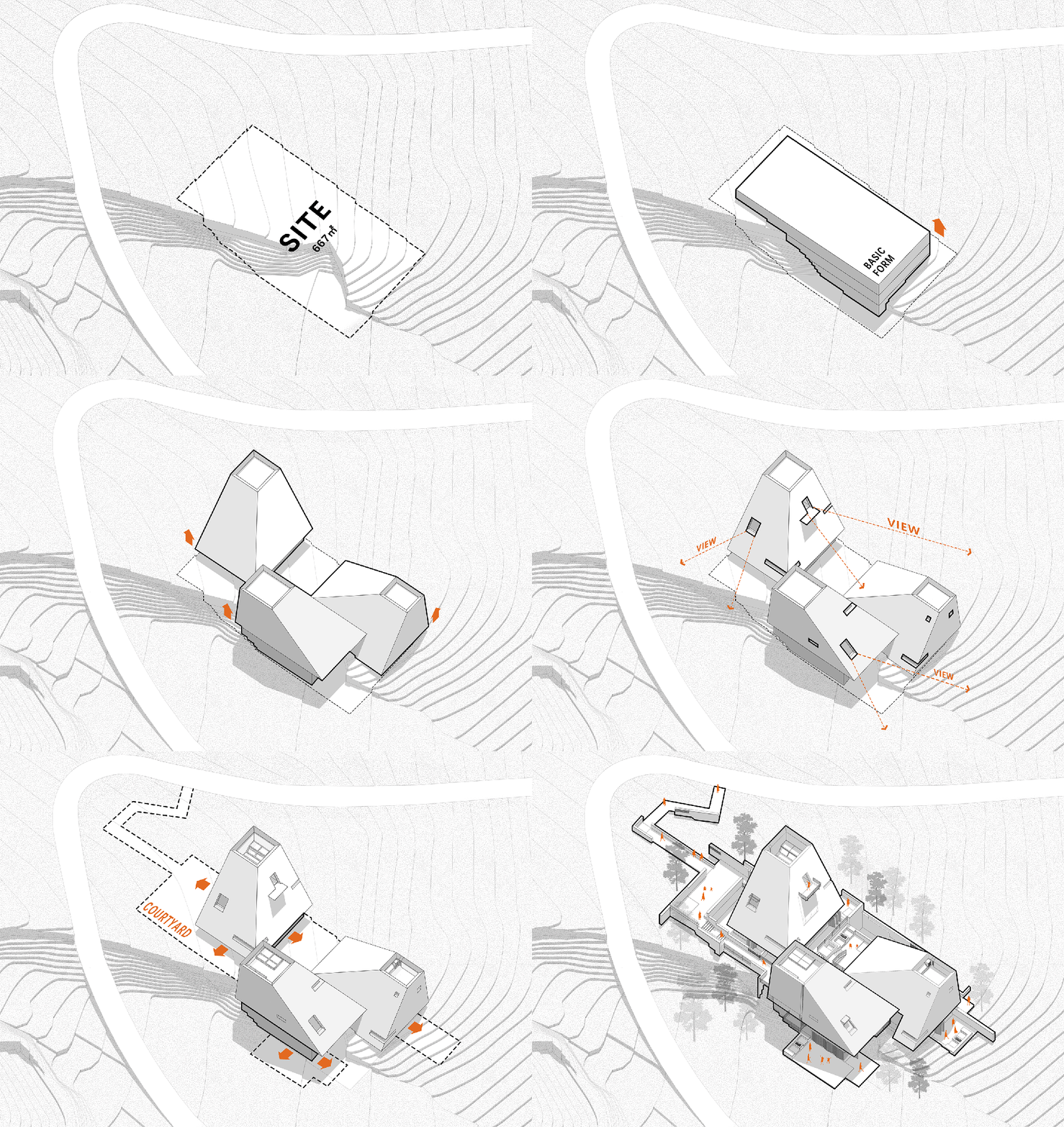
△ Generation diagram
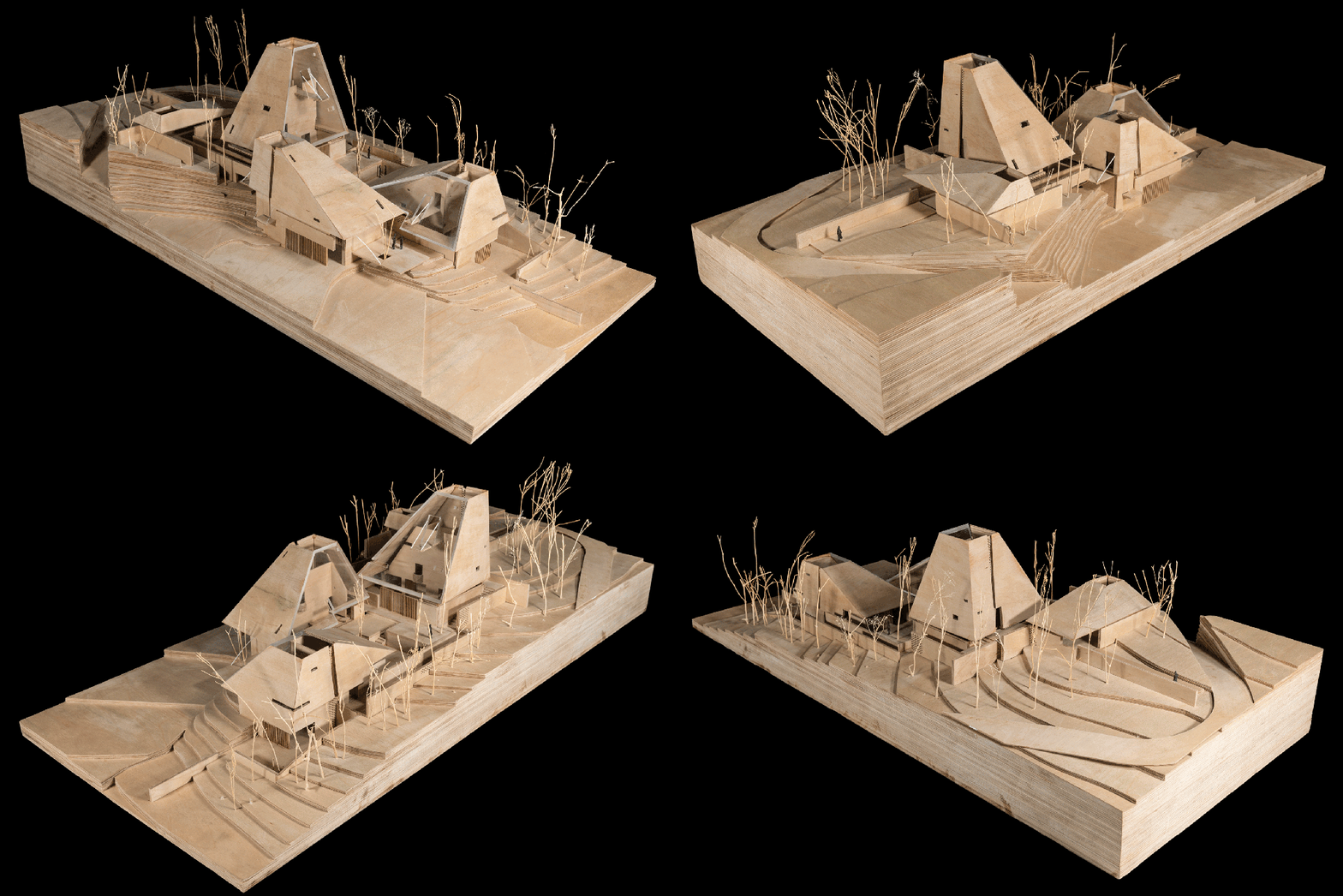
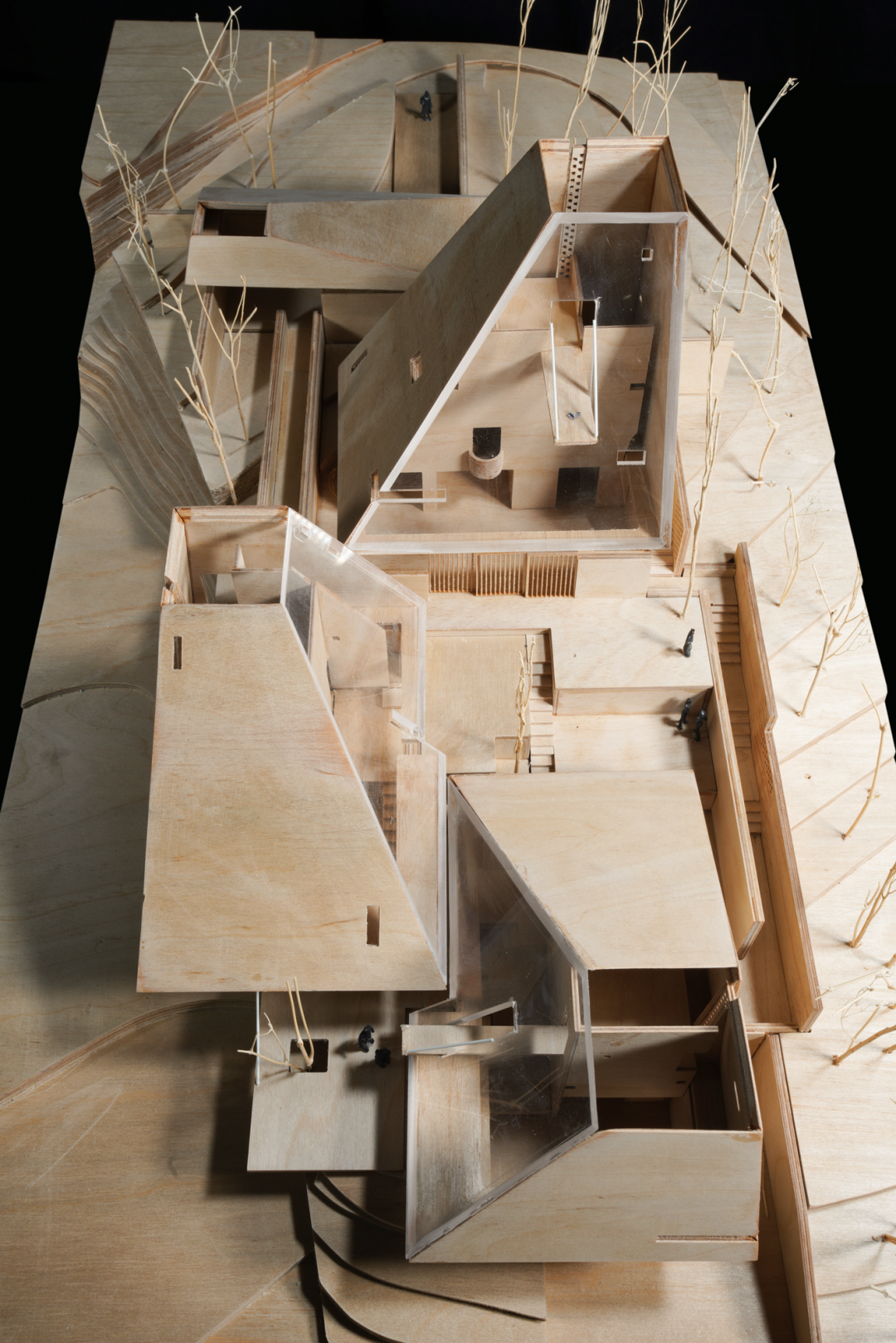
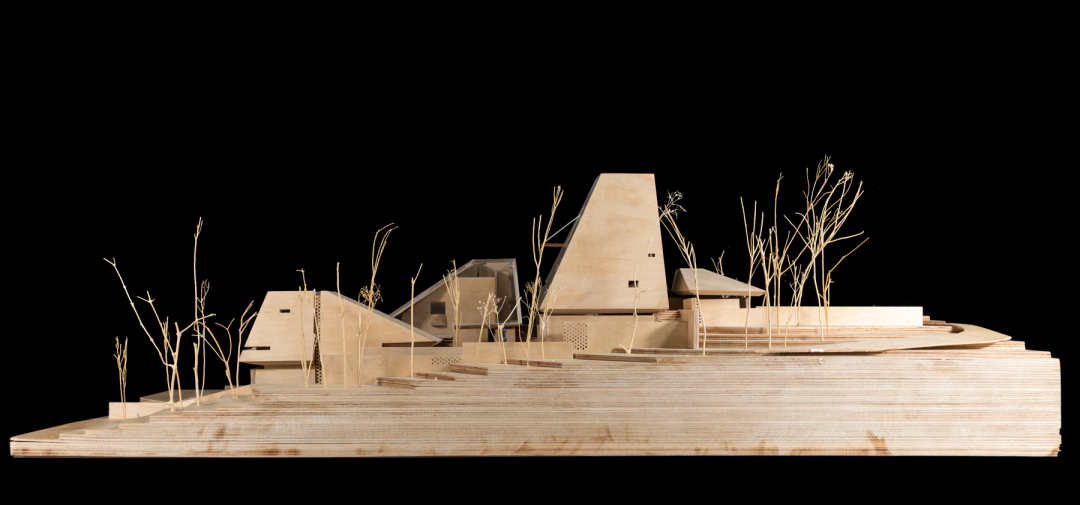
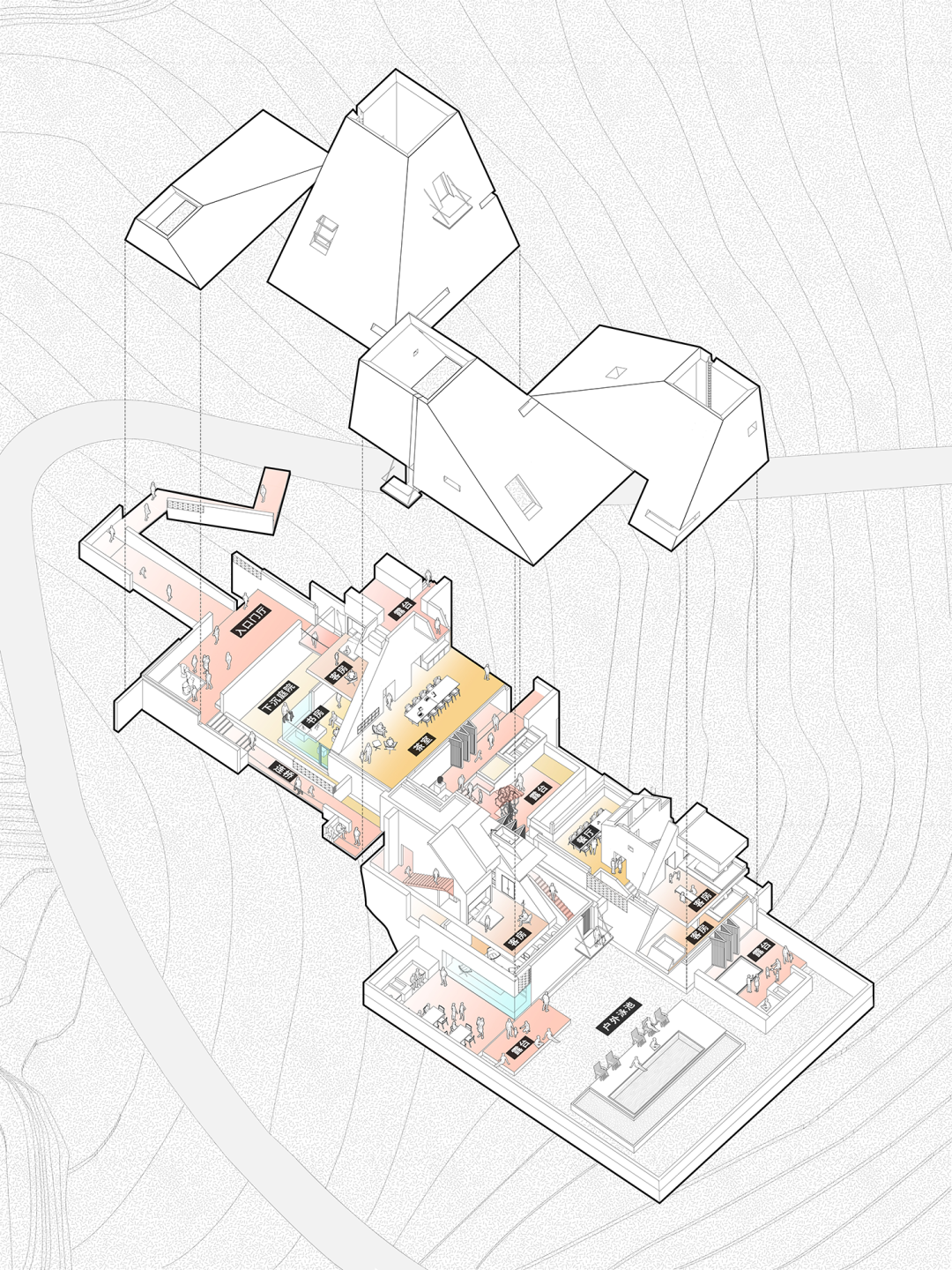
The circulation strategy also emerges directly from the site topography. Visitors enter from the western high point and pass through a transitional pavilion before descending into a central courtyard. From there, pathways branch toward architectural volumes positioned at different elevations. This movement sequence—from high to low, from exterior to interior—creates a continuous spatial relationship between architecture and terrain.
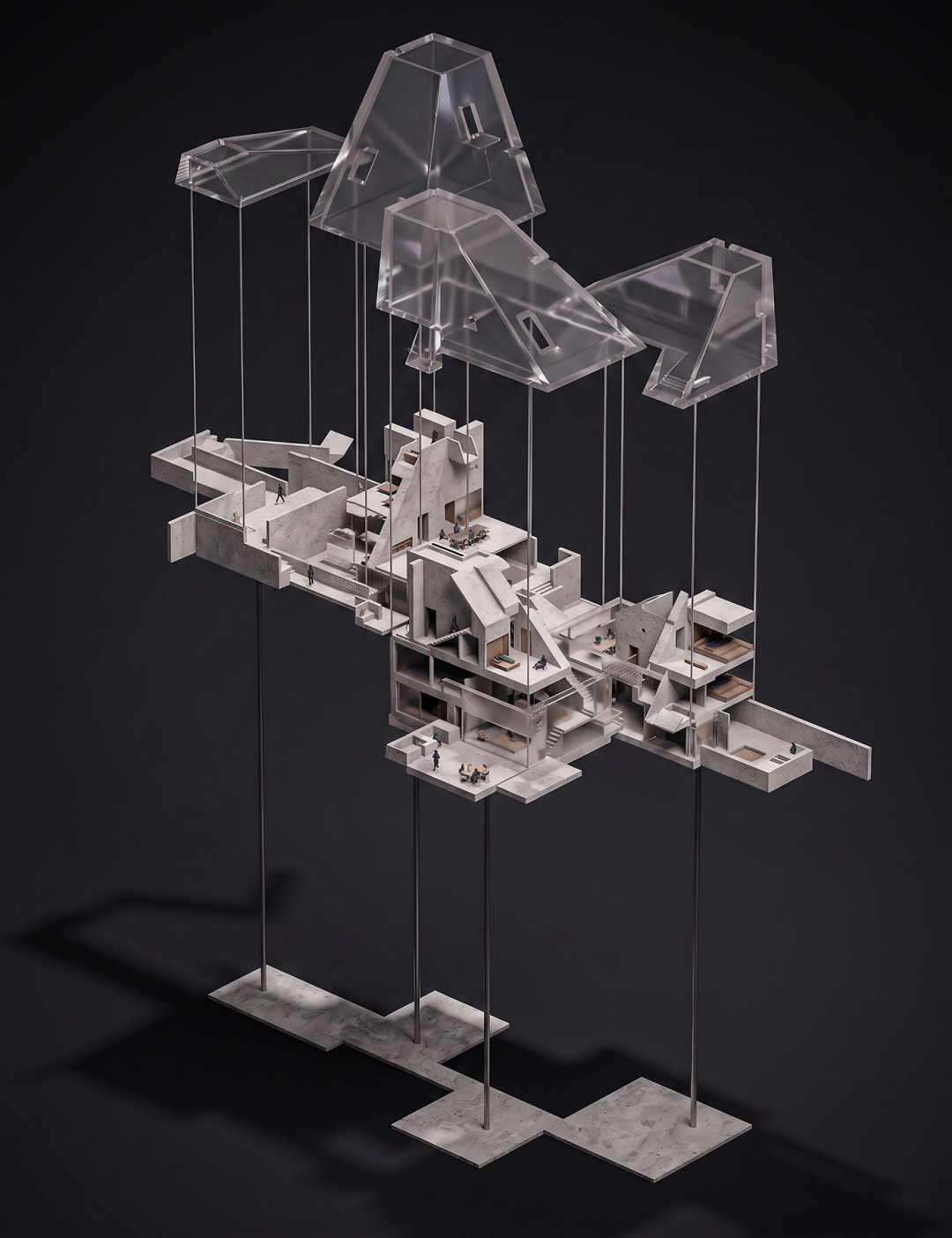
△ Exploded axonometric model
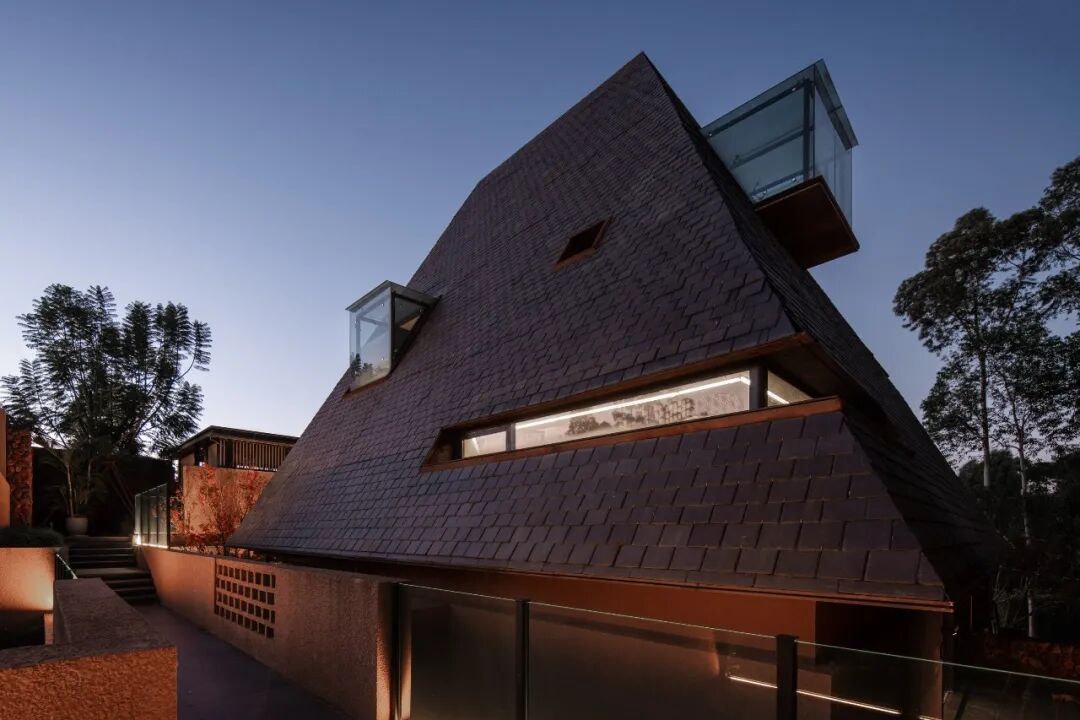
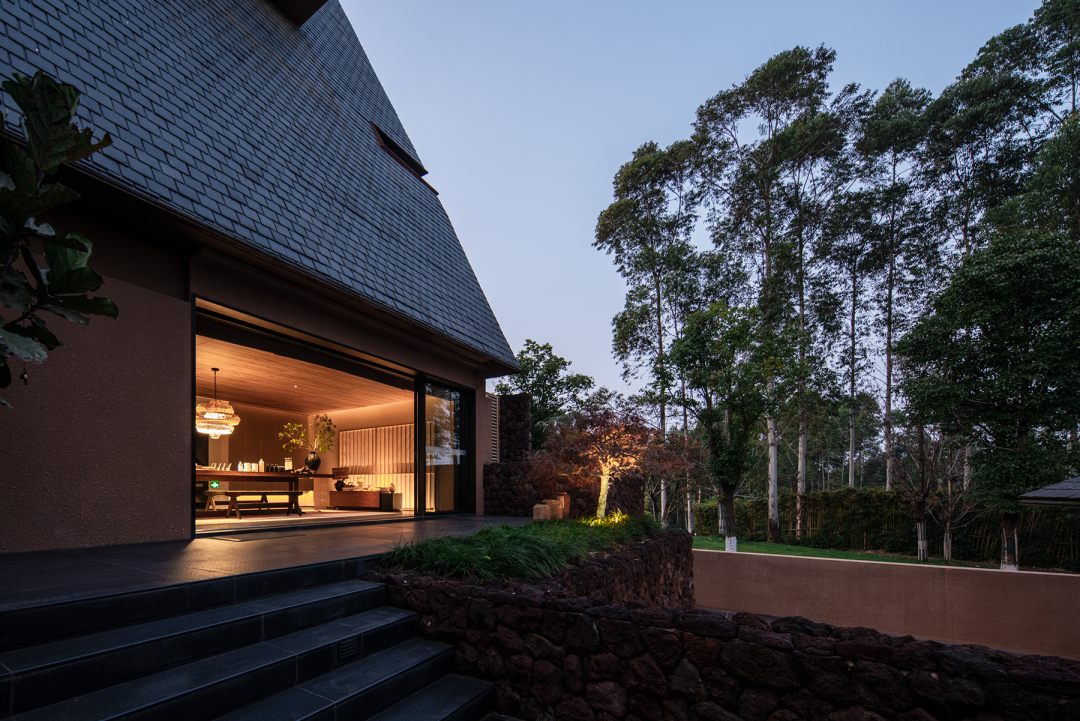
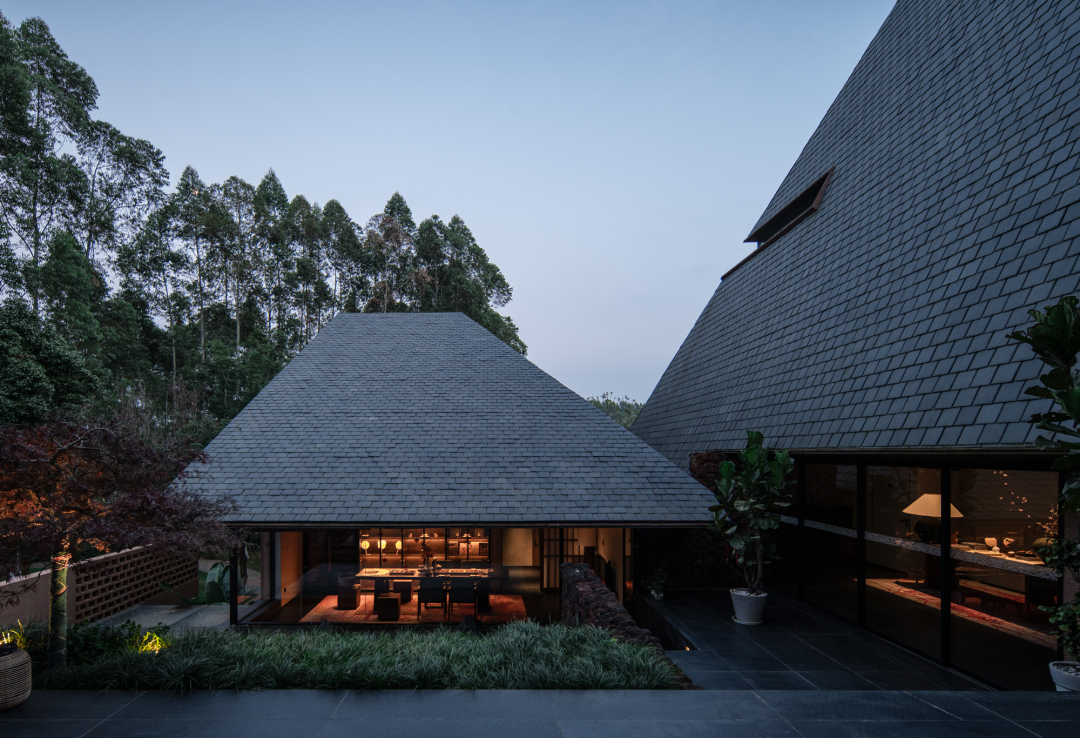
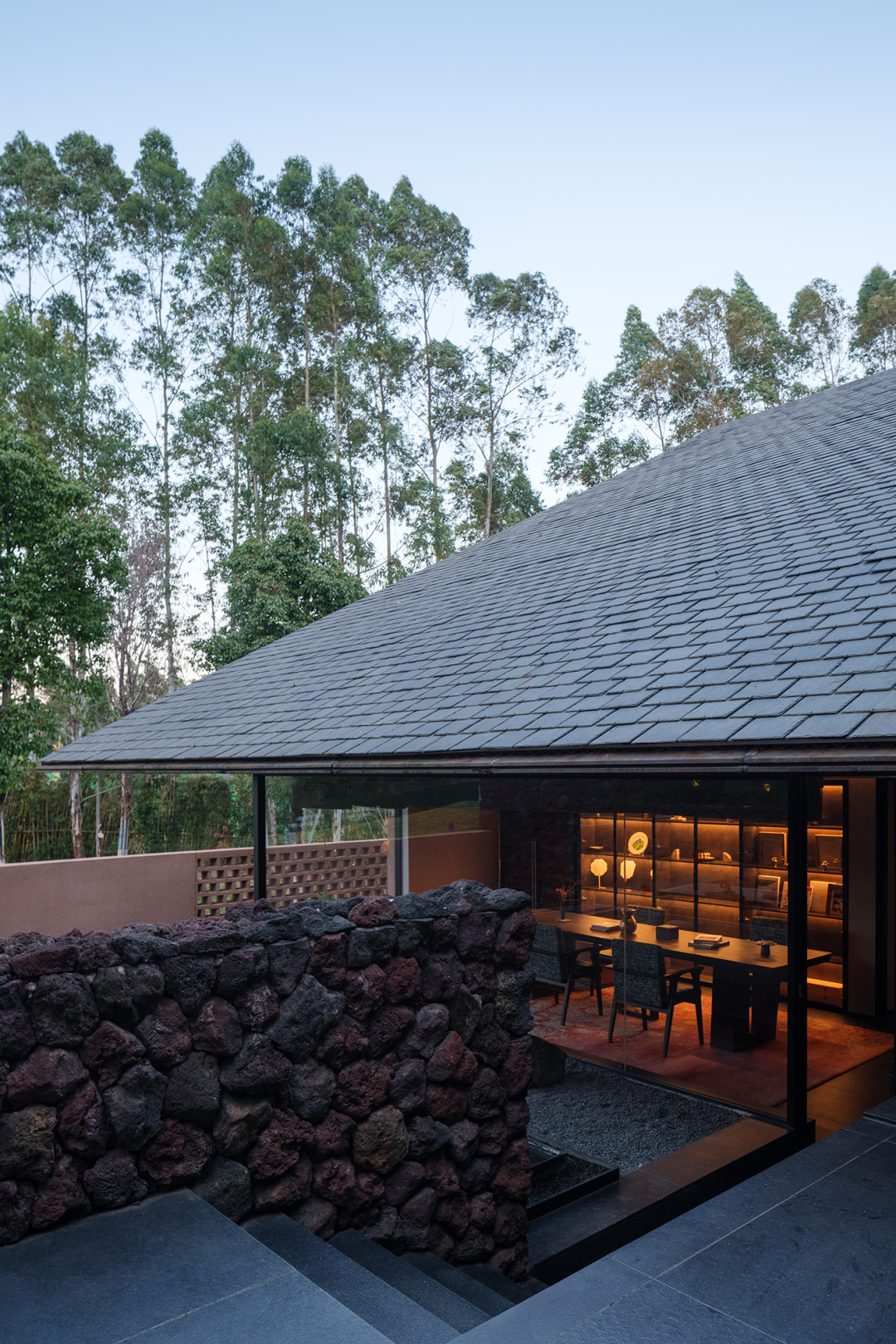
The architectural language draws inspiration from the traditional “mushroom houses” found in Hani settlements across the Honghe region. These vernacular dwellings typically combine rammed-earth walls with thatched roofs, creating a distinctive profile: broad and grounded below, narrowing upward toward the roof.
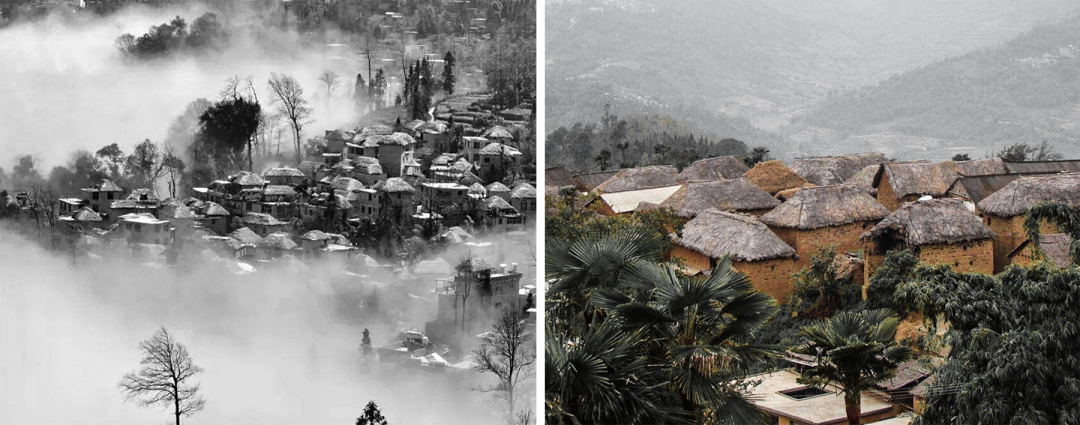
△ Hani ethnic settlement, image source: internet
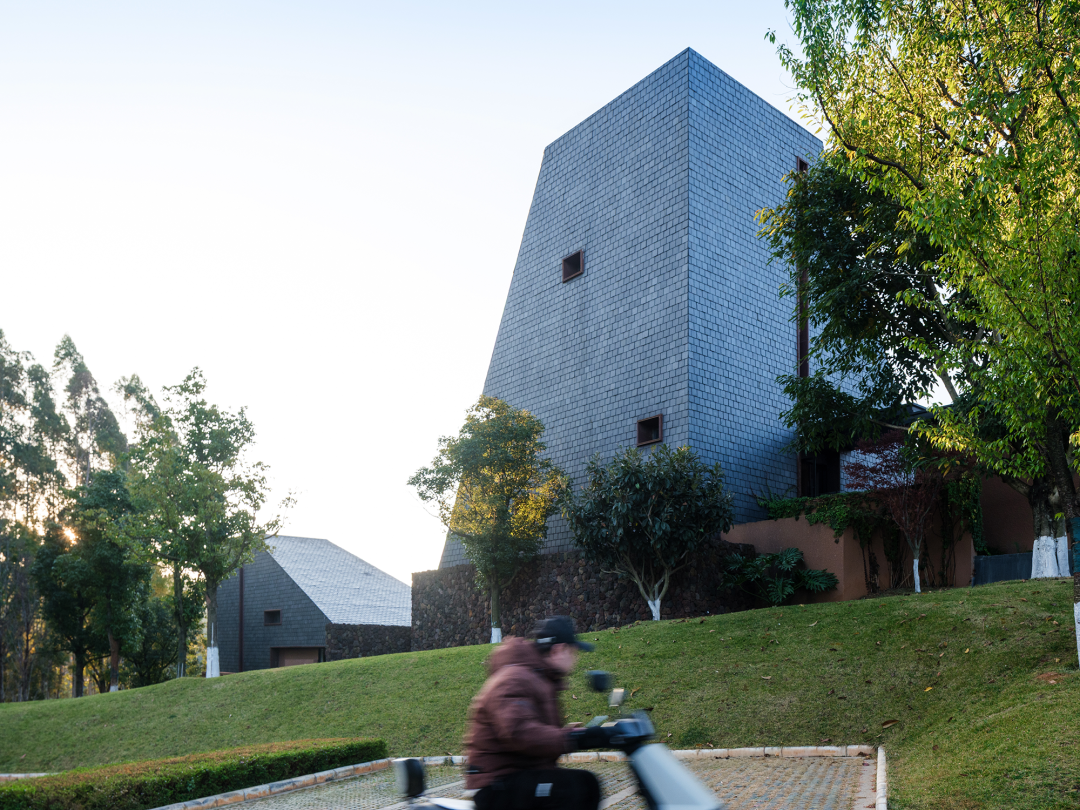
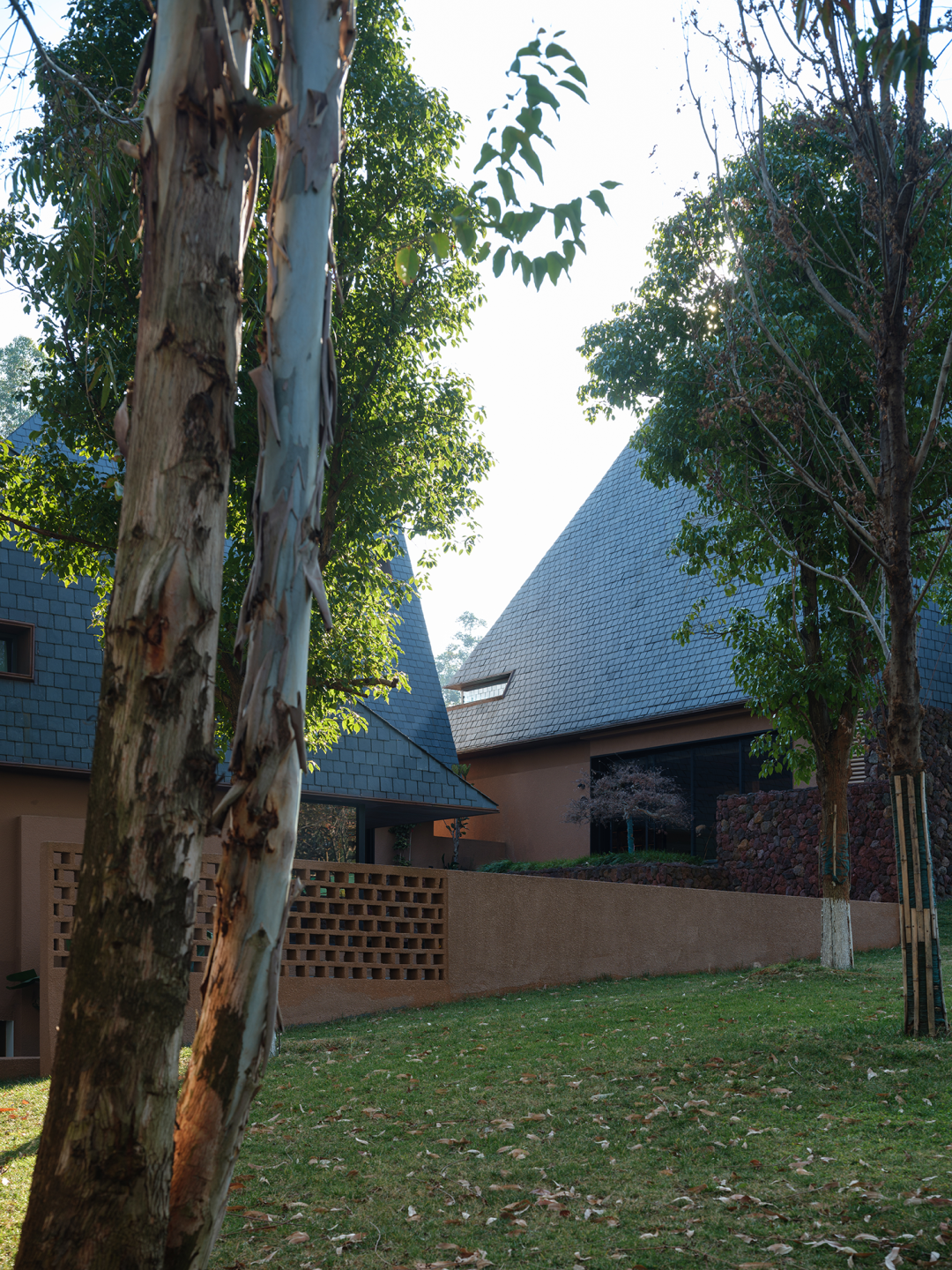
Rather than replicating the traditional form, the project extracts its underlying spatial logic and translates it into a more abstract geometric language. Tapered rooflines and thick walls generate sculptural volumes that appear as though they have emerged directly from the red earth landscape.
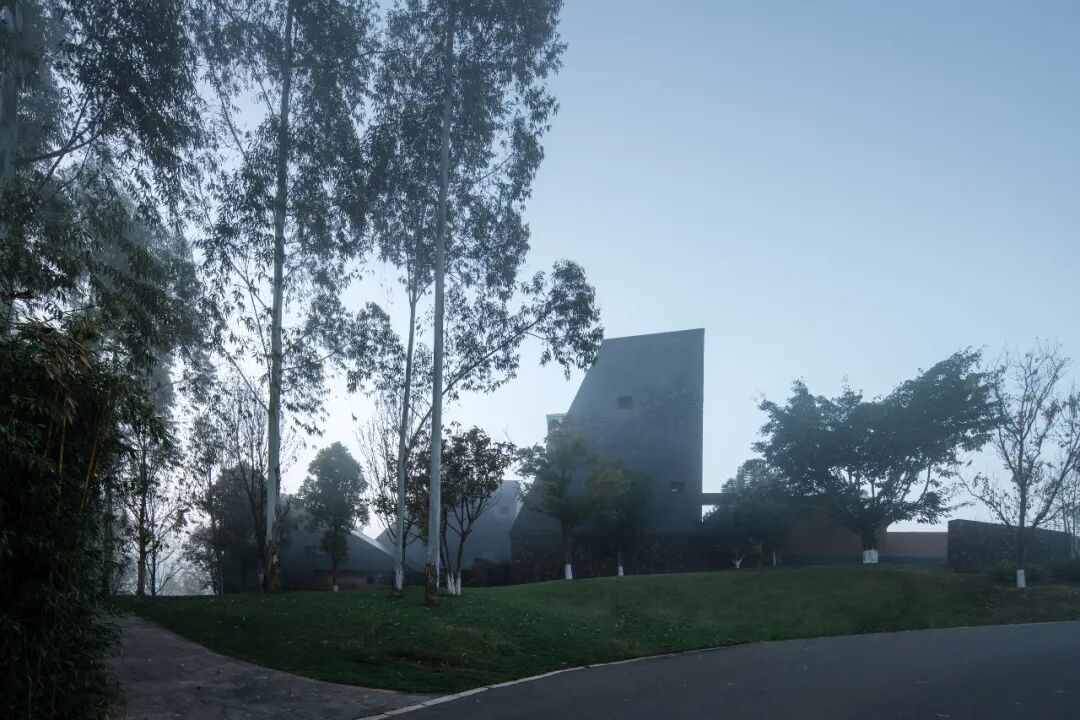
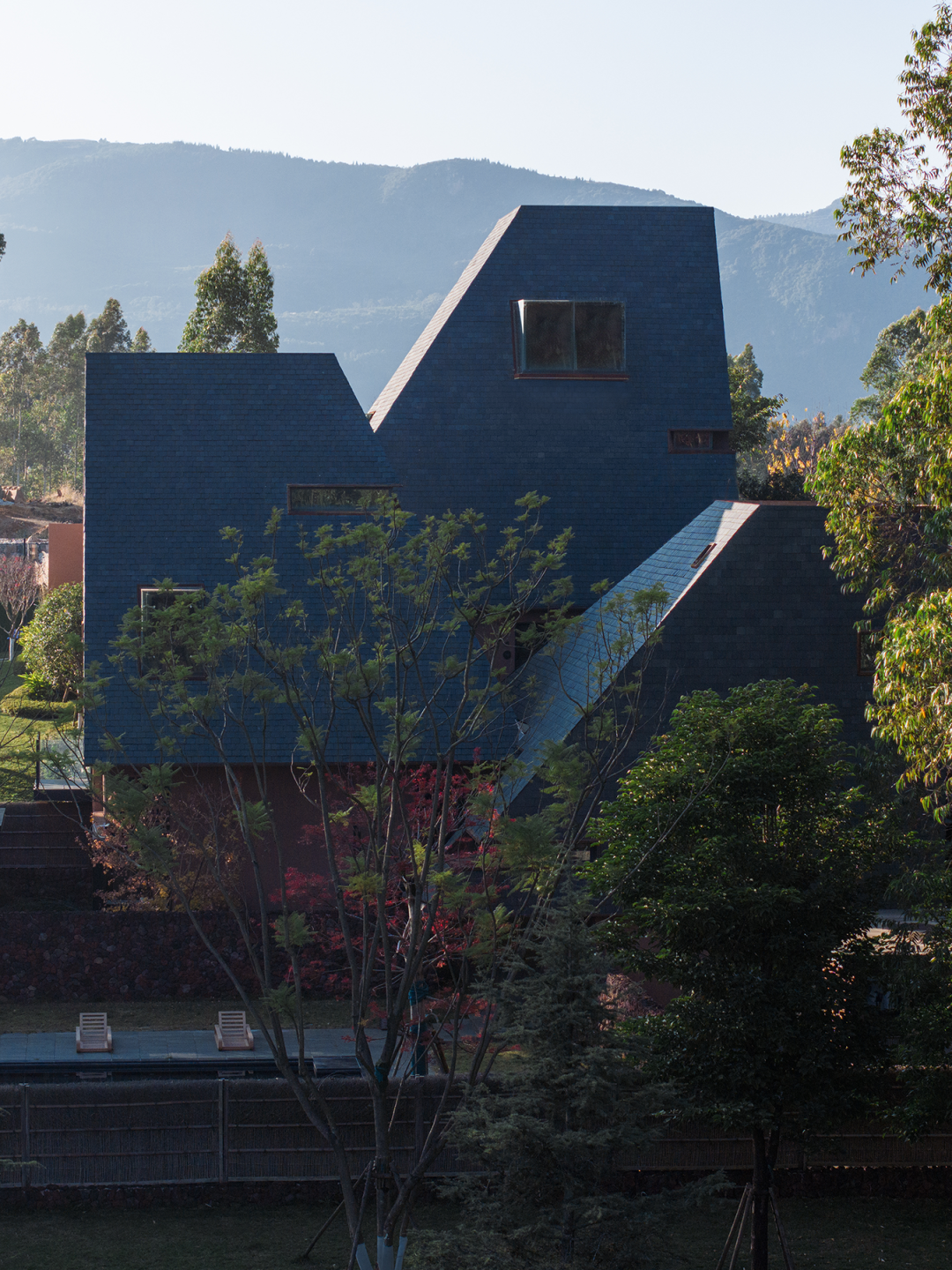
This reinterpretation of the vernacular prototype emerged from a response to local climate and lived experience. Under the intense and direct sunlight of Yunnan’s plateau environment, the design avoids conventional strategies of openness and transparency, instead favoring spaces that feel grounded, inward-looking, and protective.
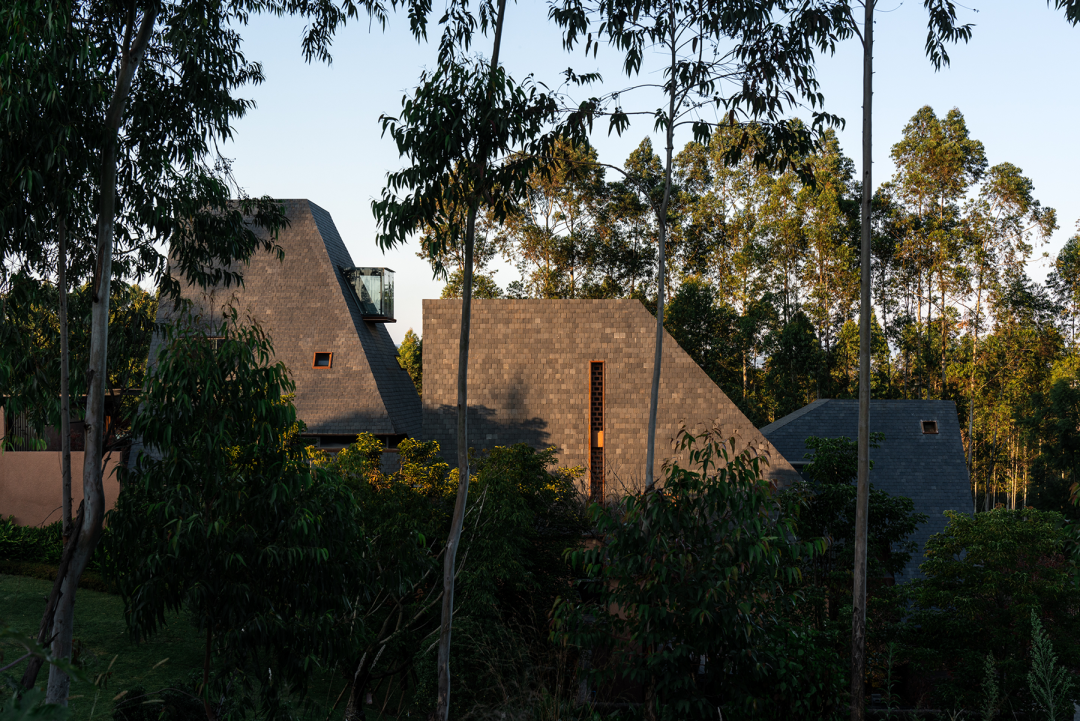
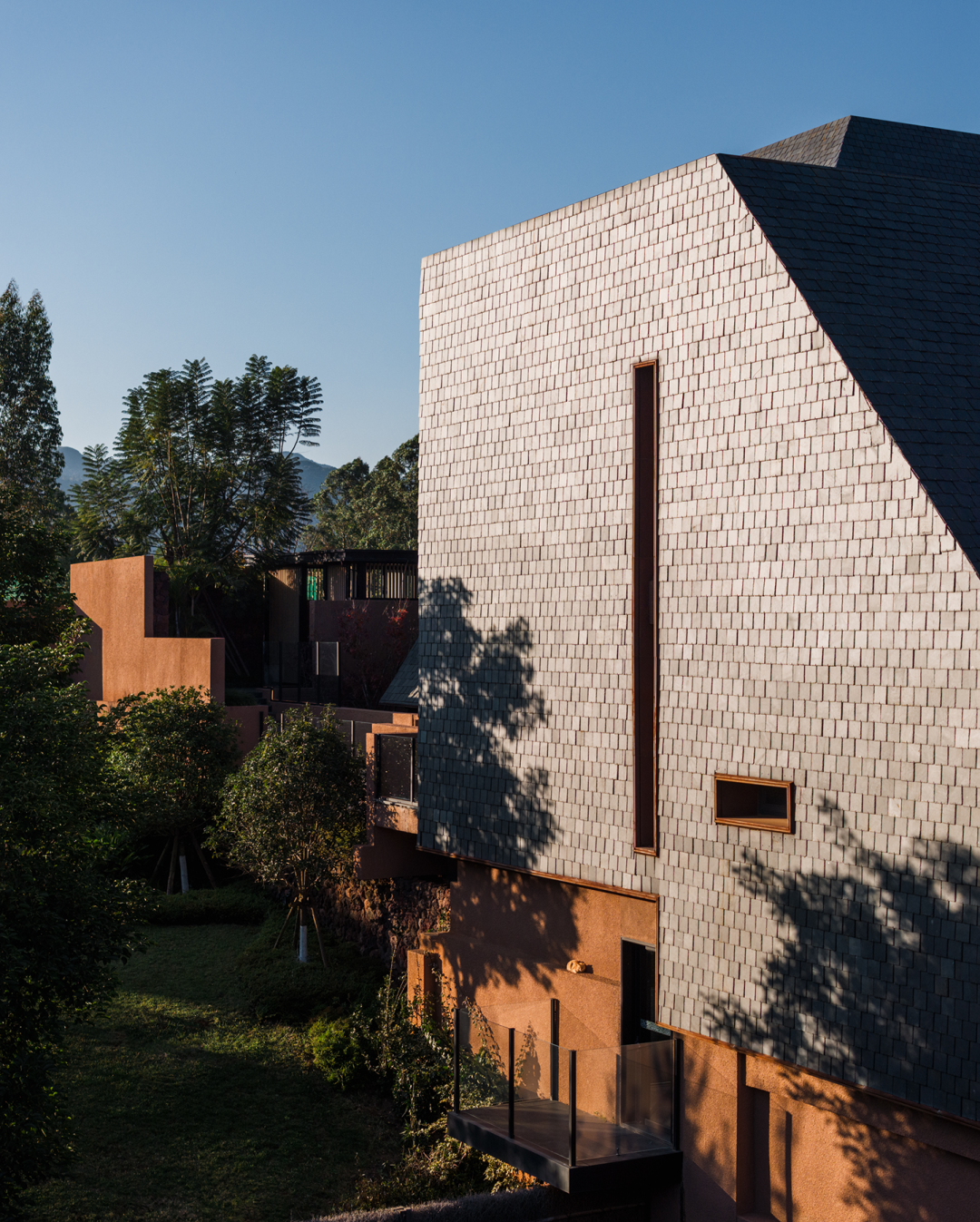
Rather than dissolving architectural boundaries through extensive glazing, the project emphasizes the presence of the building as a solid spatial form. Thick walls, deeply recessed openings, and carefully controlled daylight create a relationship with nature that is not based on unobstructed views, but unfolds gradually through moments of enclosure, pause, and perception.
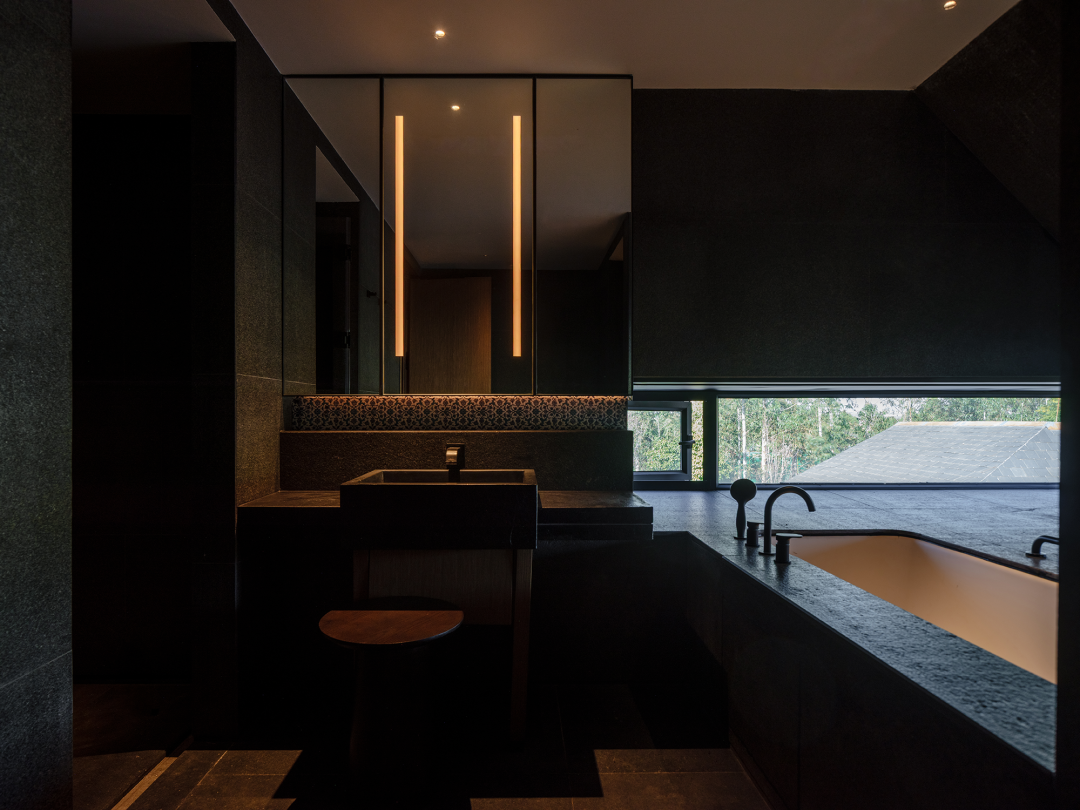
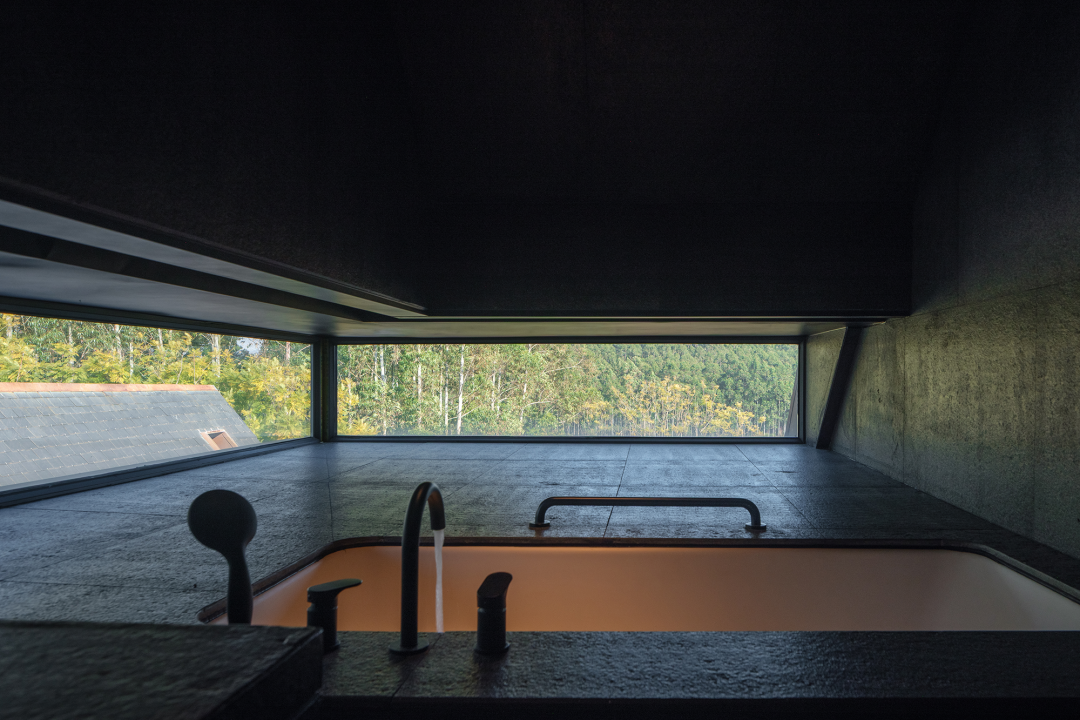
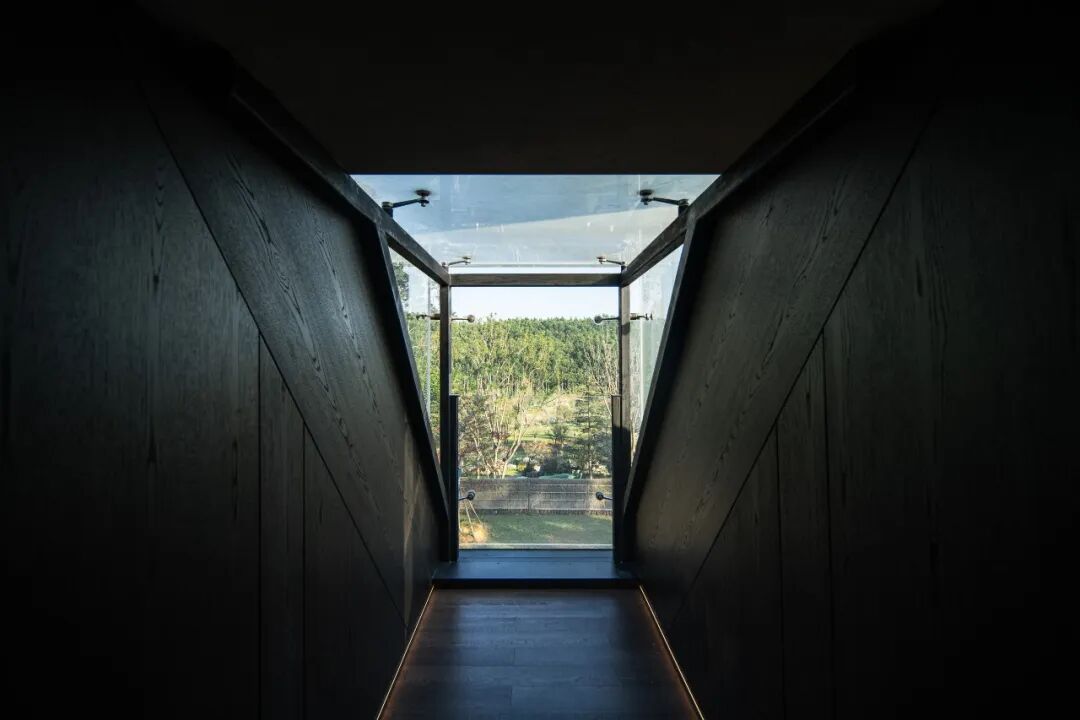
The buildings are conceived as “containers of light.” Interior spaces are shaped through carefully positioned geometric openings that choreograph changing daylight conditions. Under the intense sunlight of Yunnan’s plateau climate, window openings are intentionally reduced in scale.
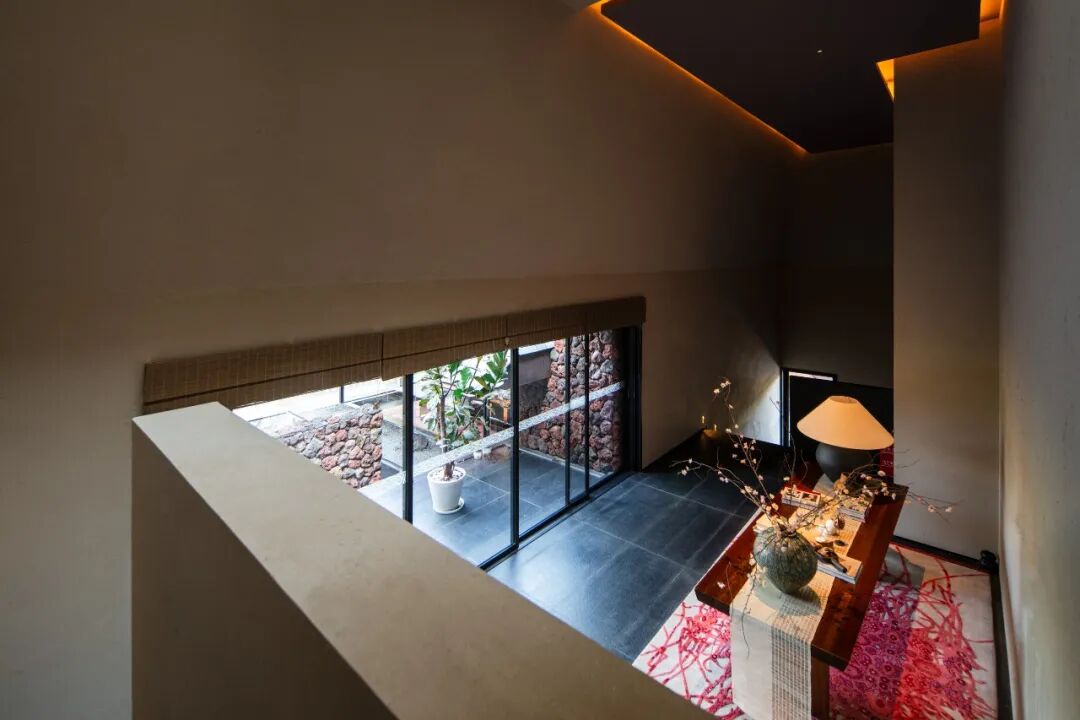
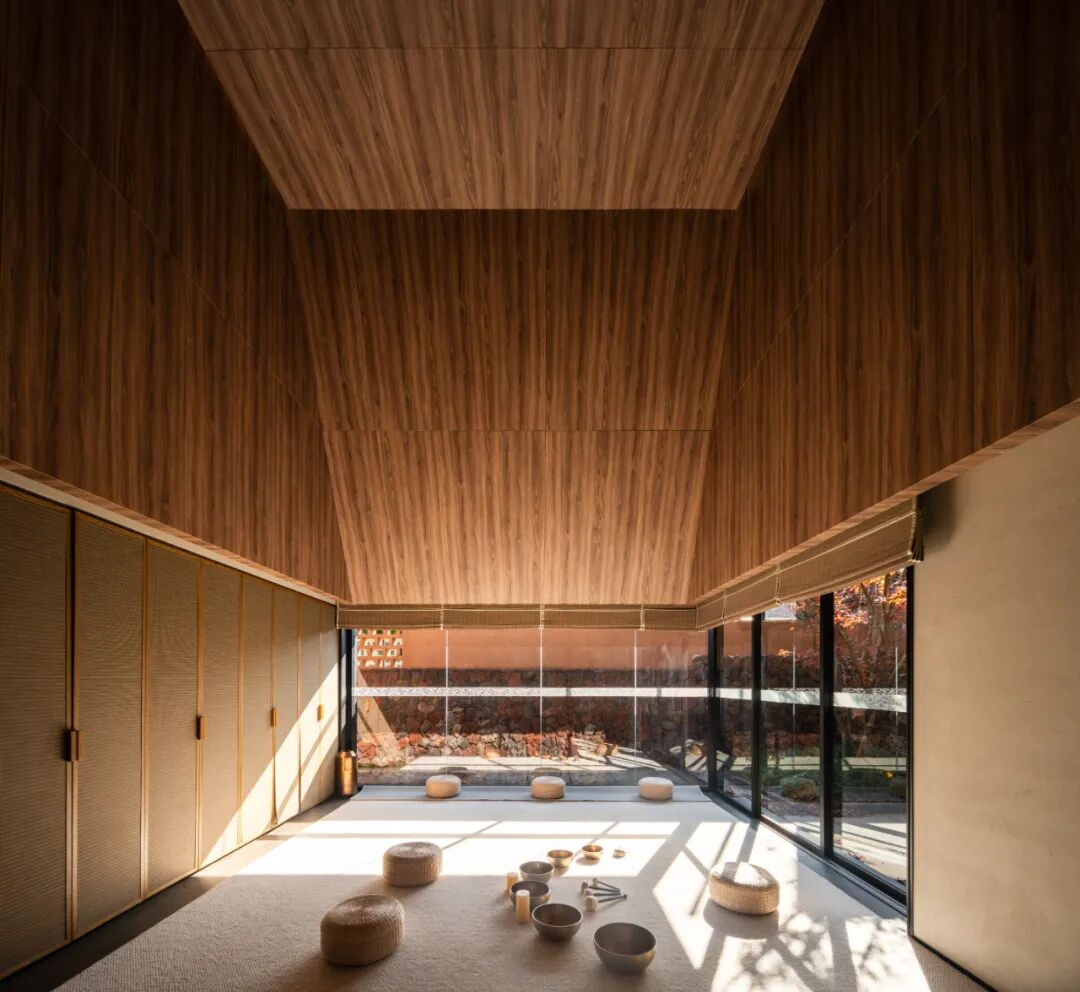
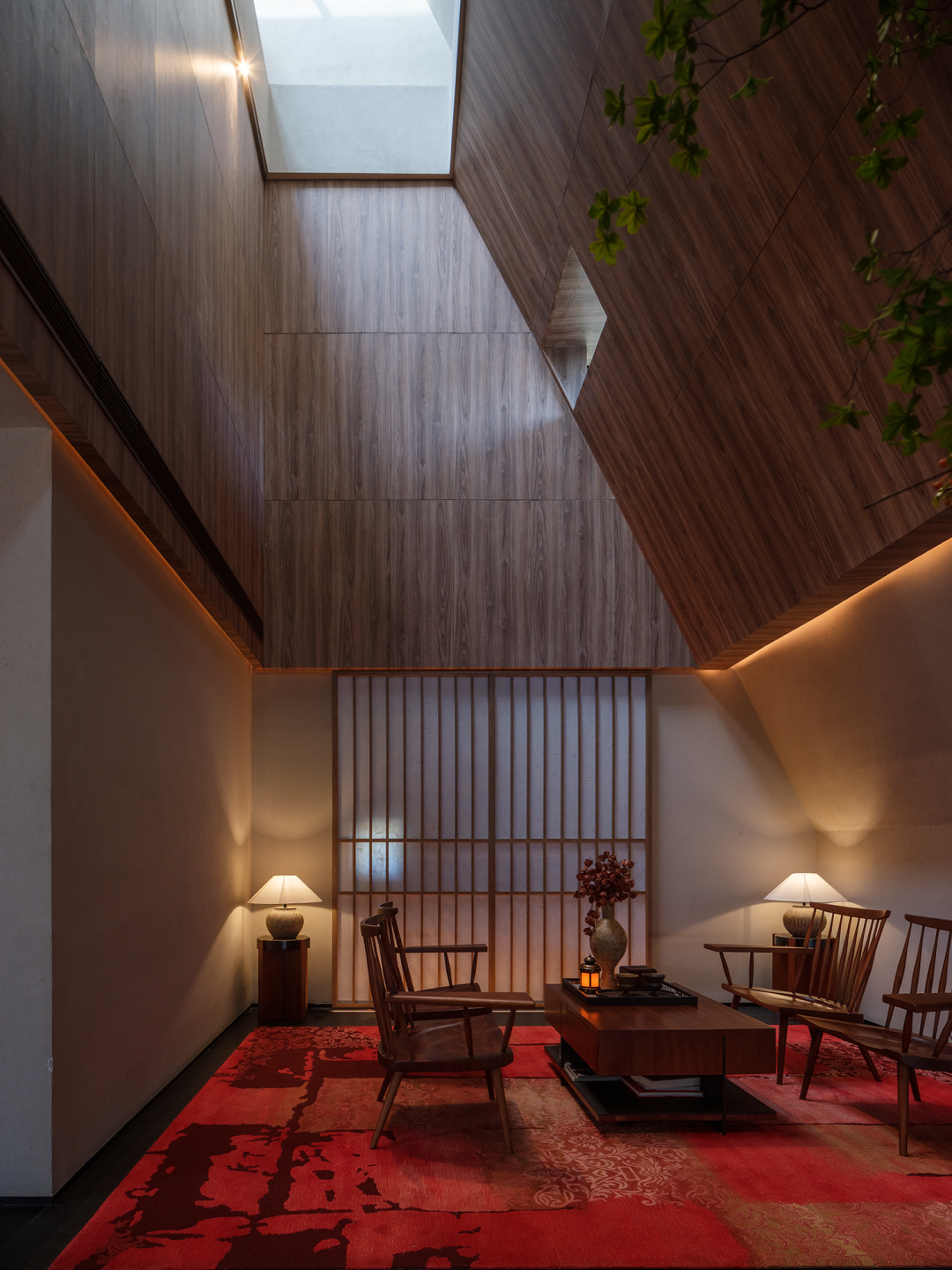
Deeply recessed within thick walls, these openings read as carved voids rather than conventional windows. As daylight slowly shifts across the interiors throughout the day, fragments of the surrounding valley landscape are selectively framed, maintaining an ongoing dialogue between interior space and nature.
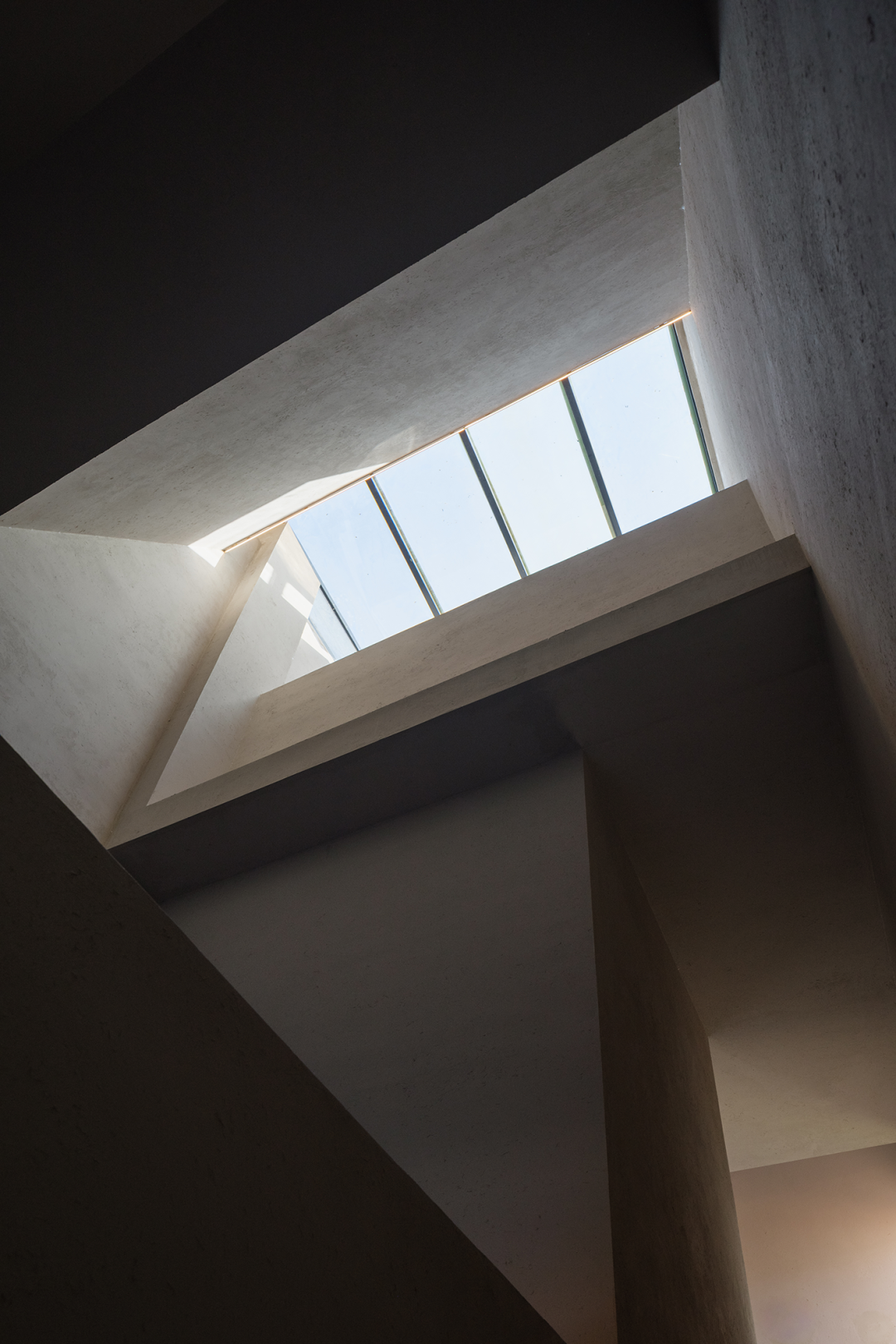
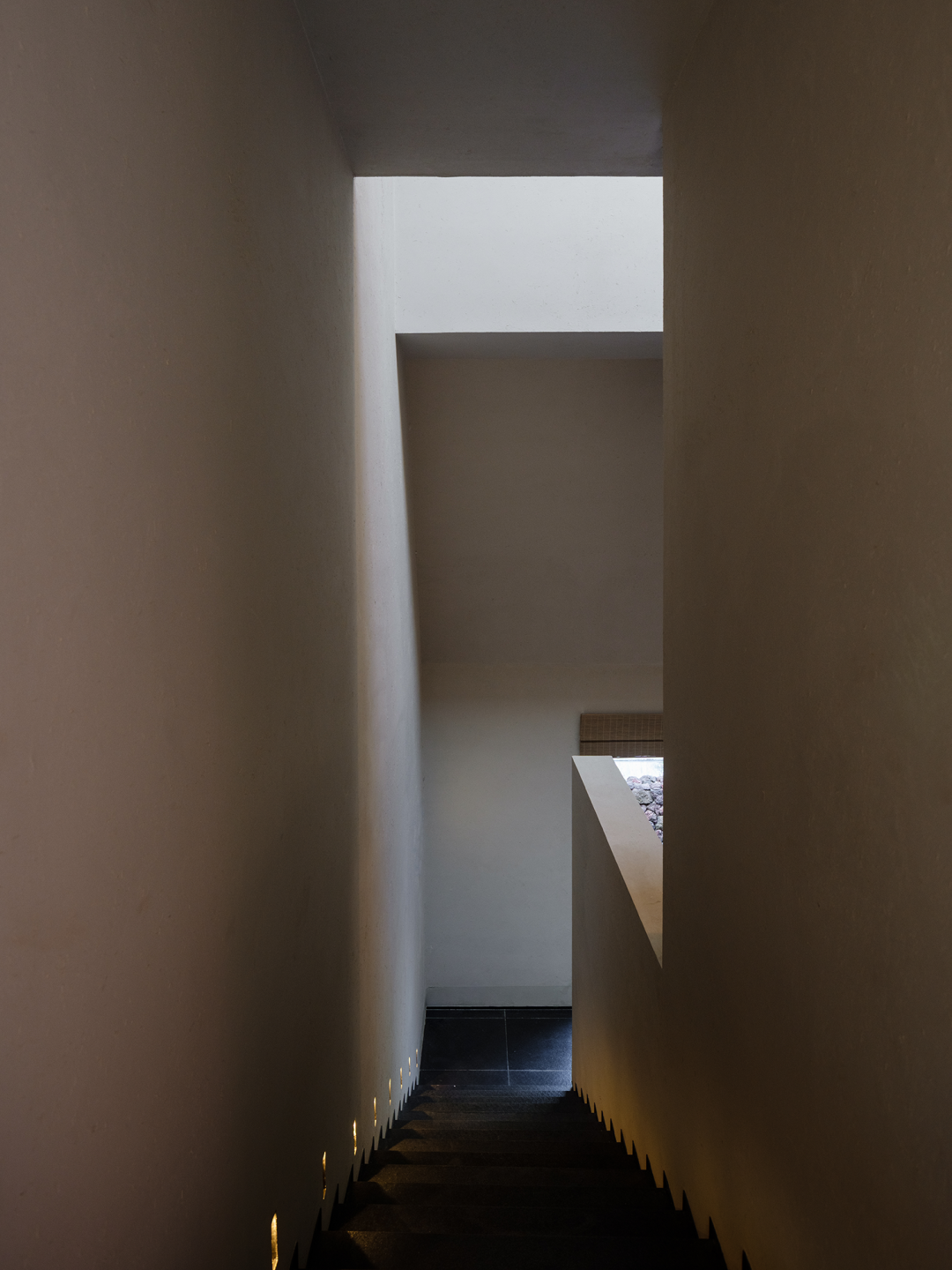
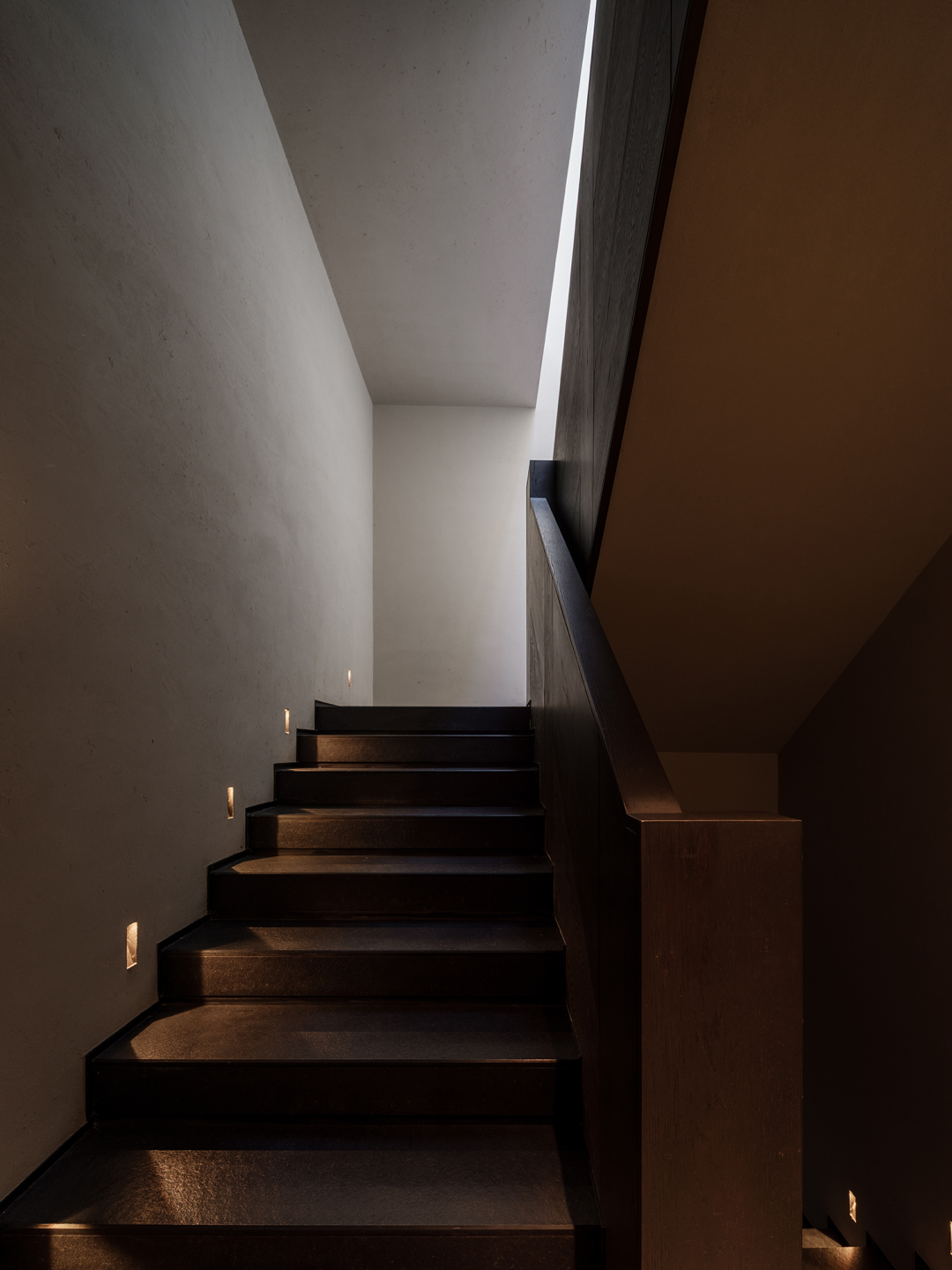

Design for the project began in 2020. After several years of development and construction, the project underwent a programmatic shift in 2023. Originally conceived as artist studios, it gradually evolved toward a wellness-oriented operational model and was ultimately transformed into the publicly accessible Muxin Valley Spa Center, which officially opened in 2024.
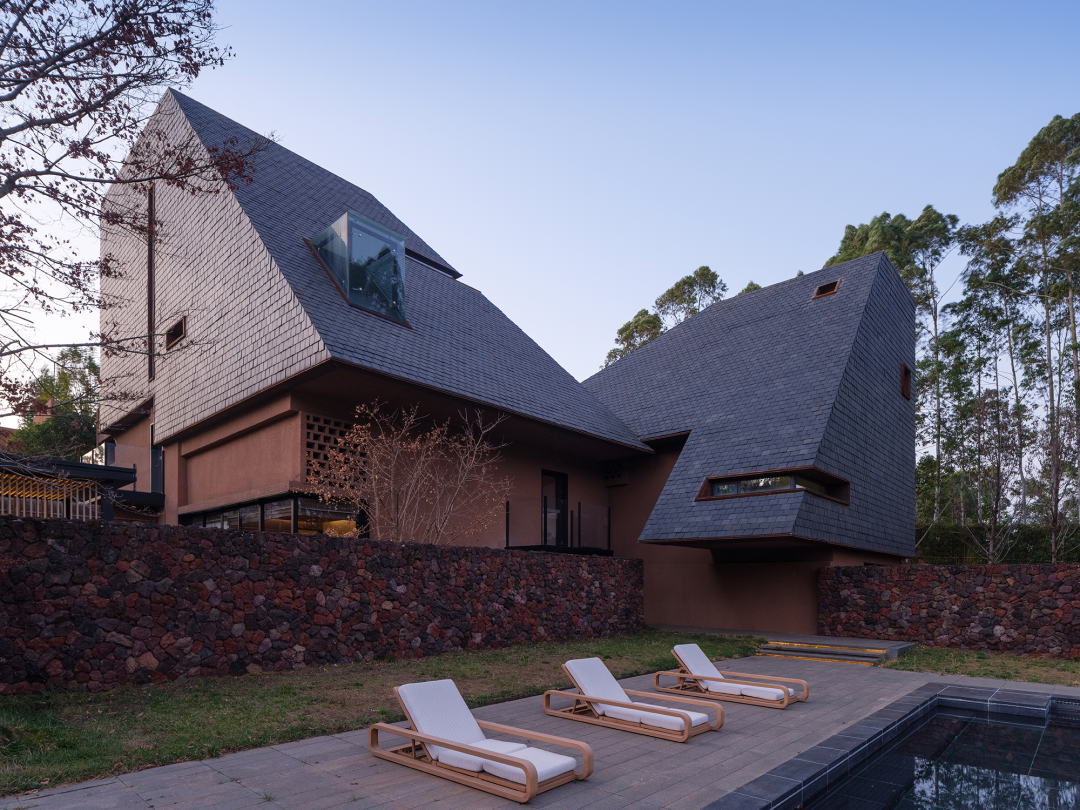
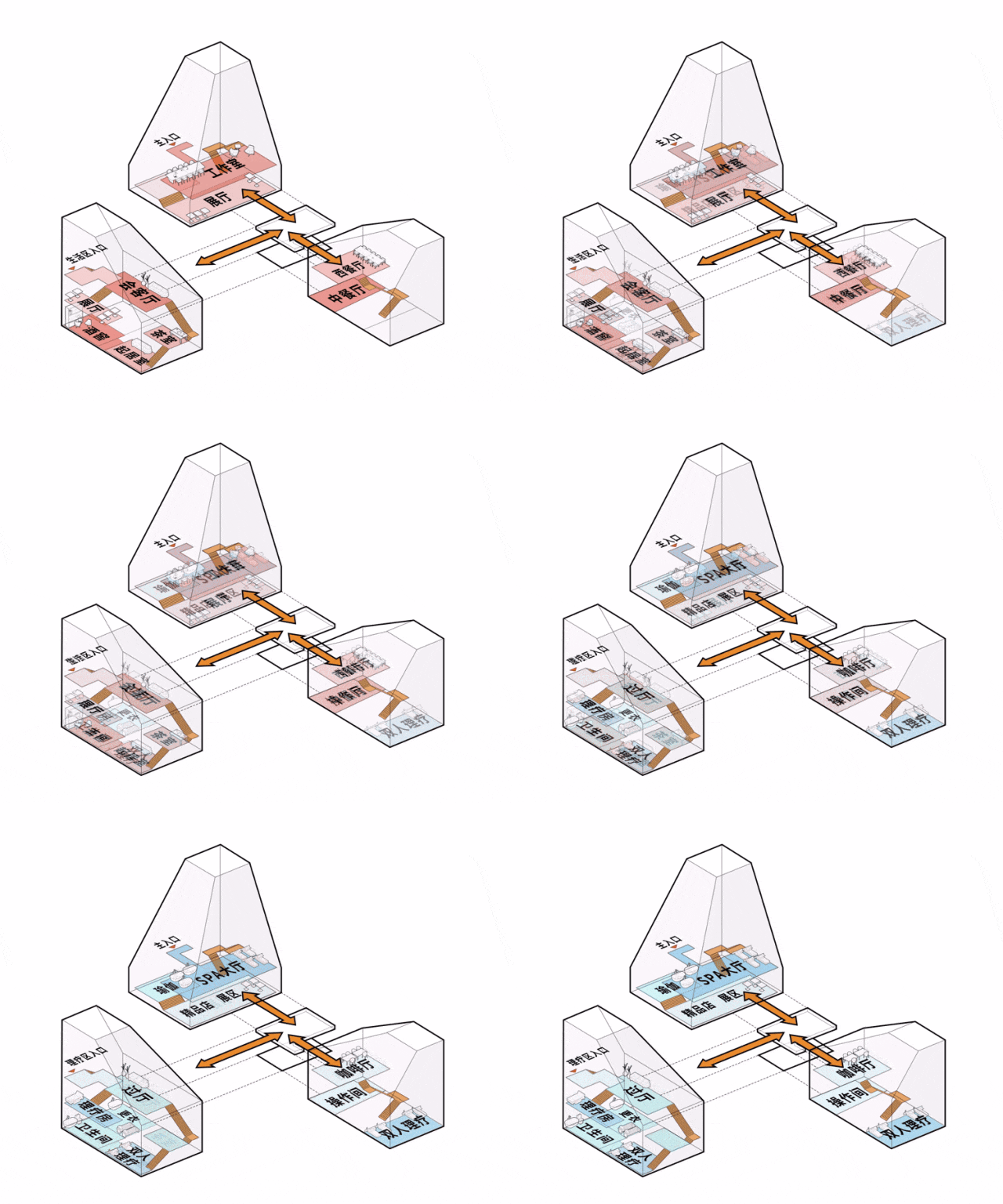
The multi-year process of design and construction also reflects a condition increasingly common in contemporary practice: programmatic requirements are often not fully defined at the outset and continue to evolve in response to operational needs, market conditions, and changing patterns of use. Within this context, architecture is no longer expected to respond to a single fixed function, but instead to accommodate broader and longer-term possibilities of occupation.
The project addresses this uncertainty through a spatial framework centered around courtyards and hierarchical relationships rather than rigid zoning:
— prioritizing structure and proportion over highly customized program-specific layouts;
— establishing continuity through courtyards and corridors to soften distinctions between inside and outside, public and private;
— replacing fixed functional divisions with spatial gradations that allow different uses to be reorganized over time.
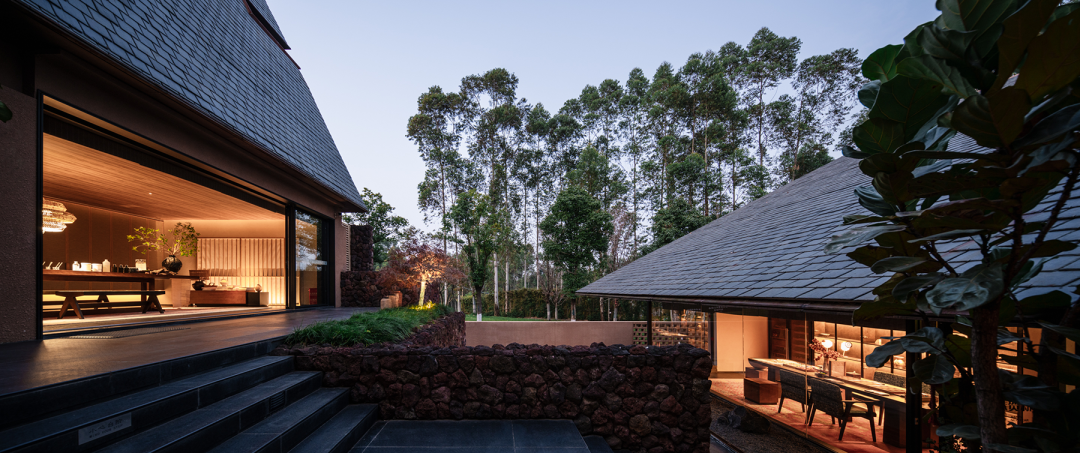
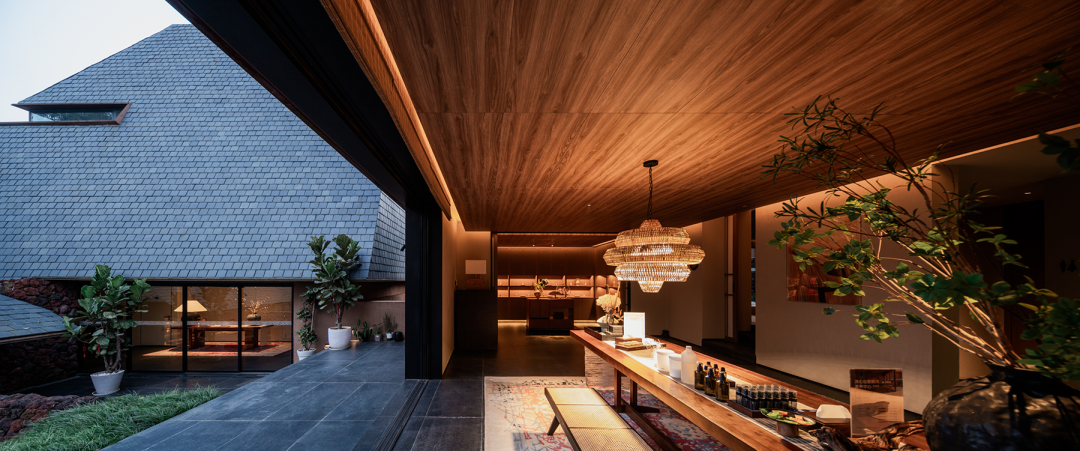
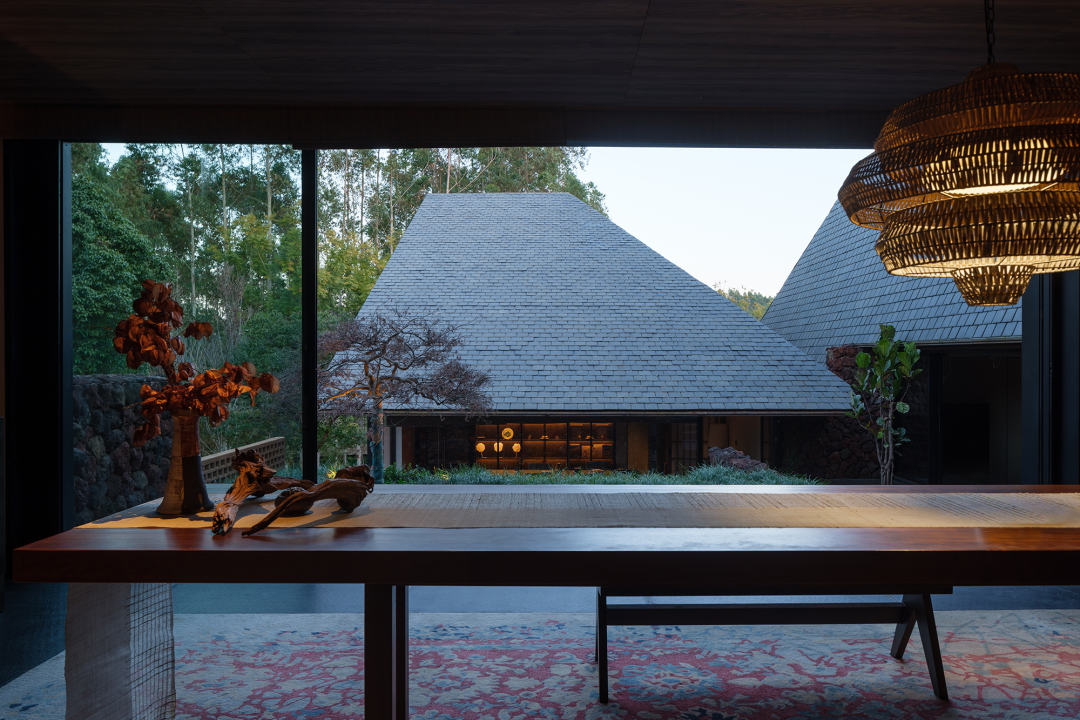
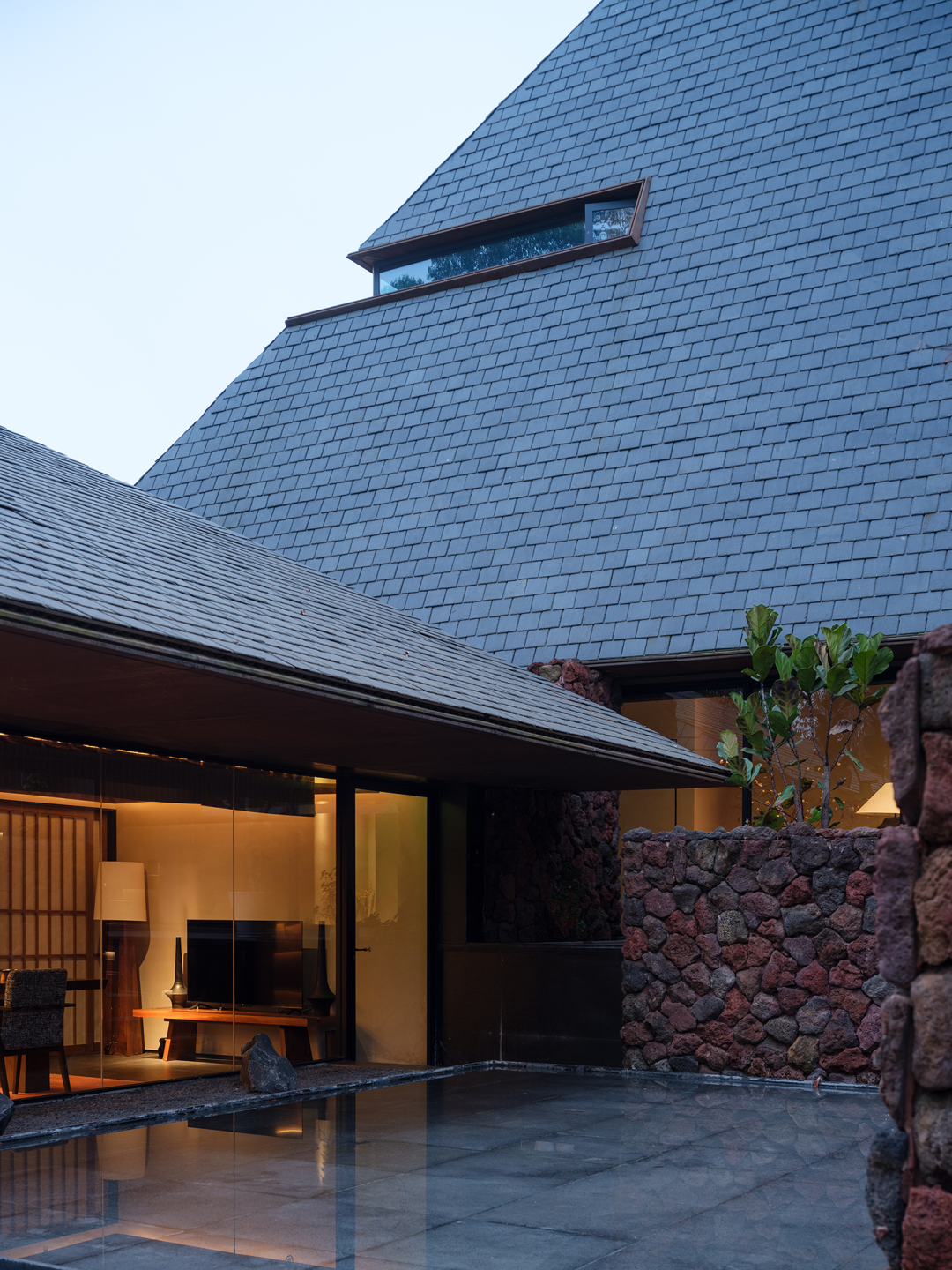
As the project shifted from studio to wellness retreat, and from private occupation toward semi-public use, the architecture required no fundamental transformation. The new functions were absorbed within the existing spatial framework. In this sense, the project is understood less as a finished object than as an open system capable of ongoing reinterpretation.
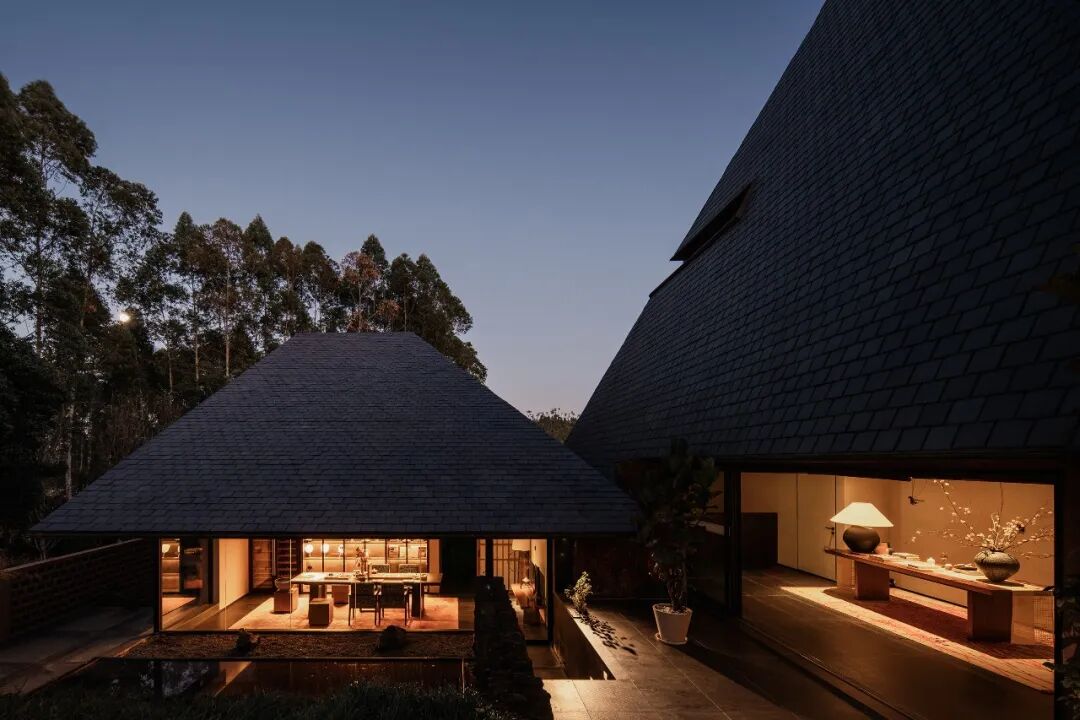
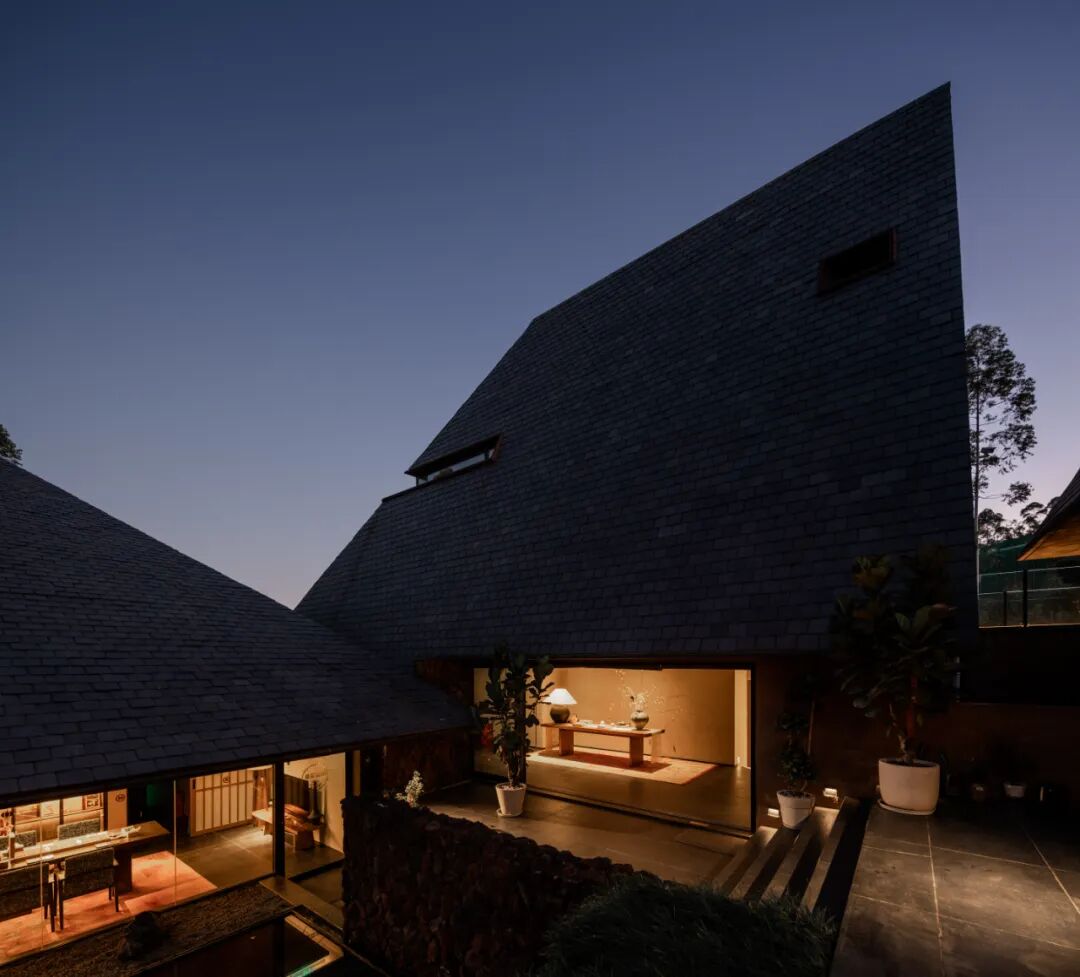
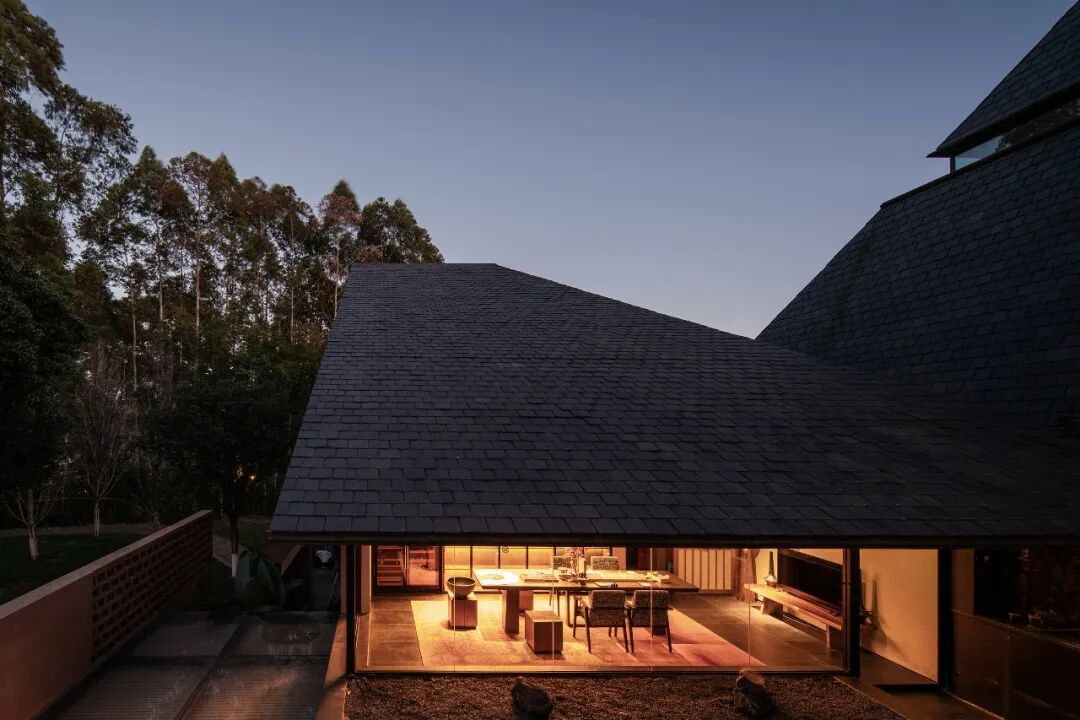
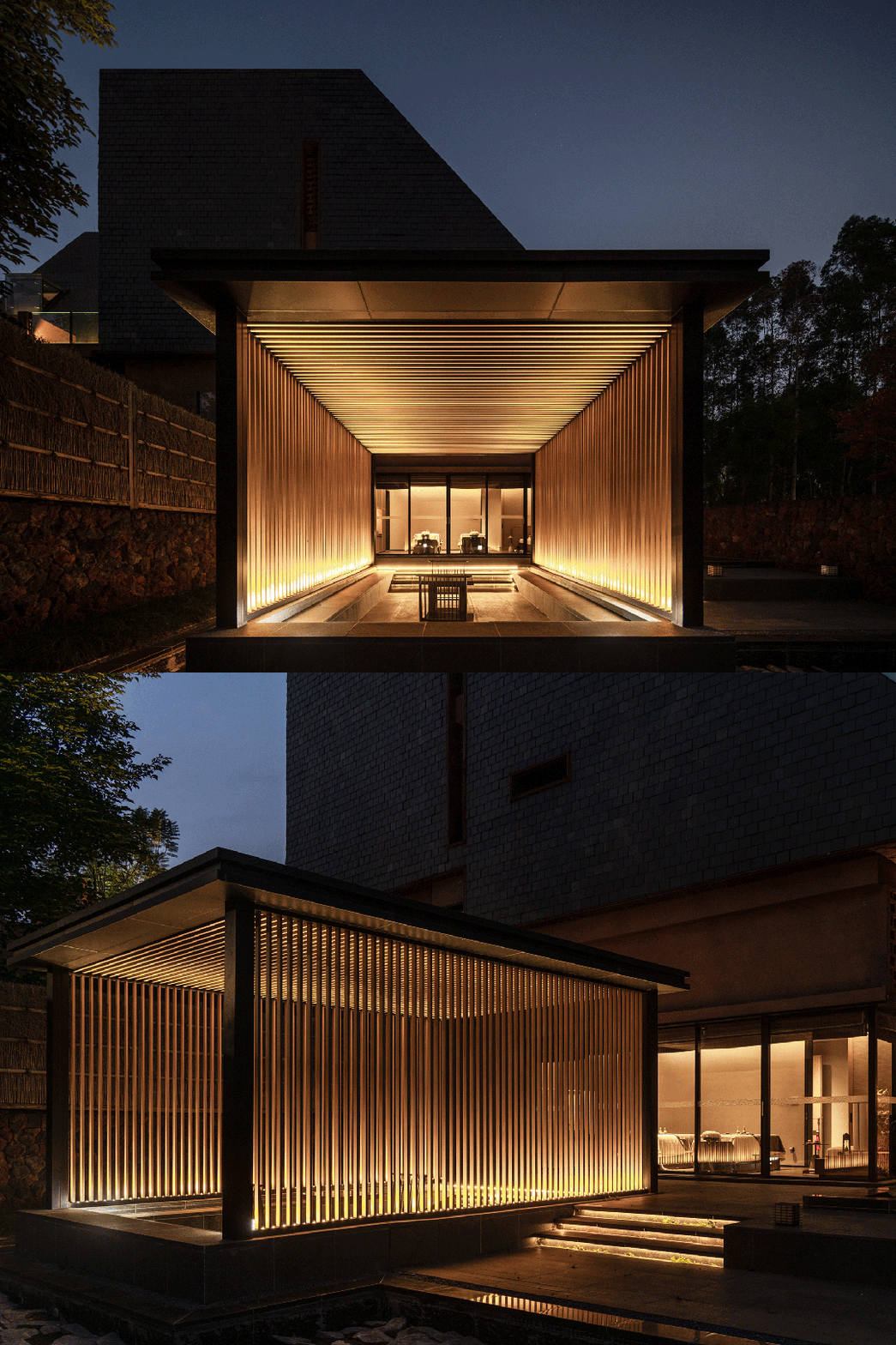
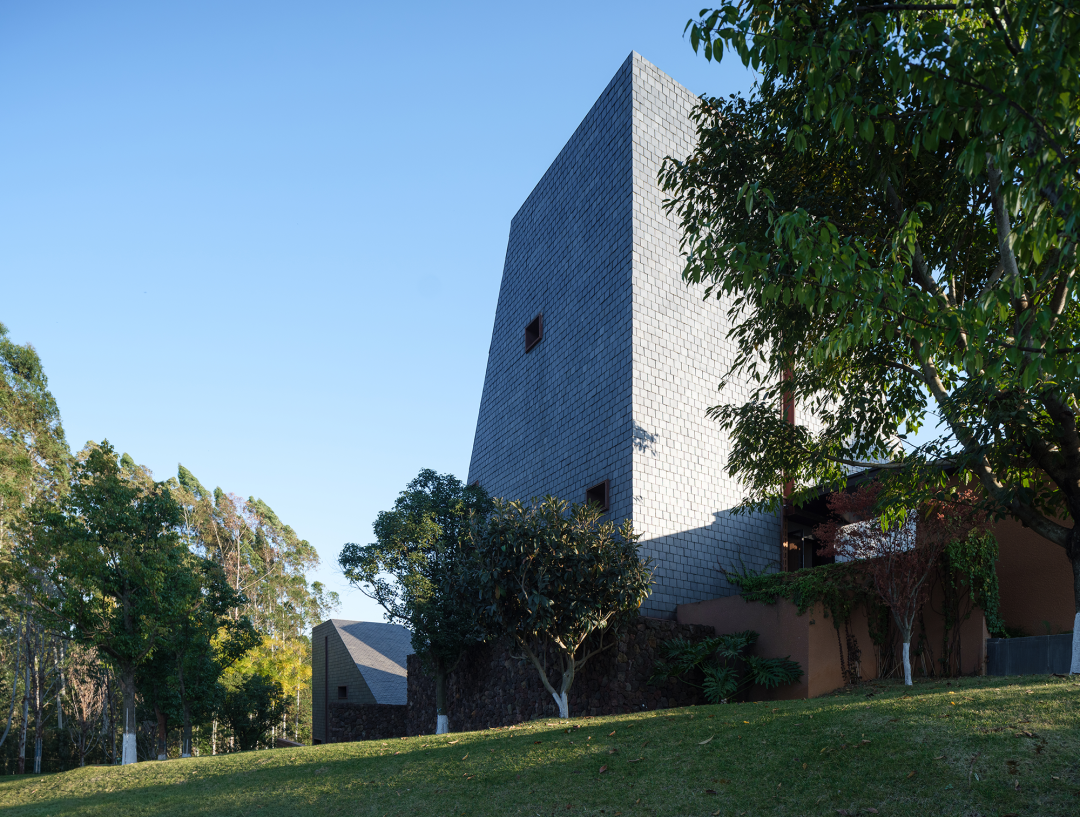
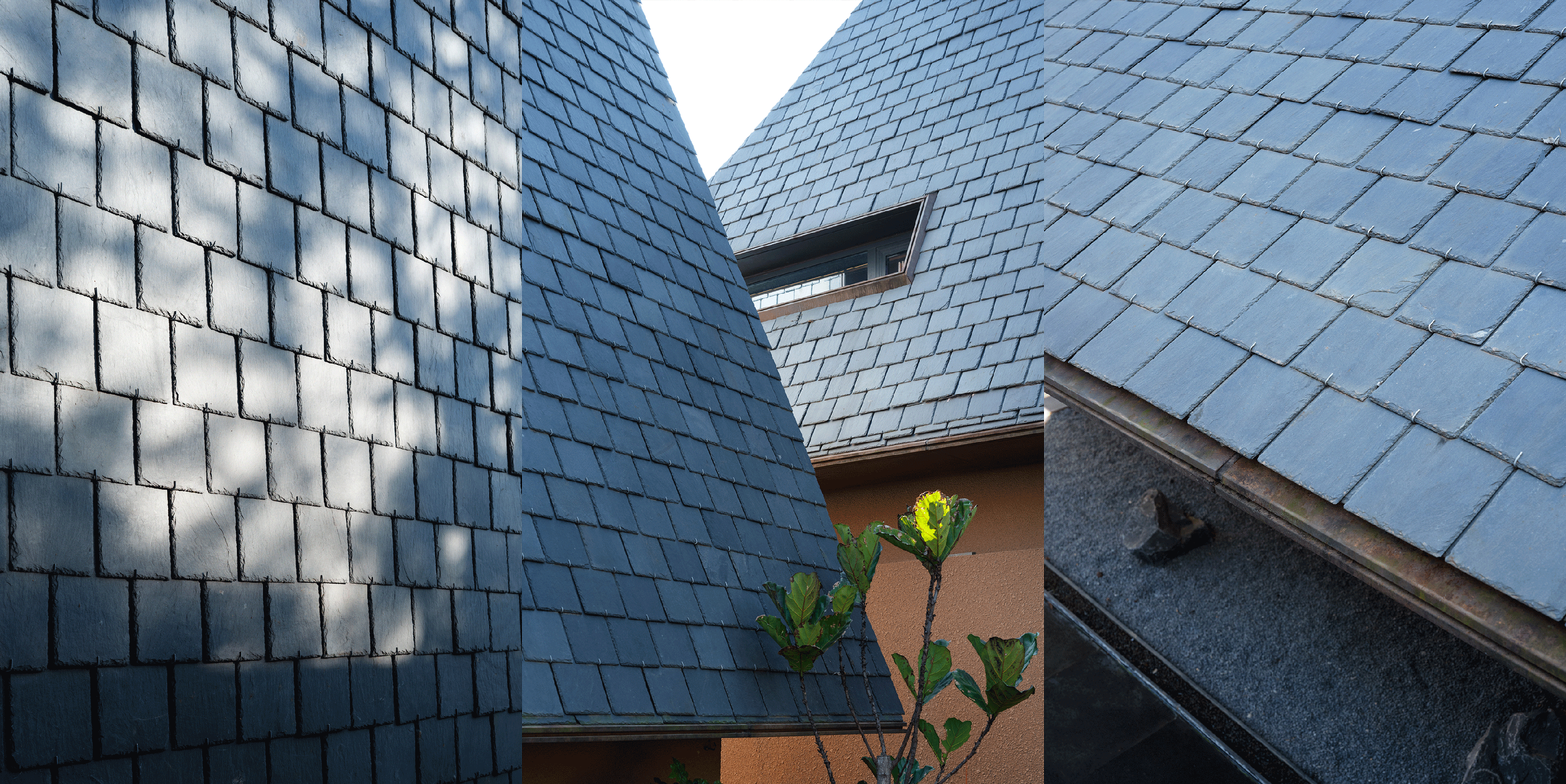
Material selection went through multiple rounds of discussion and prototyping. The design initially considered a dark fire-retardant thatched roof system as a contemporary reinterpretation of traditional construction methods. However, durability and long-term maintenance requirements ultimately led to the adoption of dark grey slate tiles. Subtle variations in color and texture among individual slate pieces create a layered roof surface that shifts under changing light conditions, giving the architecture a natural sense of depth and weathering.
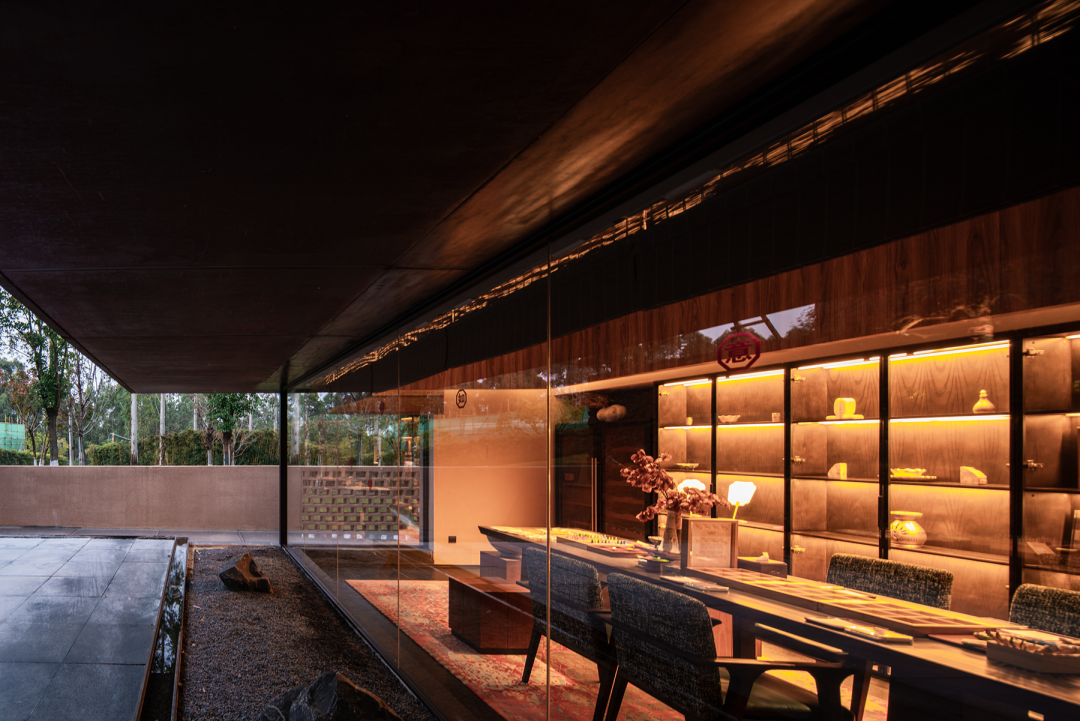
The exterior walls adopt a red-earth tone that visually extends the surrounding landscape. Retaining walls in selected areas are constructed from locally sourced red volcanic stone from Yunnan, while black metal detailing frames doors and windows. The juxtaposition of rough textures and precise elements establishes a subtle balance between tectonic solidity and crafted refinement.
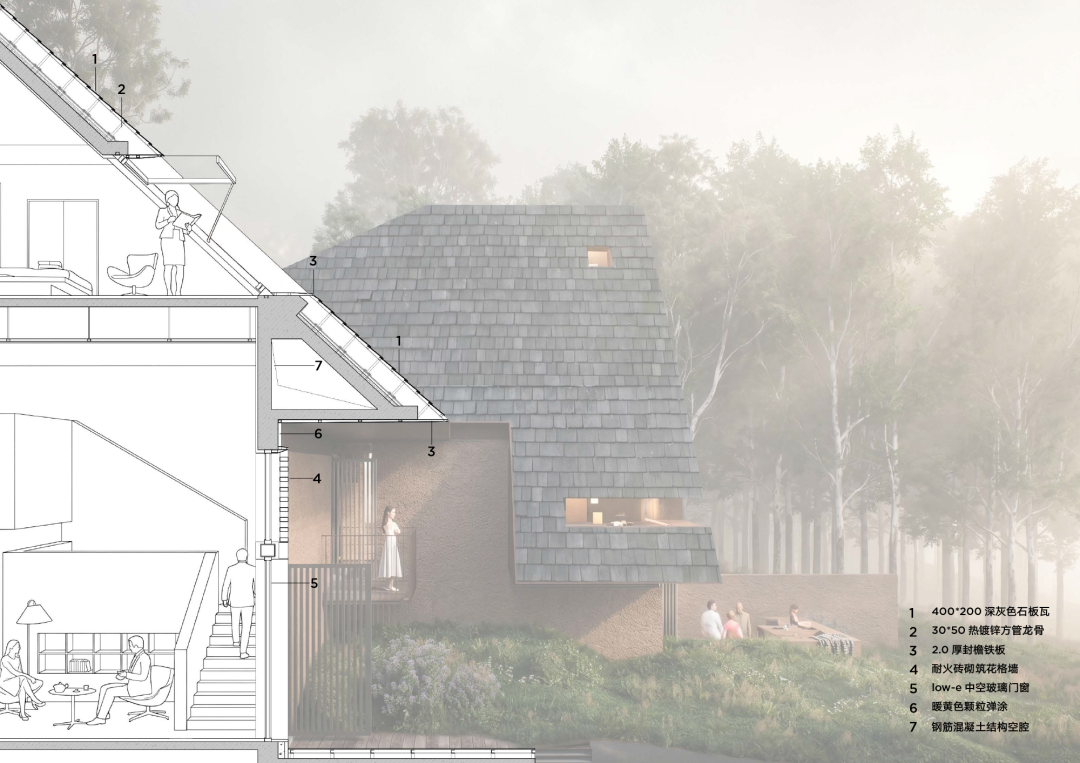
△ Wall section detail
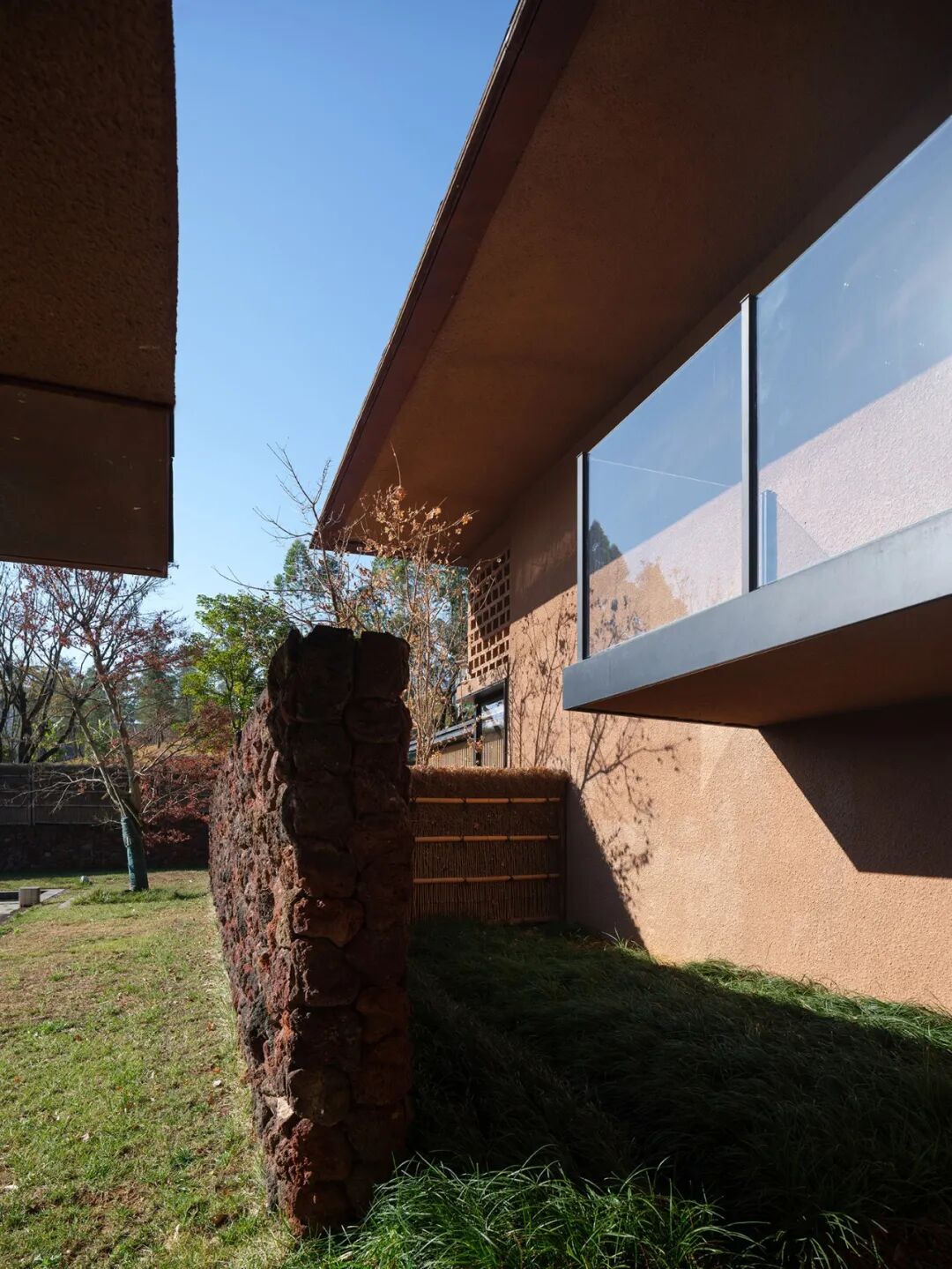
Across the Yunnan–Guizhou Plateau, expansive red earth landscapes and quiet valleys carry a slow and enduring sense of time. Within such a setting, architecture no longer seeks visual prominence; instead, it finds significance through coexistence with the landscape.
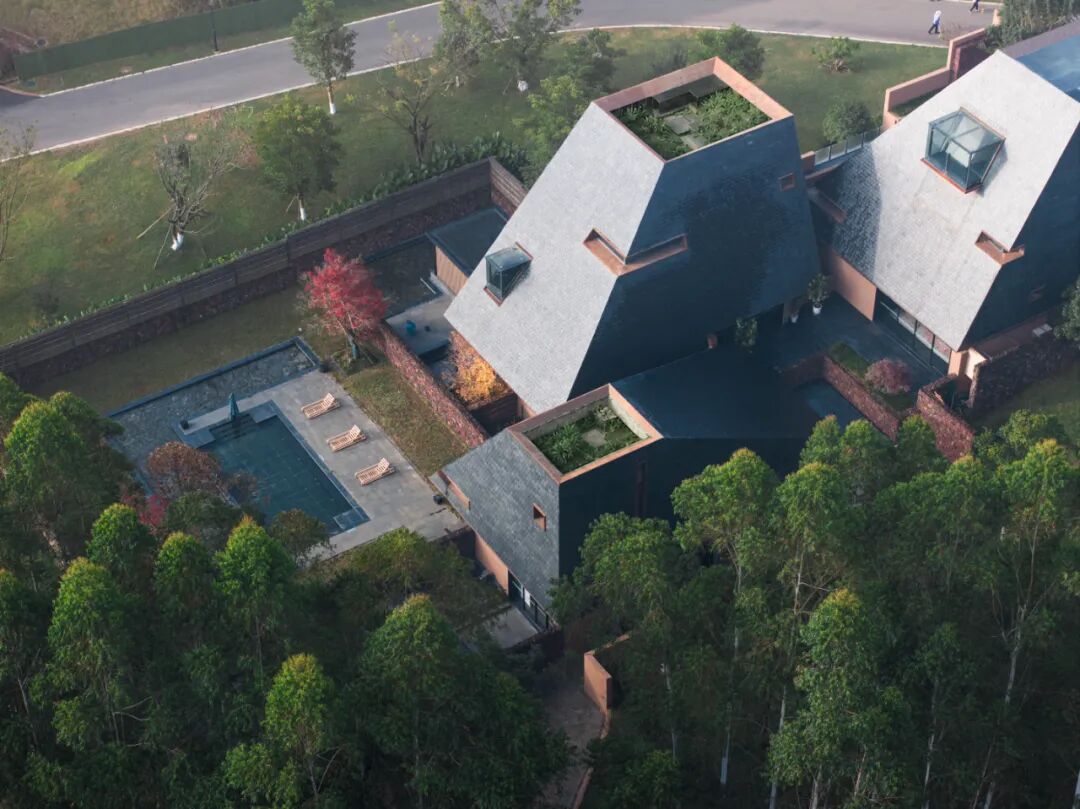
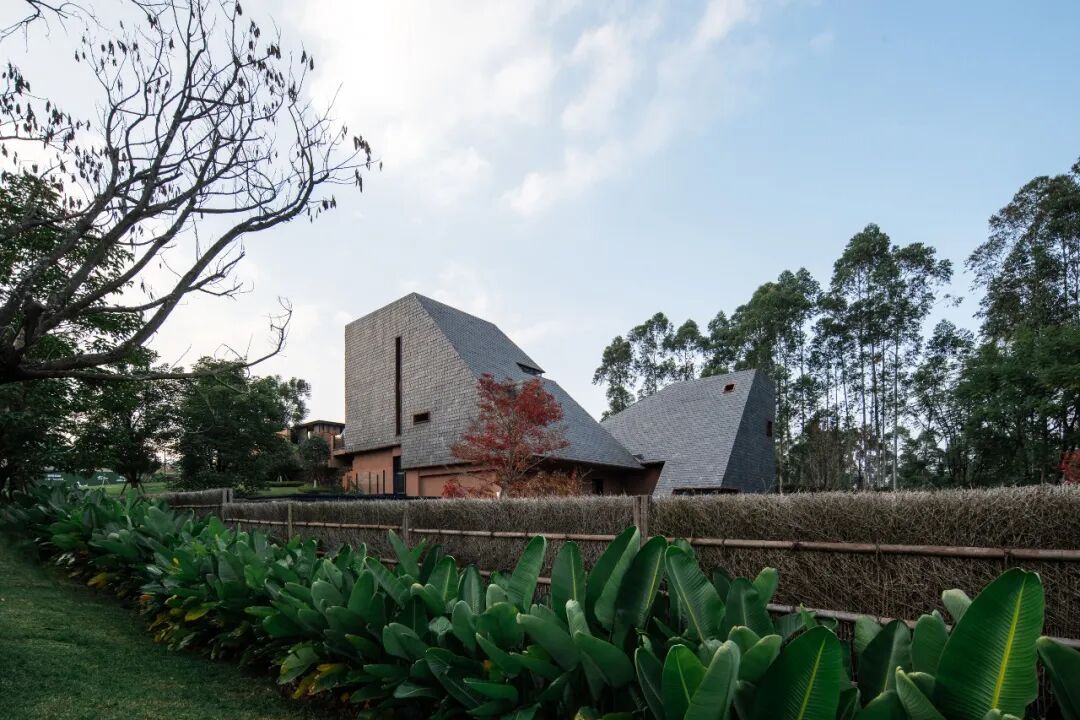
Following the completion of the Dongfengyun Art Center, line+ returned to this red-earth landscape once again, engaging with the existing terrain through a strategy of minimal intervention. Rather than asserting itself as a distinct object within the valley, the project adopts a restrained and understated presence, gradually receding into the surrounding forest and topography. From its initial conception in 2020 to its eventual completion and operation, the project evolved alongside ongoing changes taking place on the site itself. Over time, these transformations became embedded within both the architecture and the landscape, allowing the project to remain part of a continuing process rather than a fixed conclusion.
— 技术图纸 —