


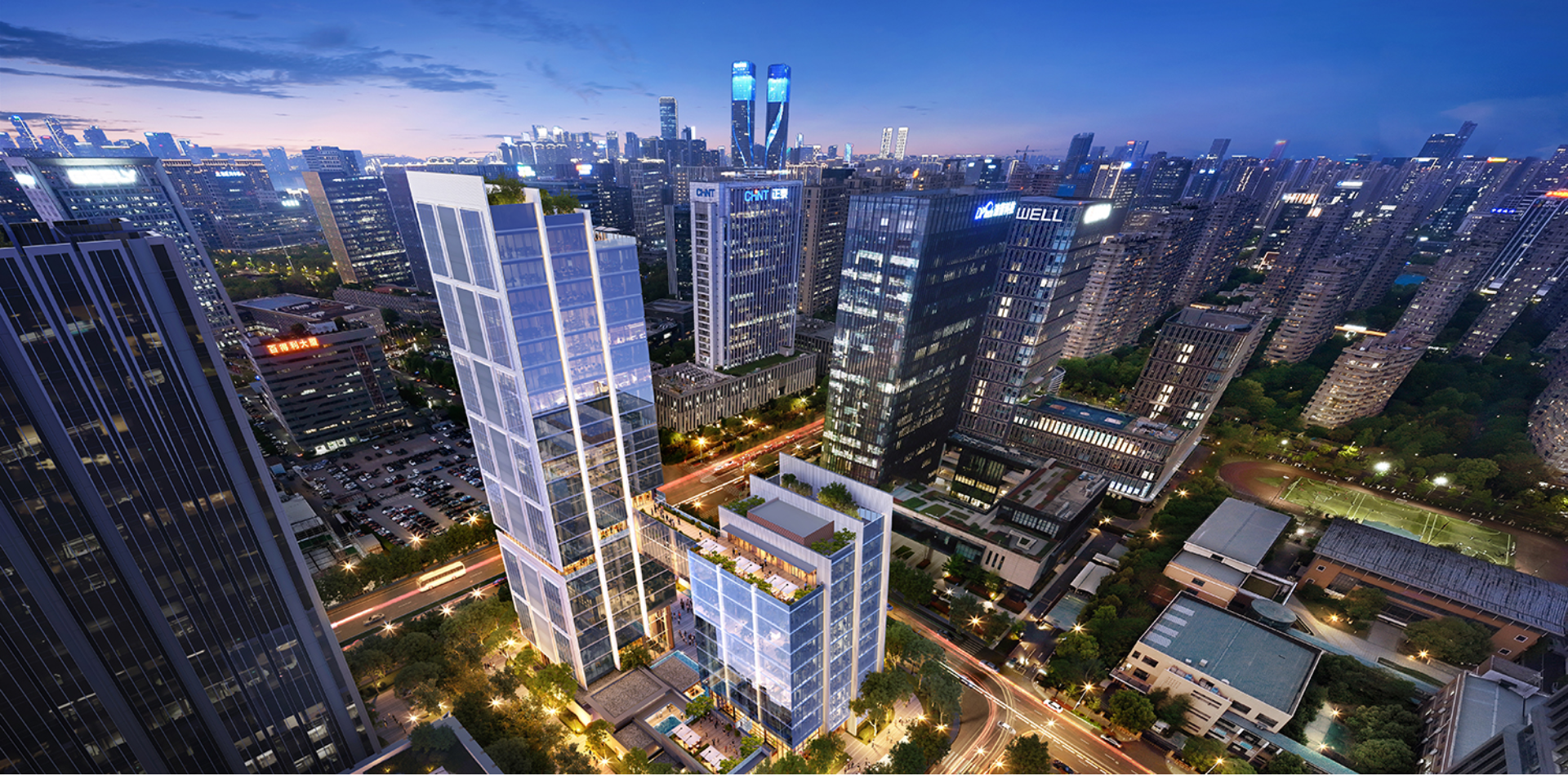

SmartLink Towers
智联双塔
“Starting from a rational architectural logic, we translate the intangible core of an enterprise into spatial order, establishing a restrained yet clear relationship between self-expression and urban identity.”
——Fanhao Meng
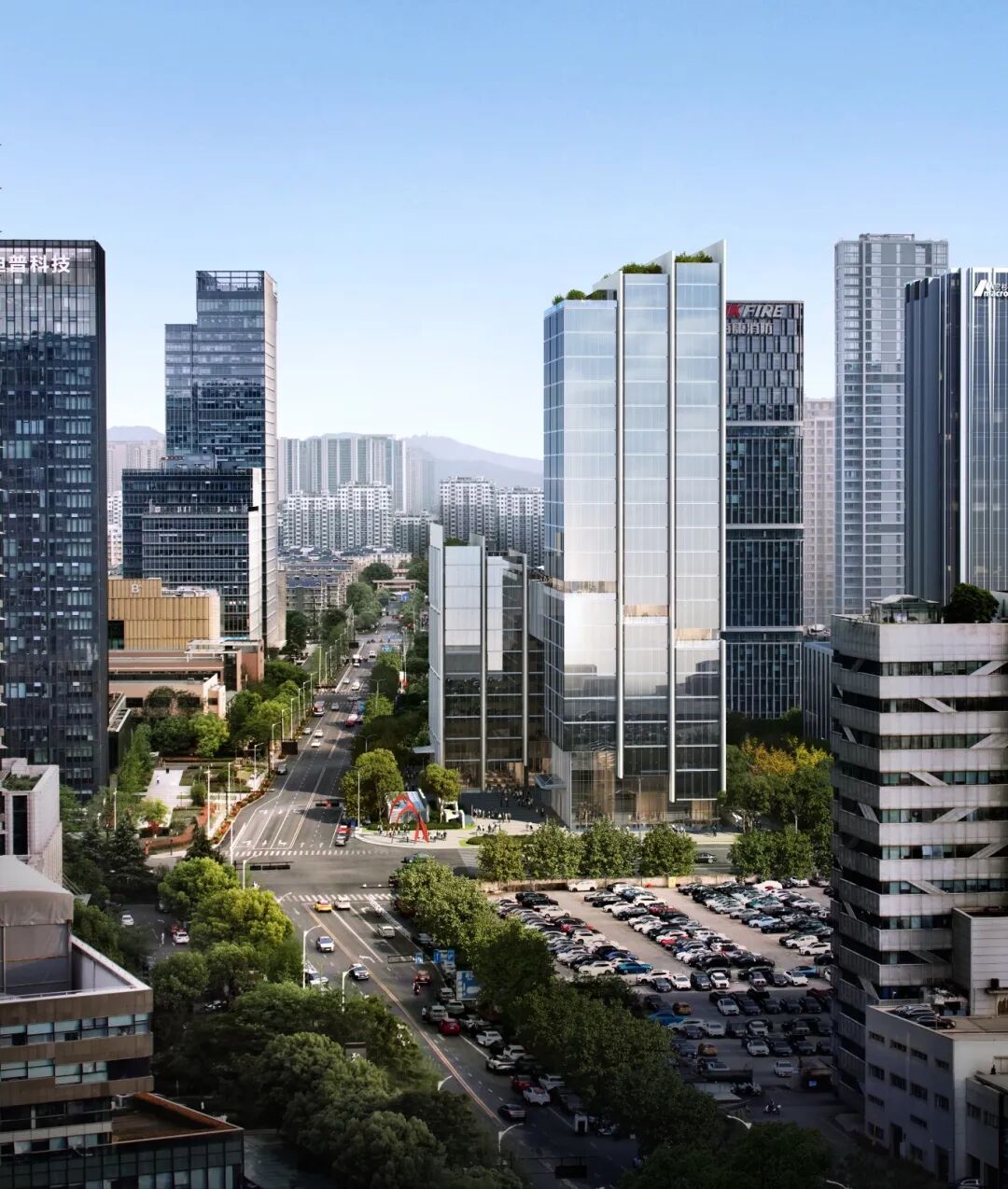
Project Name: MEDIINFO Headquarters
Location: Hangzhou, Zhejiang, China
Design Firm: line+ studio
Principal Architect / Chief Designer: Fanhao Meng
Project Architect: Xinguang Li
Design Team: Jun Hao, Dong Yuan, Wenxuan Zhang, Yiming Pan, Min Zhu, Chunle Miao, Hao Xu, Yubin Wang, Chenyang Li (Architecture);Yuting Jin, Xin Ye, Jingwei Yang, Yeqin Chen, Yingyue Zhu, Jianguo Shi, Wanglei Guo, Jun Yu, Bin Zhang, Tongyu Ning, Kai Zhu (Interior)
Building Area: 46,267 ㎡
Design Period: 2022.3–2023.10
Construction Period: 2023.12–Present
Client: MEDIINFO I.T. CO., LTD.
Local Design Institute: Suzhou Hongdu Architectural Design Co., Ltd.
Facade Consultant: Zhejiang Zhongnan Curtain Wall Co.,Ltd.
Structure: Frame–Shear Wall System
Materials: Ceramic Panels, Glass, Aluminum Panels
Led by Fanhao Meng, co-founder and principal architect of line+ studio, the team was commissioned by MEDIINFO I.T. CO., LTD., a leading enterprise in smart healthcare and the big health sector, to undertake the integrated architectural and interior design of its headquarters building. Serving as chief architect, Meng oversaw multidisciplinary coordination across architecture, interiors, landscape, facade, and lighting, managing the project from concept design through construction.The project topped out in August 2025 and is currently in the facade construction phase, with completion scheduled for 2027.
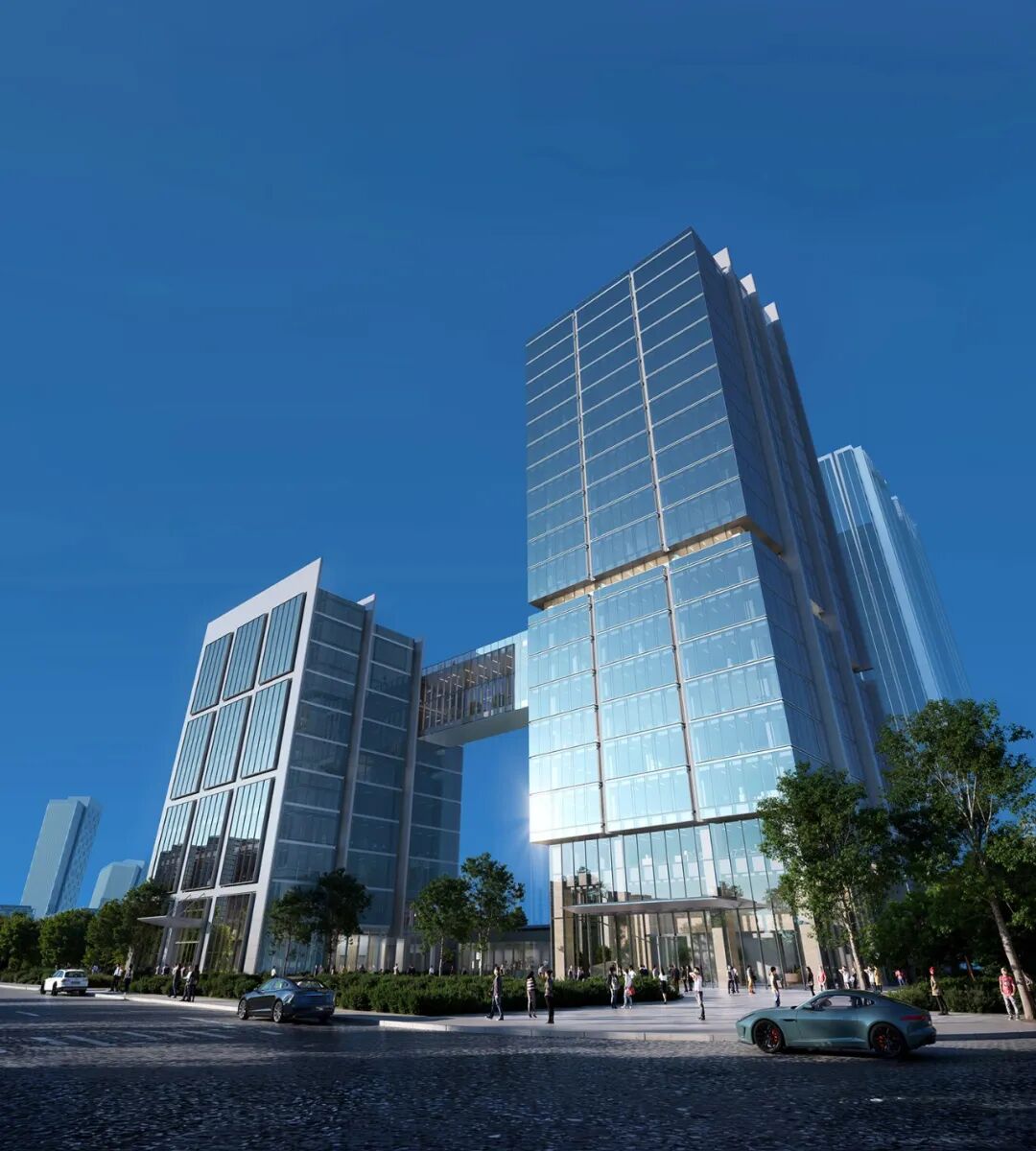
The headquarters is not merely a collection of office spaces, but a design practice that transforms the company’s intangible core into a tangible spatial order. line+ studio aims to construct an architectural identity aligned with the enterprise spirit through rational spatial logic, allowing the building to become an urban symbol embodying its core values.
MEDIINFO I.T. CO., LTD. is a leading provider of integrated solutions in smart healthcare and the big health industry in China, committed to advancing digital transformation through the deep integration of information technology and medical management. This industry background inherently demands efficiency, precision, and systematic thinking, which are internalized into the company’s core values of pragmatism, simplicity, and clarity.
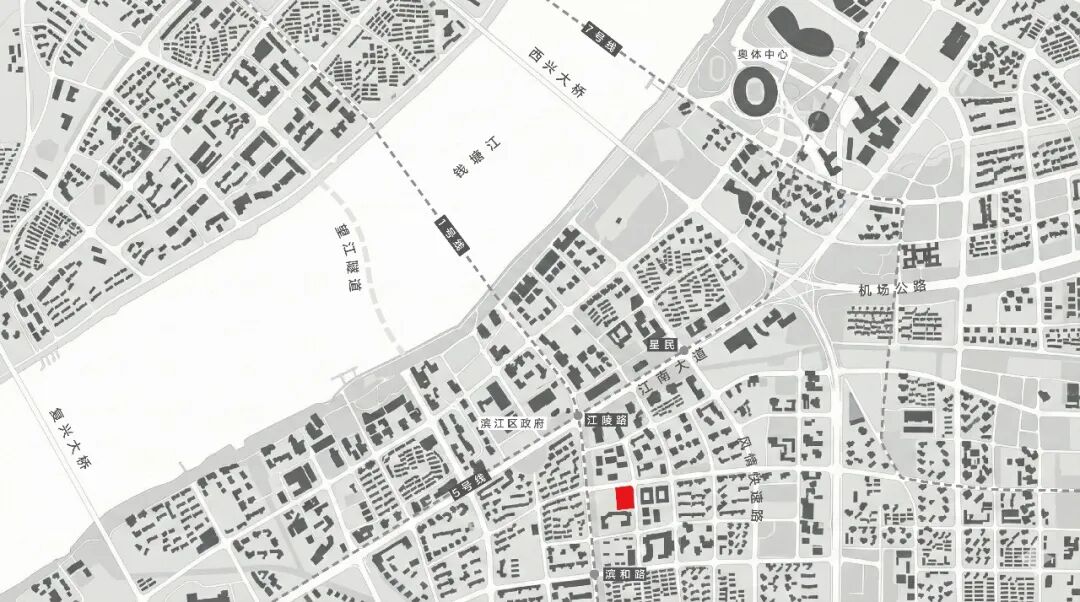
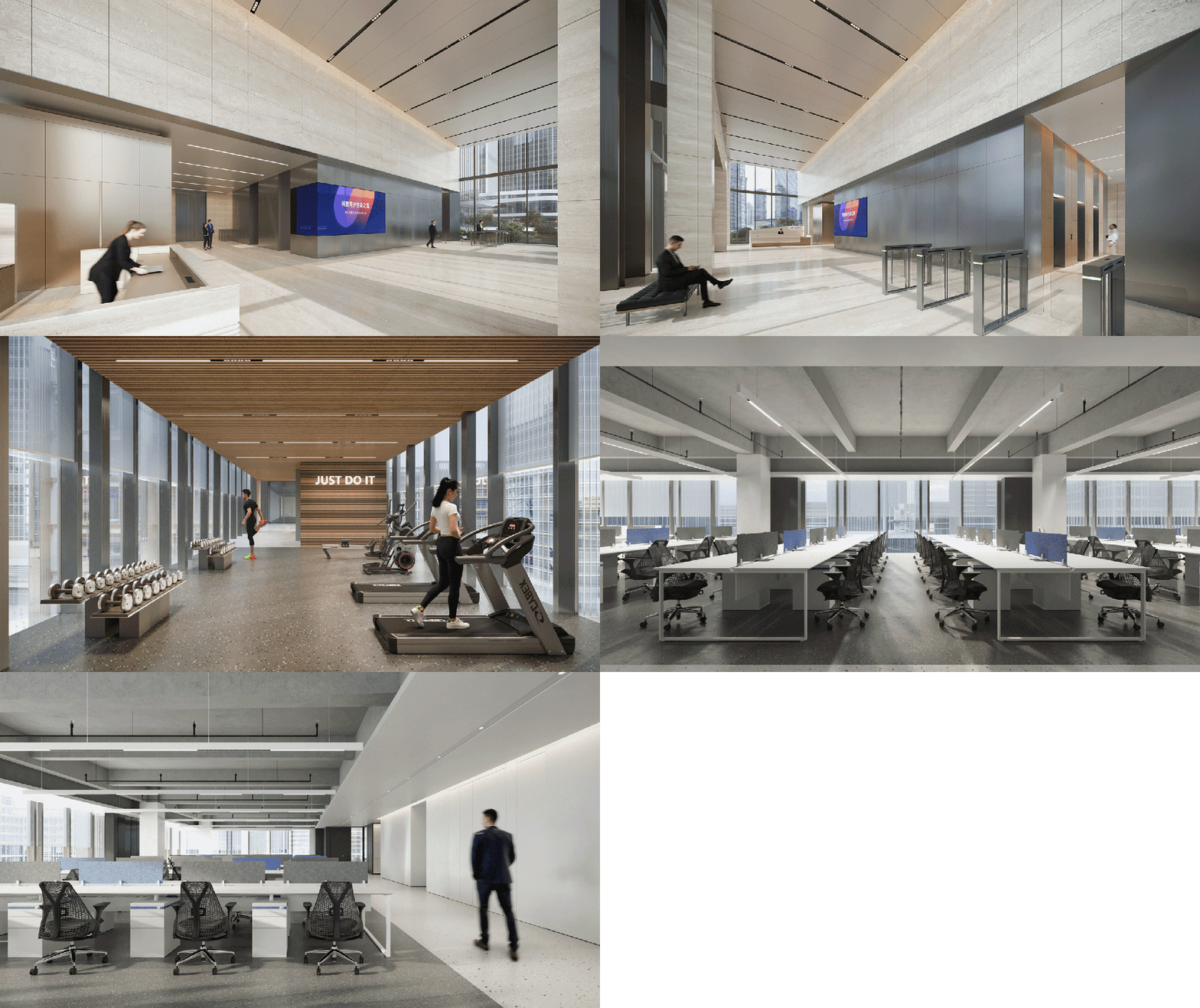
Through in-depth communication with the client, this consensus became increasingly clear. “Pragmatic, concise, efficient, and precise” were defined as key design principles, forming the foundation of the architectural character. The project is located in the core area of Binjiang District, Hangzhou, with Yue Ming Road to the north and Gonglian Road to the east, surrounded by well-developed urban amenities. The program integrates multiple functions, including office, reception, exhibition, and internal communication.
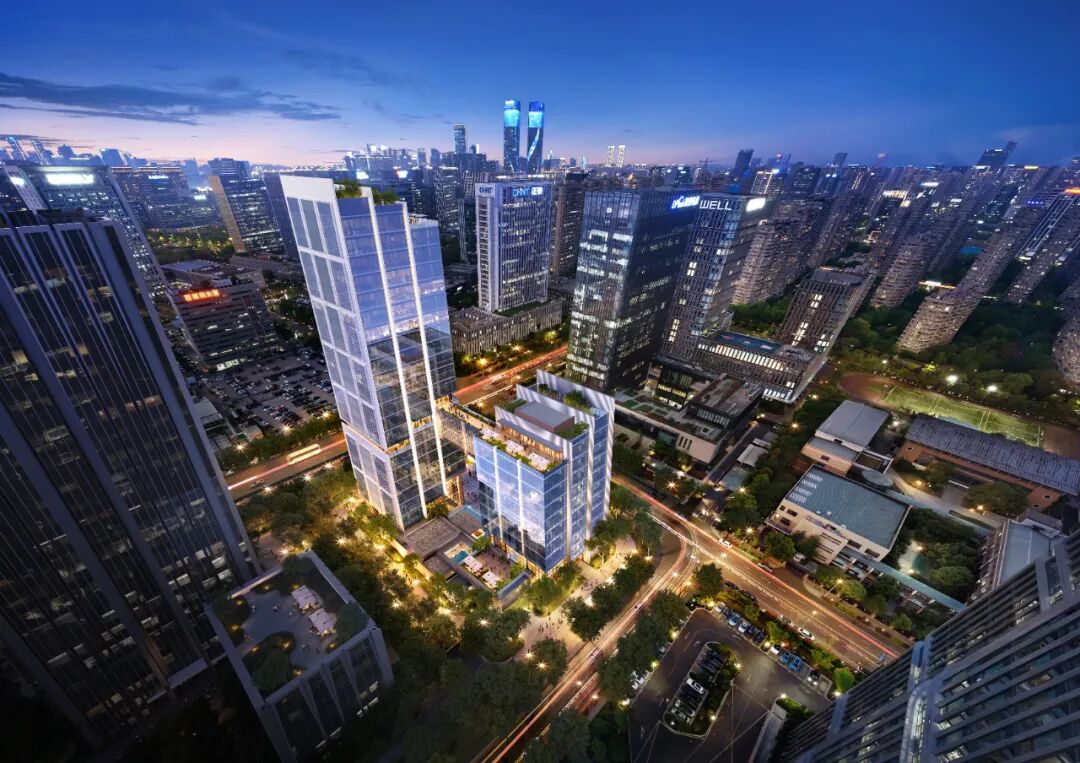
Based on this, the design goes beyond the creation of physical space, aiming to respond to the company’s intrinsic values through precise and rational architectural logic. While efficiently accommodating complex programs, the project presents a restrained and clear formal expression, allowing the building to naturally emerge as a symbolic representation of rationality, ambition, and intelligence within the urban context.
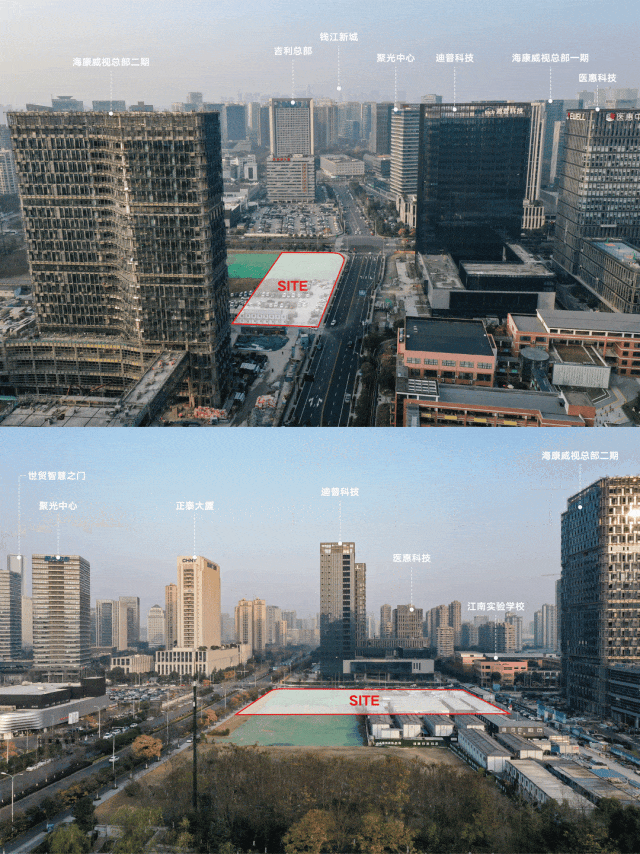
Site investigation shows that the terrain is relatively flat with favorable development conditions. The plot is trapezoidal, measuring approximately 86 meters on the north, 78 meters on the south, 121 meters on the west, and 118 meters on the east, with a total site area of 9,778 square meters. The surrounding area consists primarily of high-quality office buildings. Adjacent to the west is a headquarters under construction, while the south and east are occupied by completed corporate campuses. The northern edge along Yue Ming Road serves as the primary urban frontage.
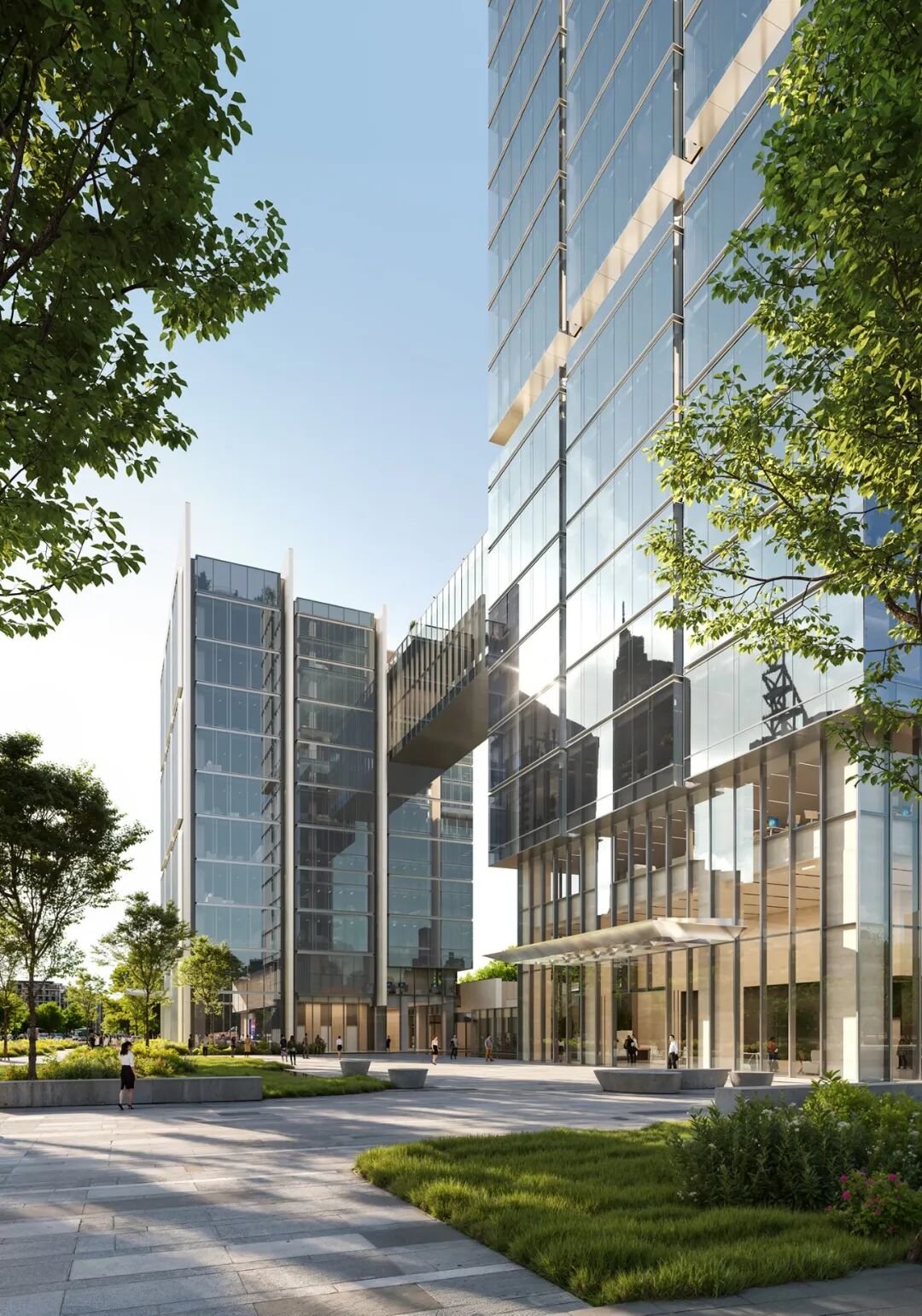
Through extensive scheme comparisons and close collaboration with the client, a clear and direct spatial strategy was established:
First, corporate functions and leasable office spaces are separated into two volumes, forming a twin-tower configuration;
Second, the 100-meter tower is placed along the northern edge to maximize urban visibility;
Third, the offset arrangement creates an public plaza at the northeast corner;
Fourth, the towers are connected at height to form an integrated whole with shared functions;
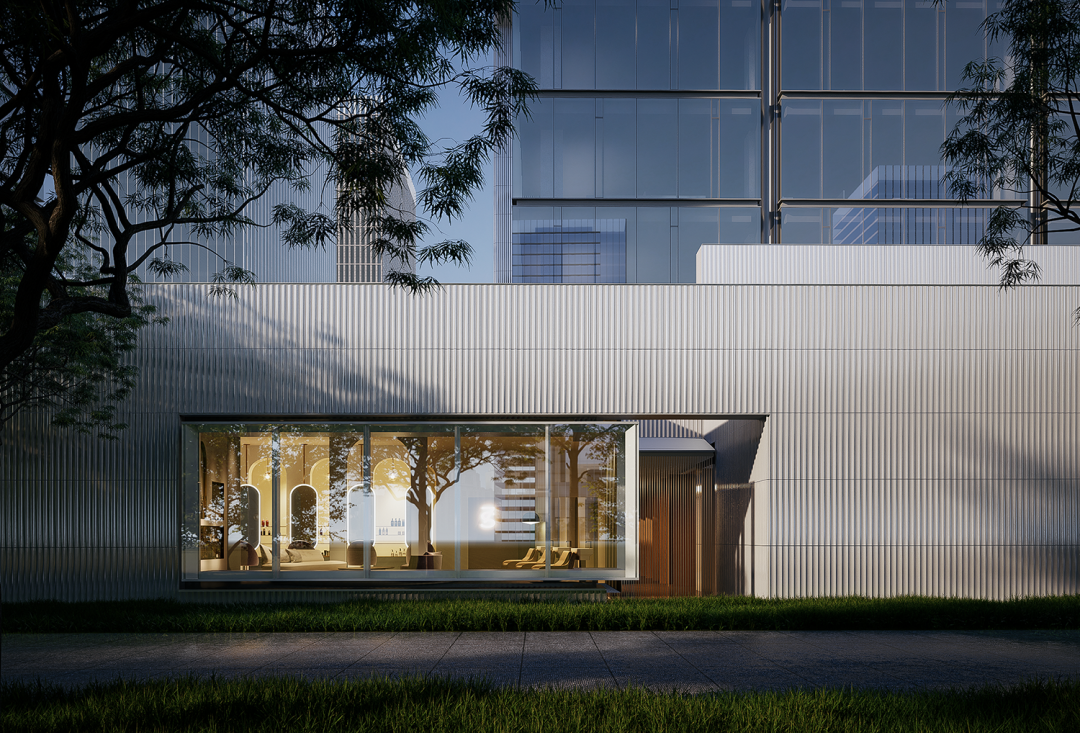
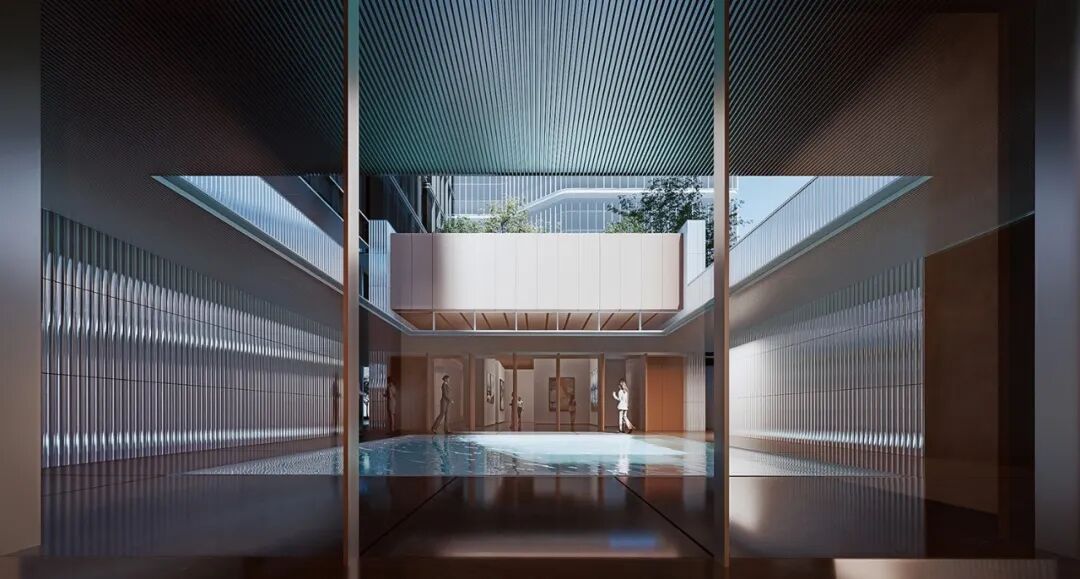
Fifth, the podium is fragmented into courtyard-like public spaces, incorporating layered areas for activity and interaction, thereby activating the site with greater openness and complexity.
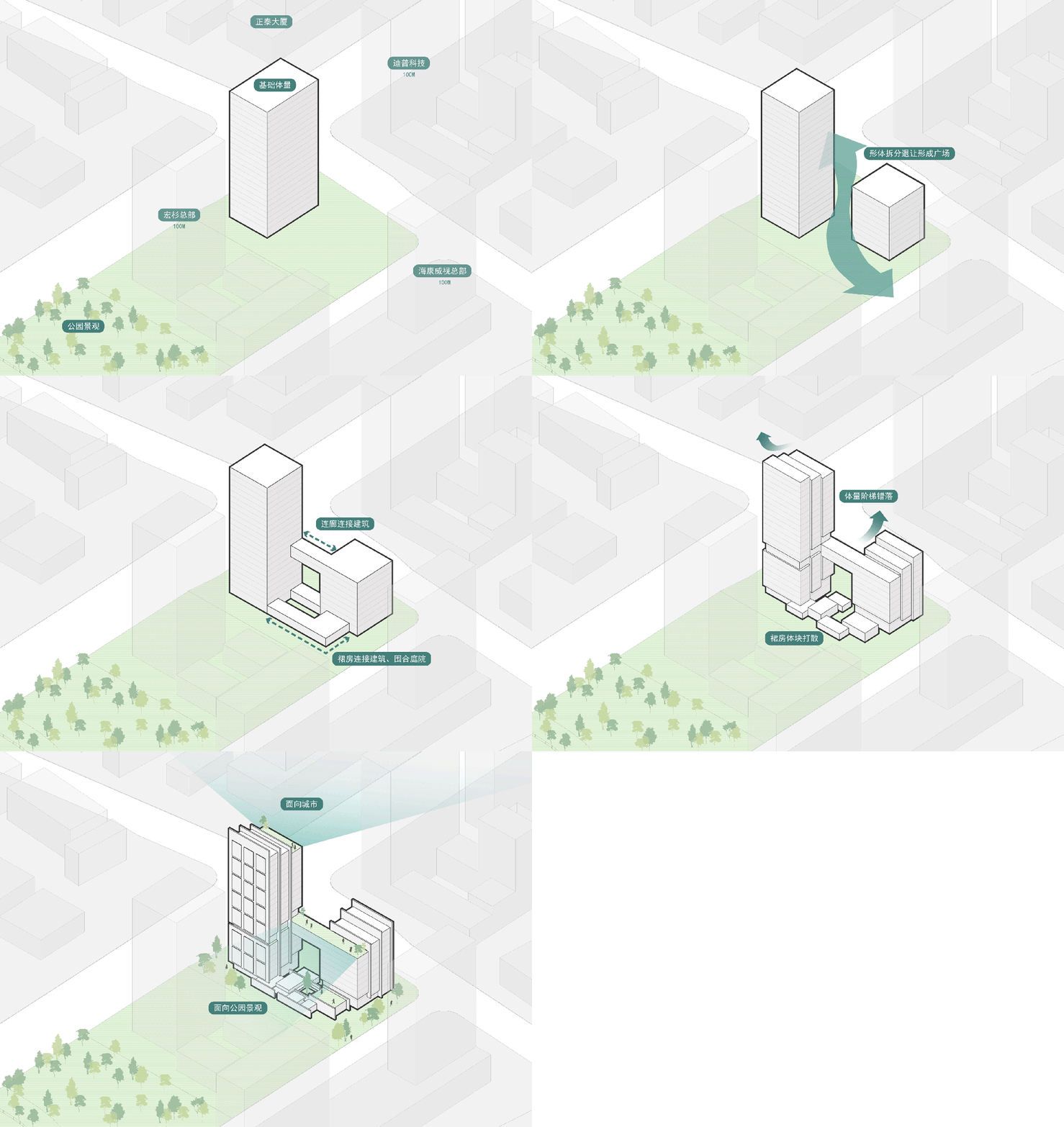
△ Massing Generation Diagram
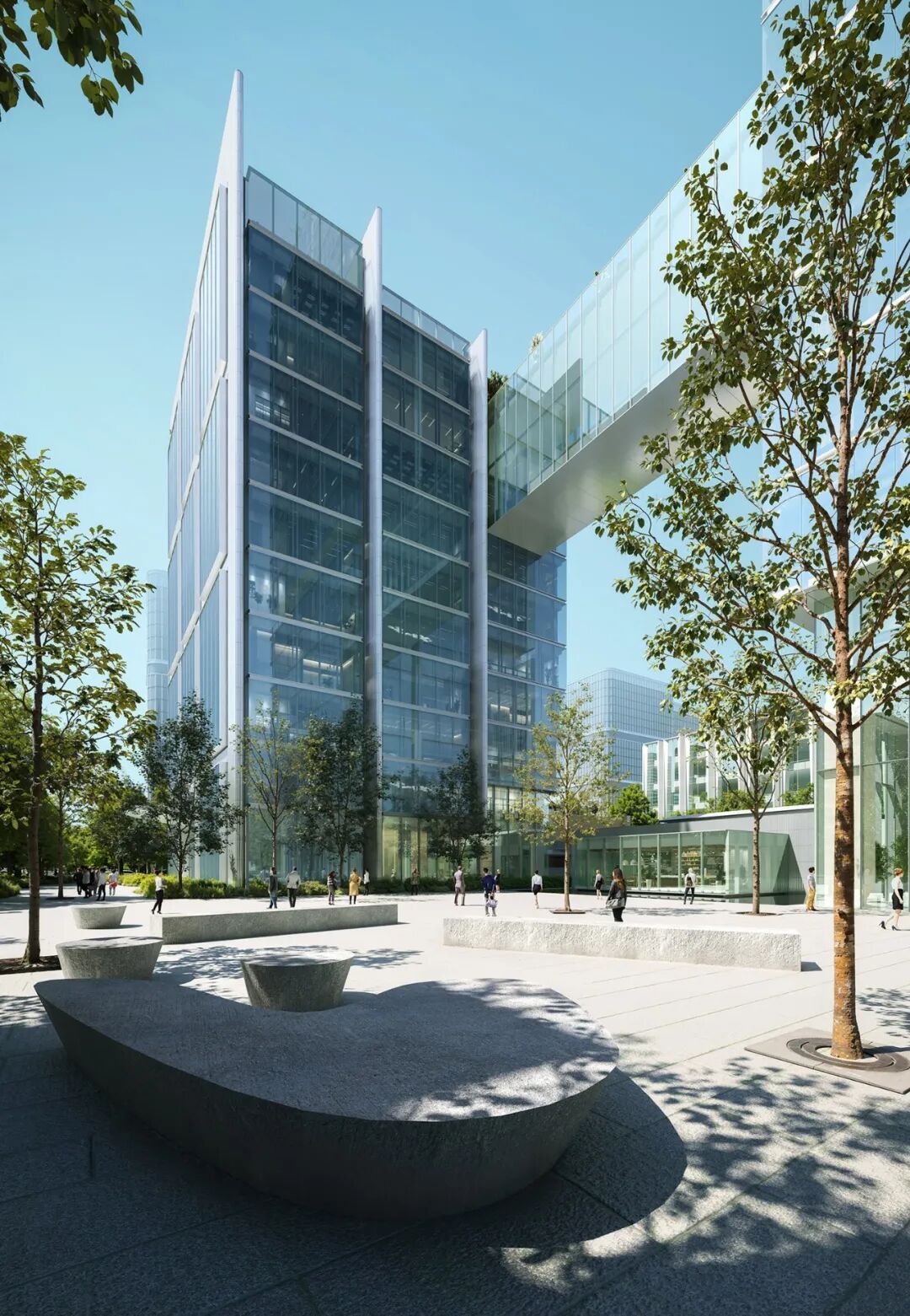
These strategies establish a coherent framework linking city, site, program, and massing, embedding architectural functions into the spatial logic of the site and forming the foundation of a rational planning layout.
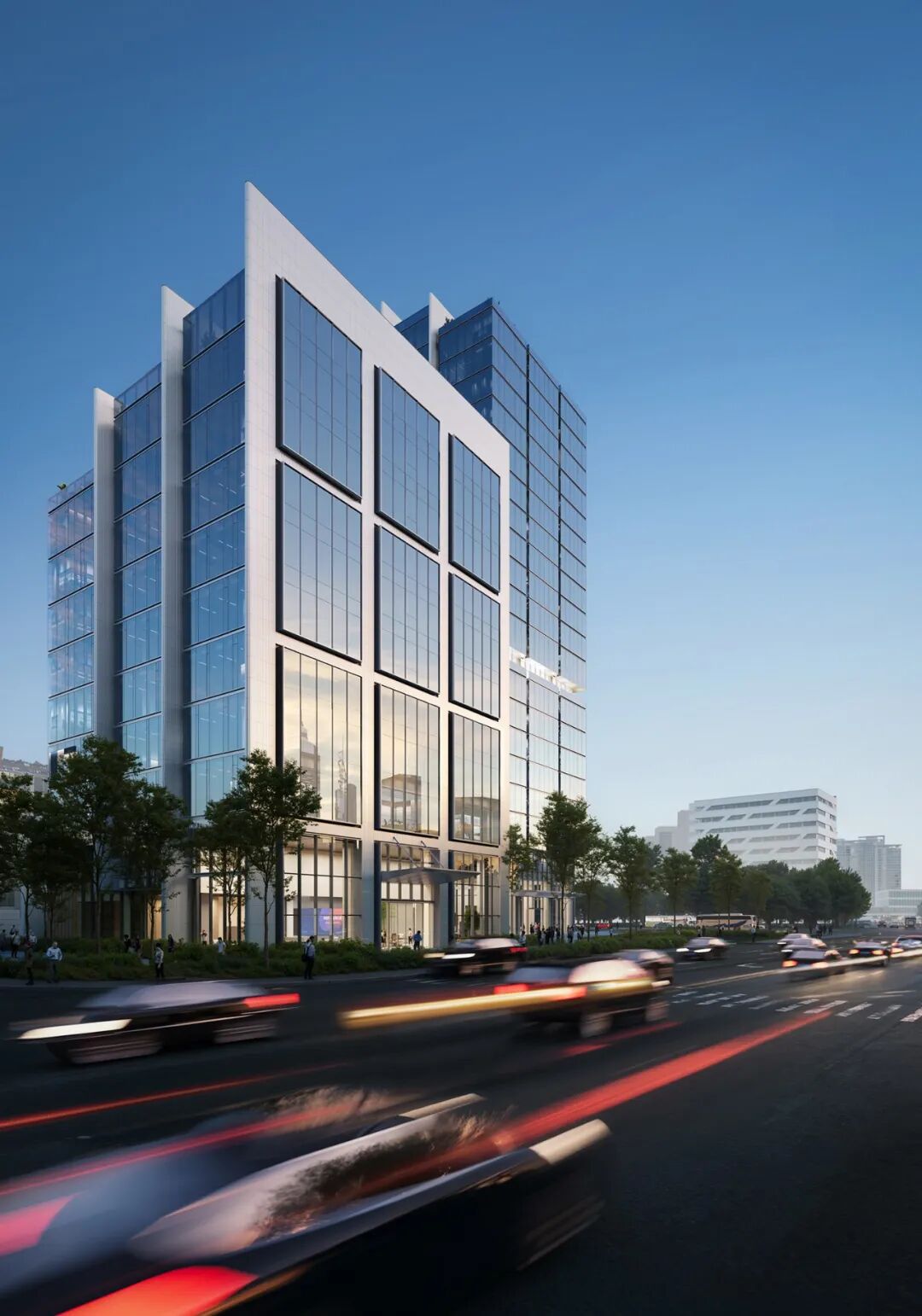
With a height limit of 100 meters and surrounded by towers of similar scale, the key challenge lies in distinguishing the MEDIINFO headquarters within a homogeneous urban fabric.
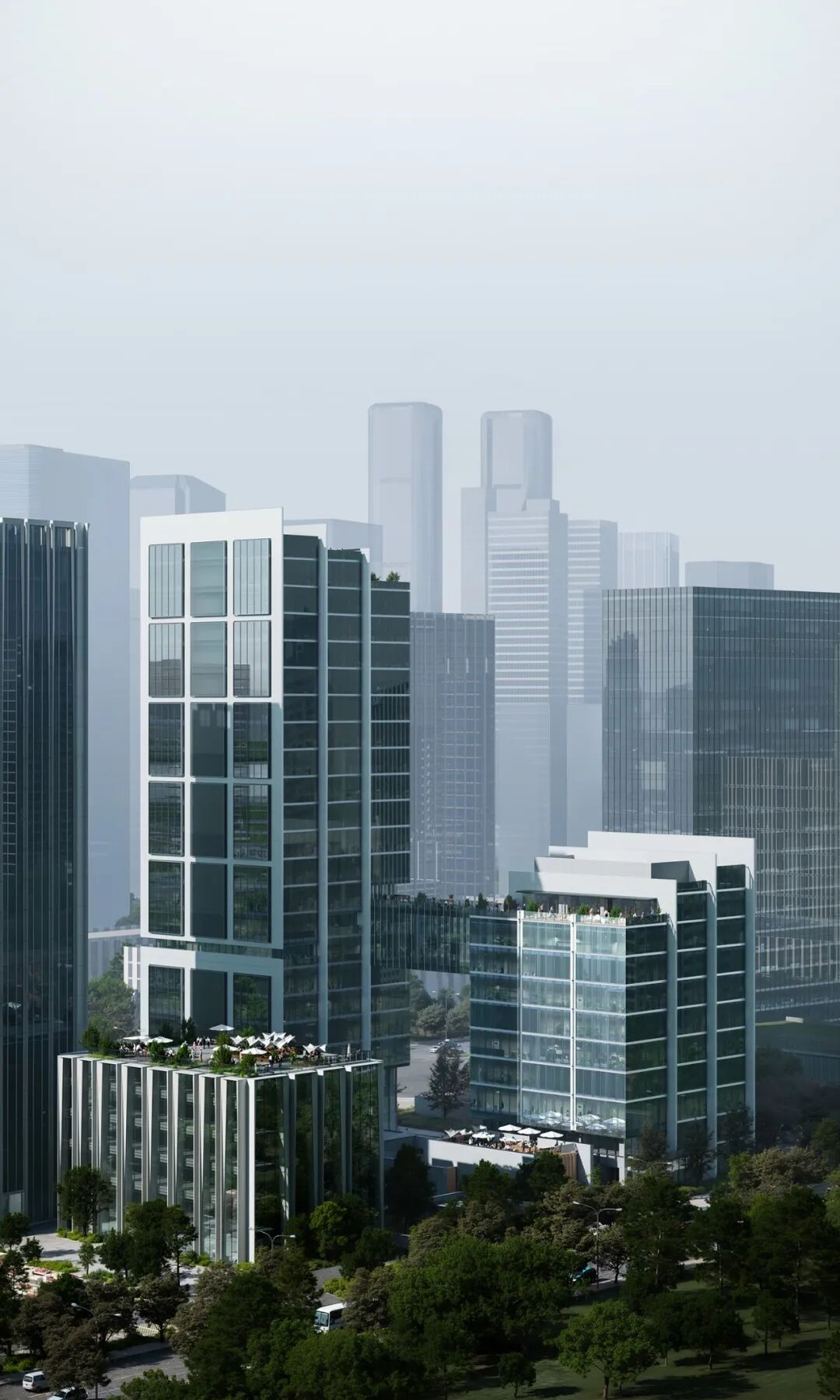
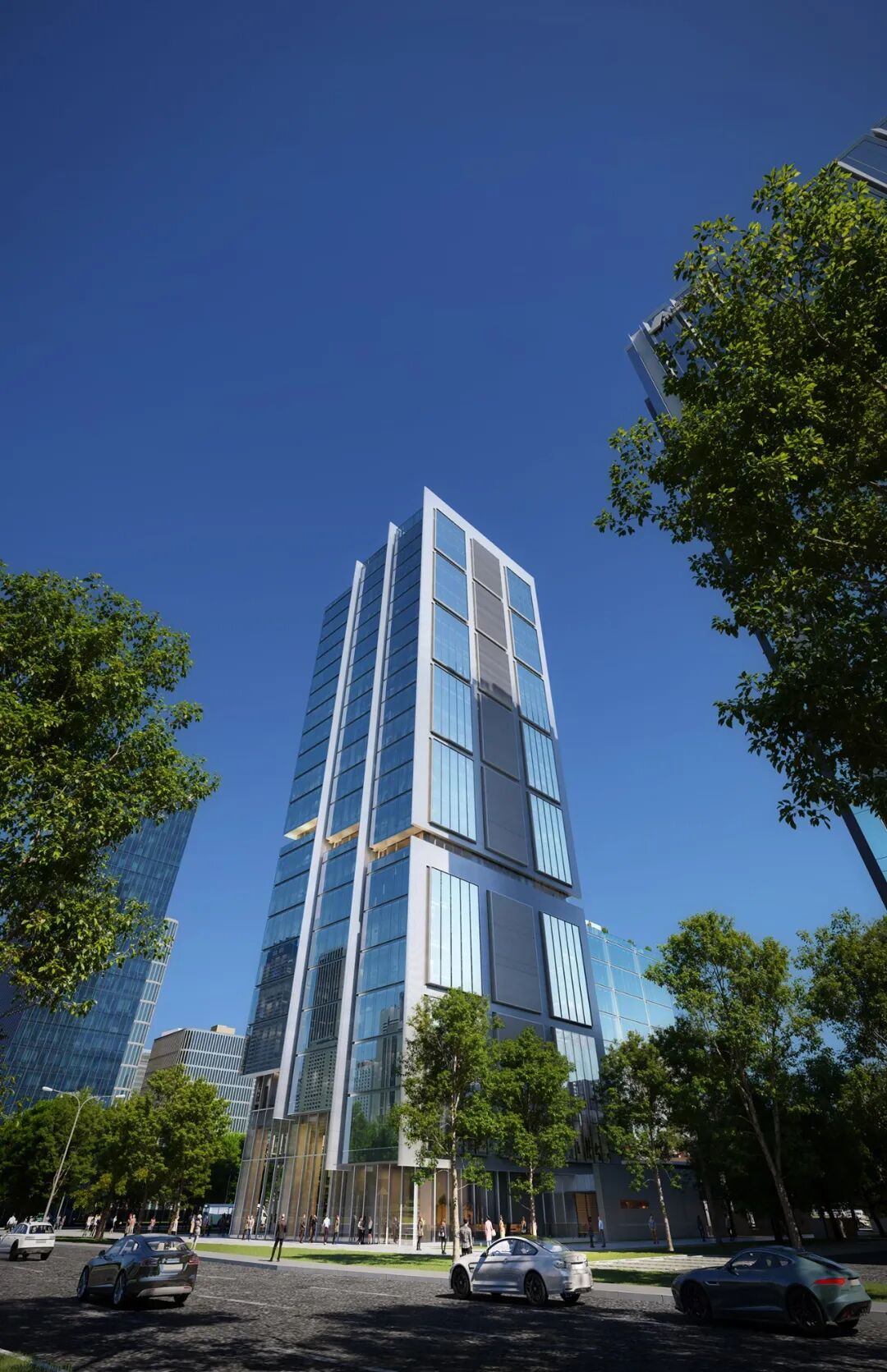
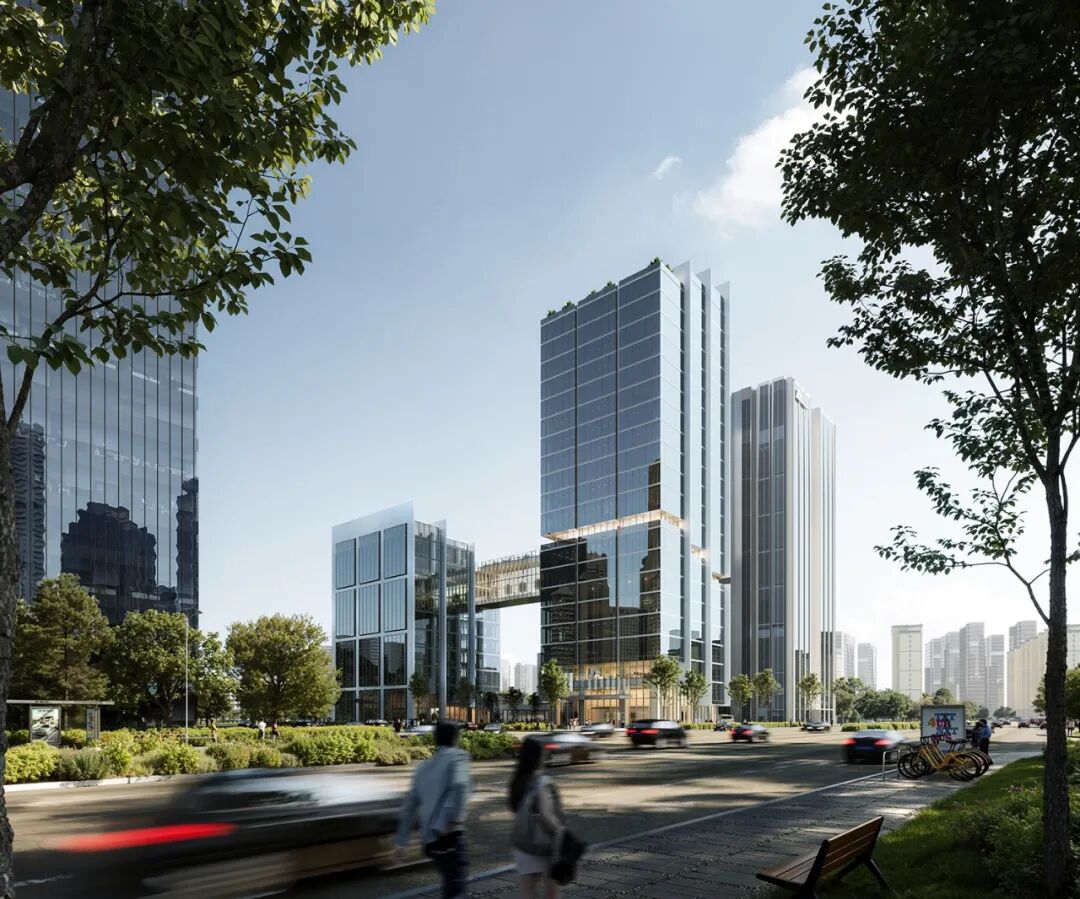
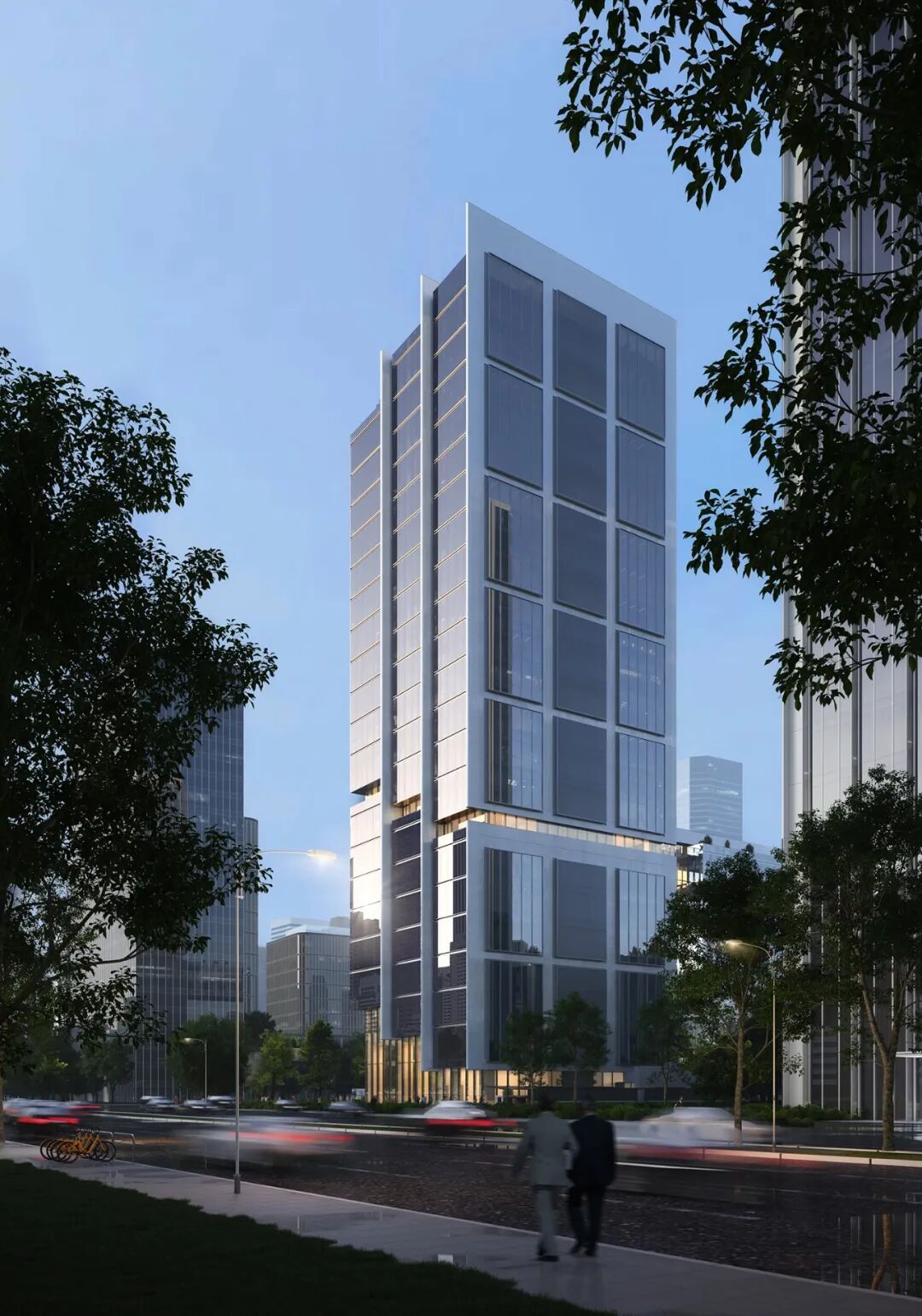
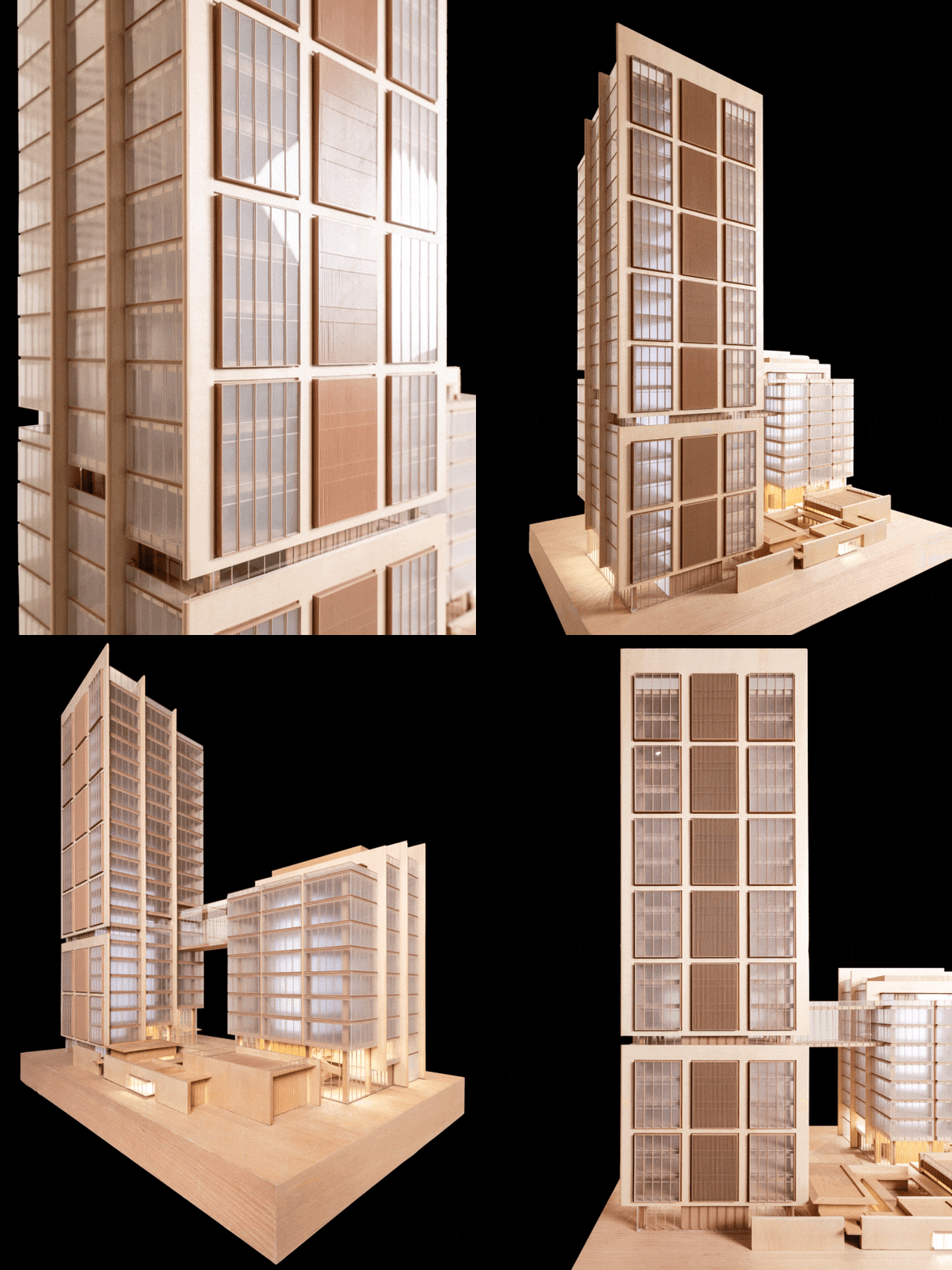
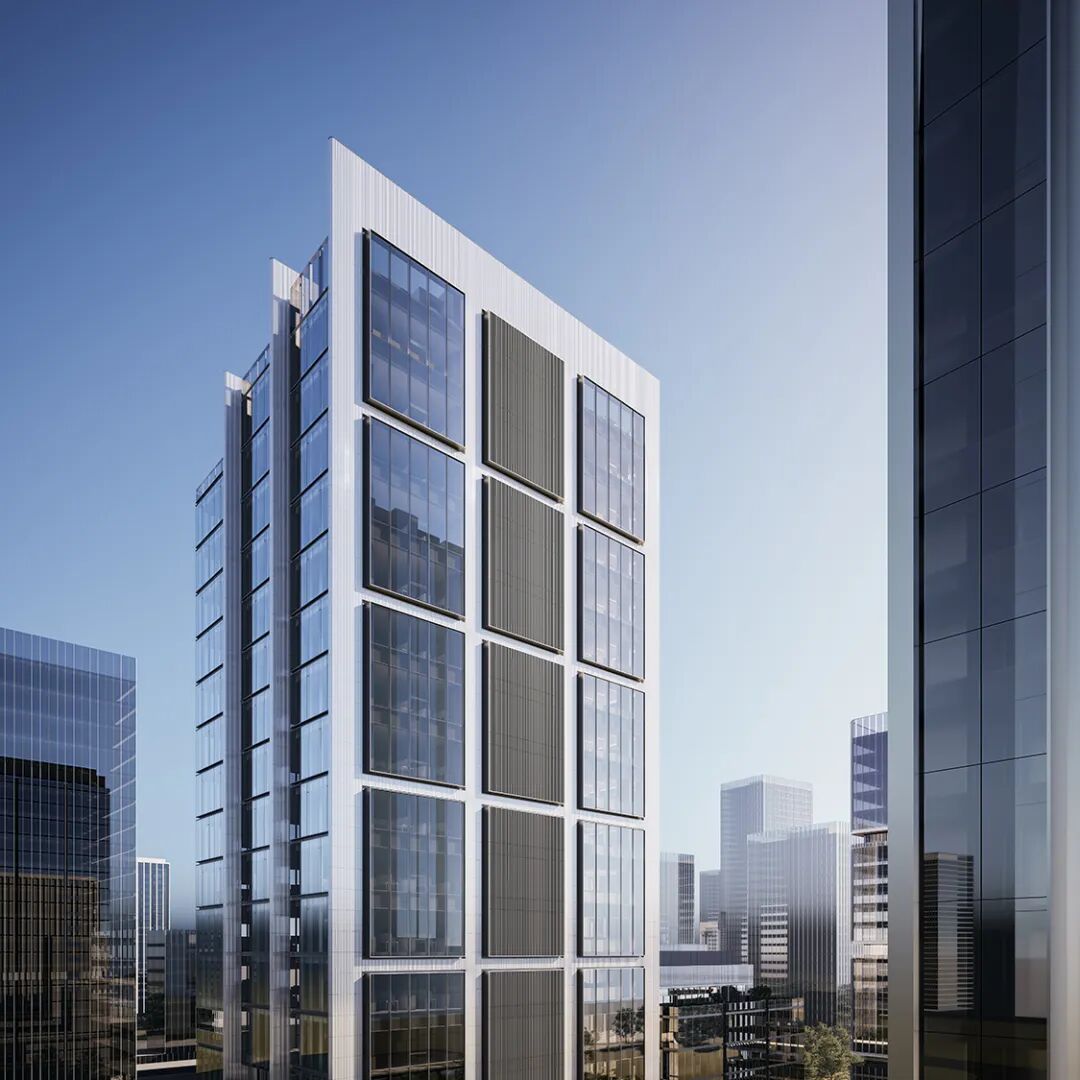
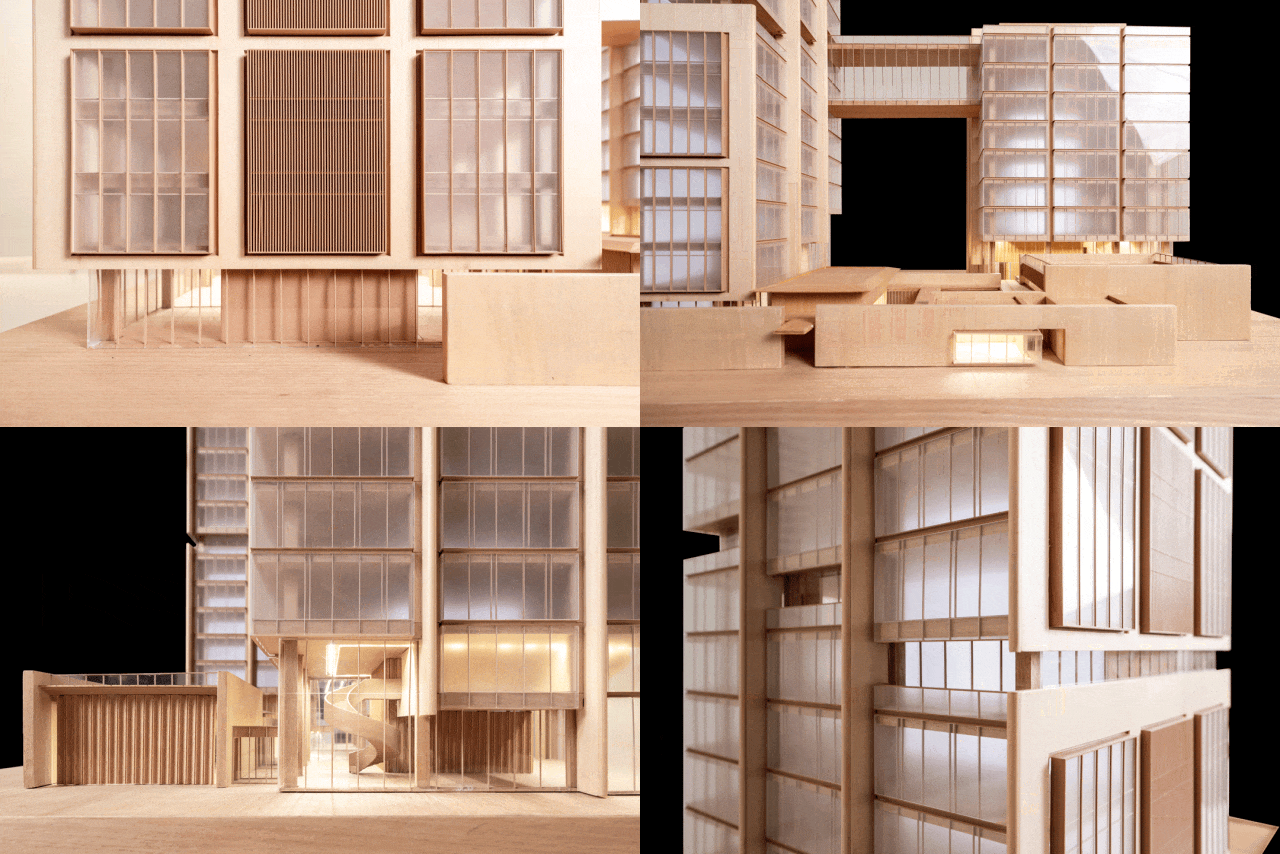
To enhance verticality, the primary volume is subdivided into three vertical segments, creating a more slender proportion. Three ascending planar white walls are introduced along the north–south axis, symbolizing growth and reinforcing an upward expression.
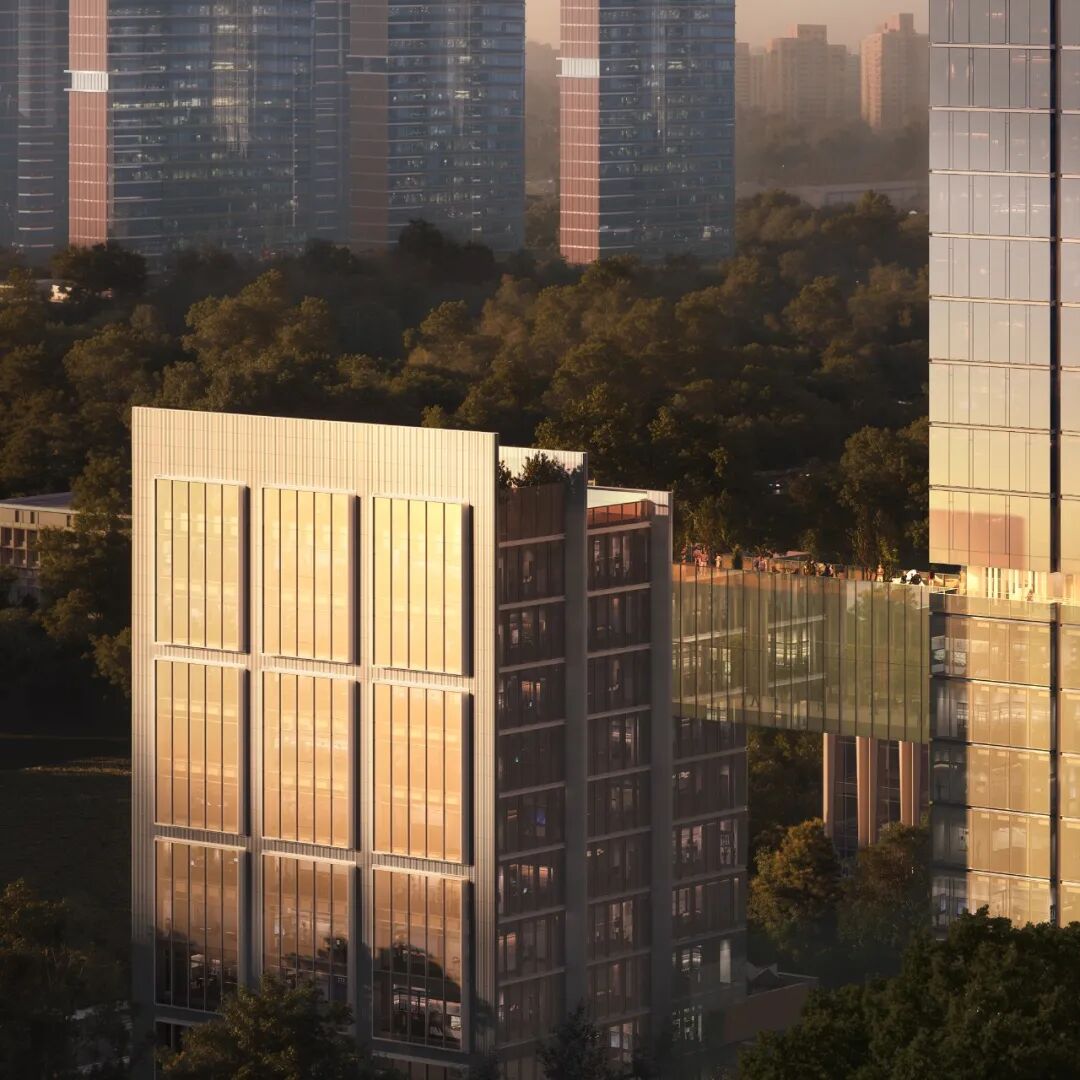
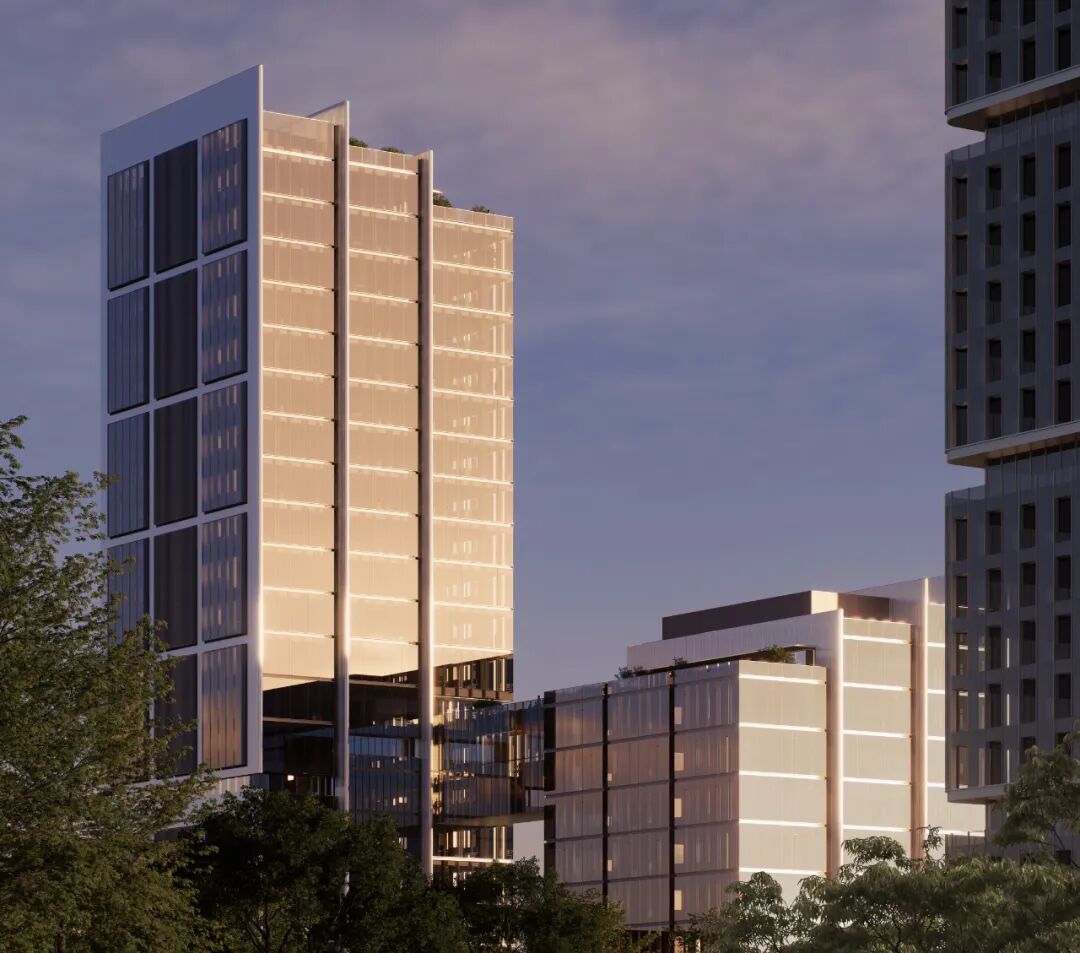
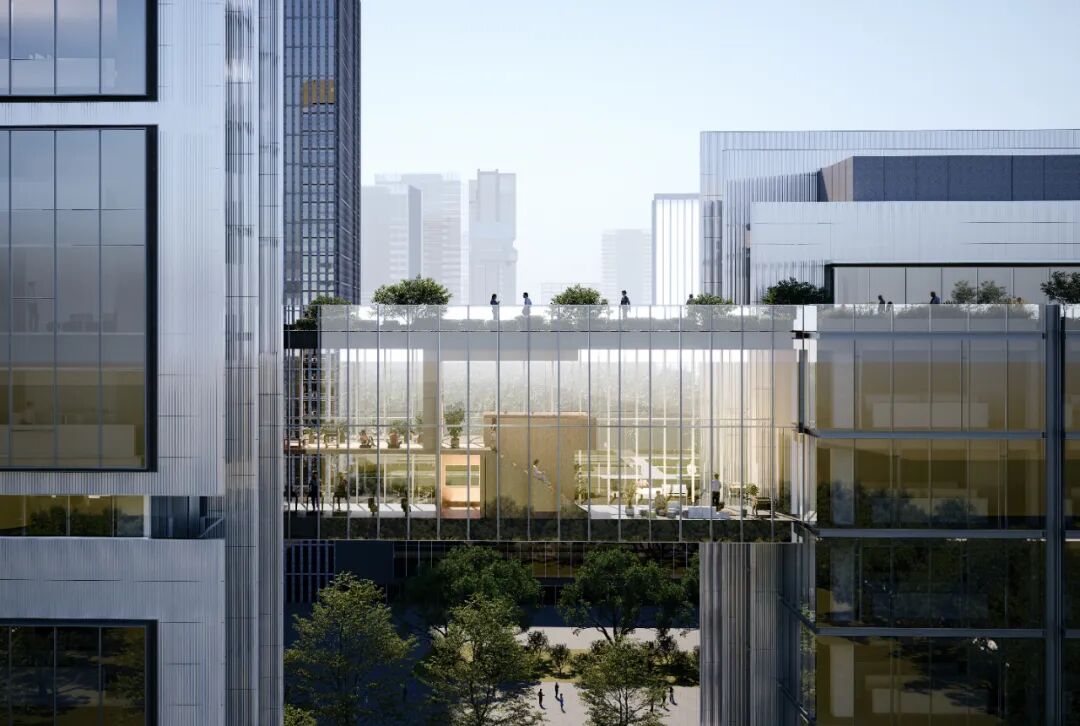
Stepped sky terraces are inserted at mid-height, subtly enhancing the building’s identity while responding to the skybridge and integrating the two towers into a unified whole.
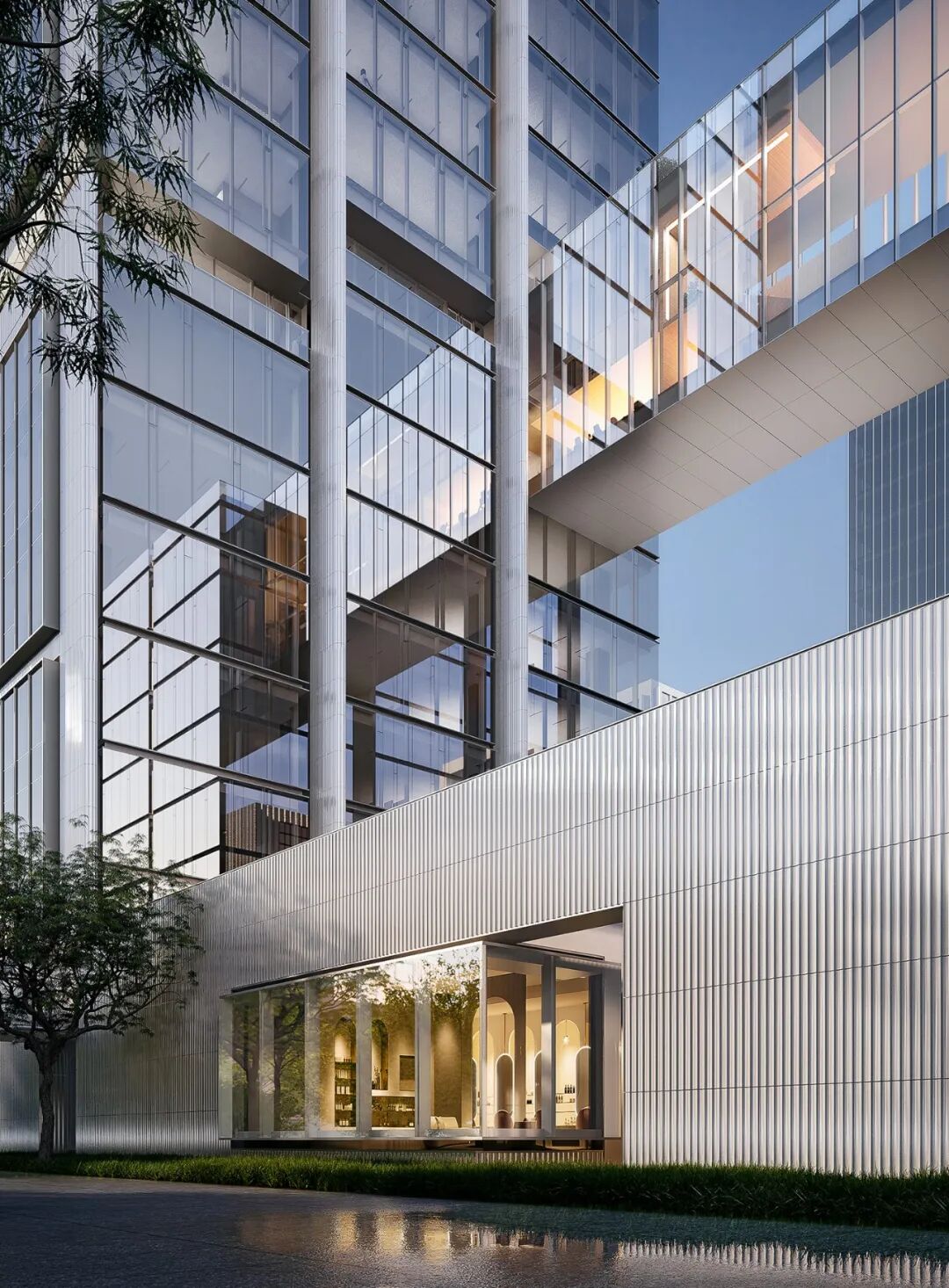
This creates a dynamic skyline, strengthening the headquarters’ recognizability within a predominantly flat urban context. The twin towers are collectively defined as the SmartLink Towers.
Precision is expressed through detailing. While maintaining strict cost control, the design strives to achieve refined and enduring facade articulation that reflects the client’s identity as a technology-driven enterprise.
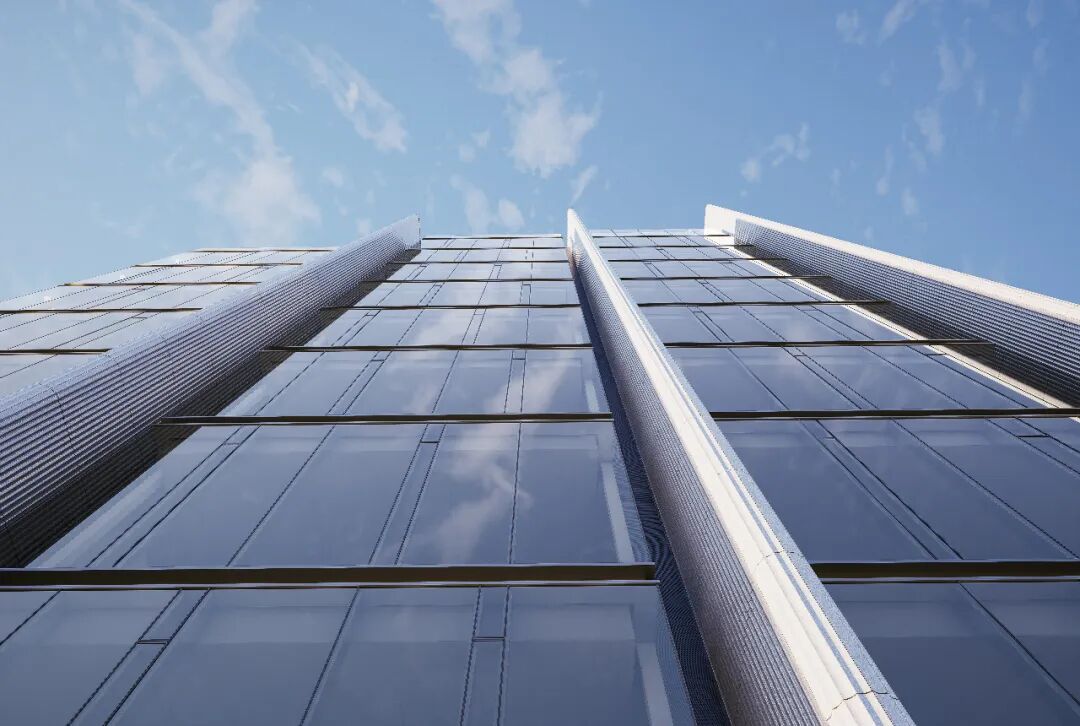
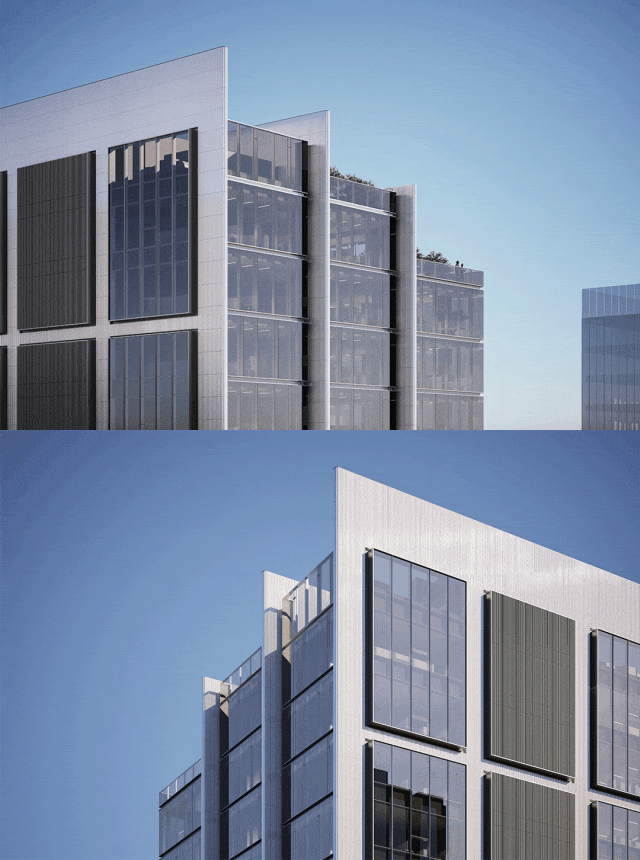
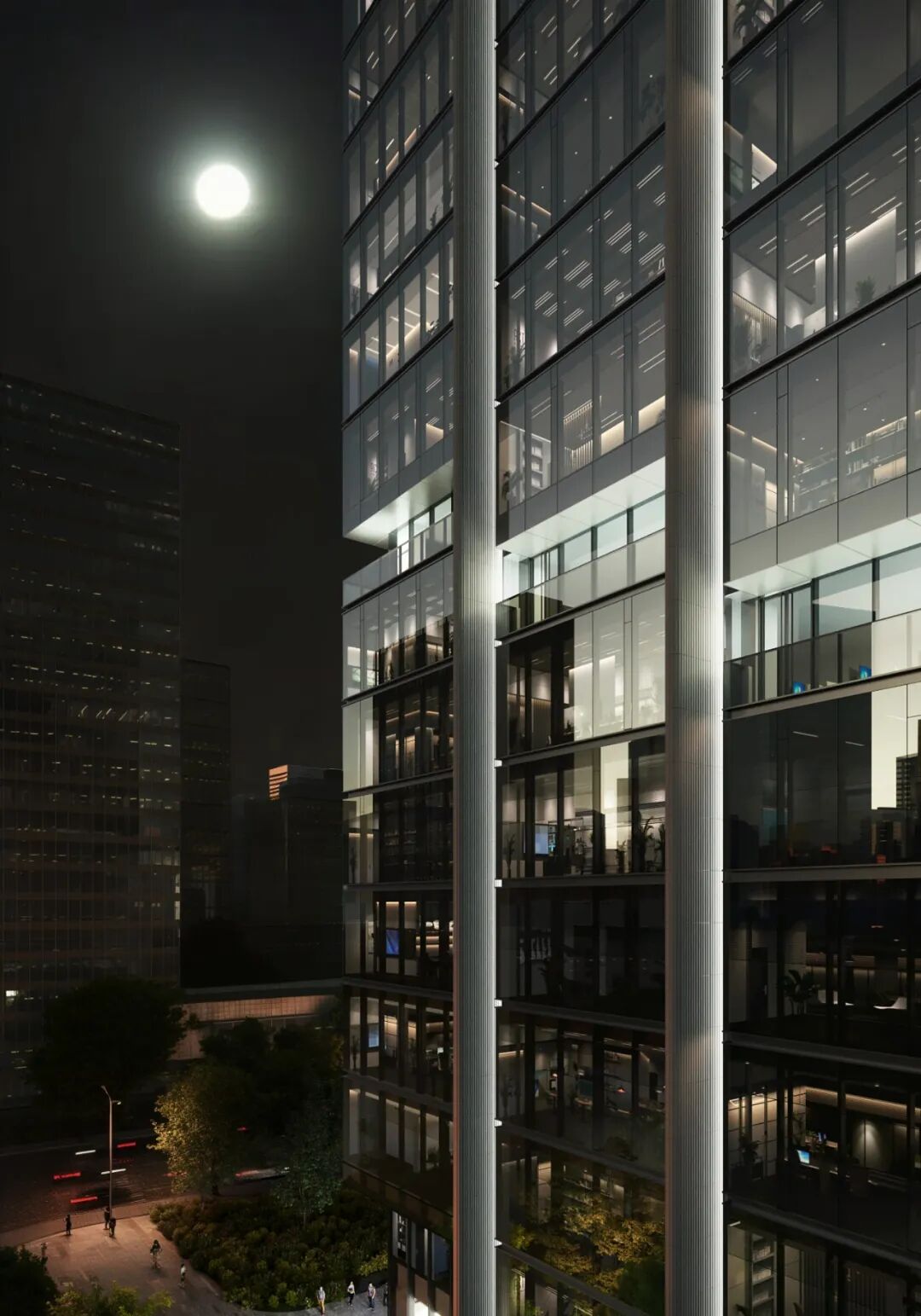
Firstly, decorative elements are minimized as much as possible. Conventional facade treatments such as excessive articulation, horizontal and vertical louvers are reduced, while the projection depth of planar walls is carefully controlled. By simplifying complexity into clarity, the building form is expressed through clean, planar surfaces and crisp coloration. This approach reflects both a pragmatic attitude toward cost efficiency and a rigorous adherence to formal logic.
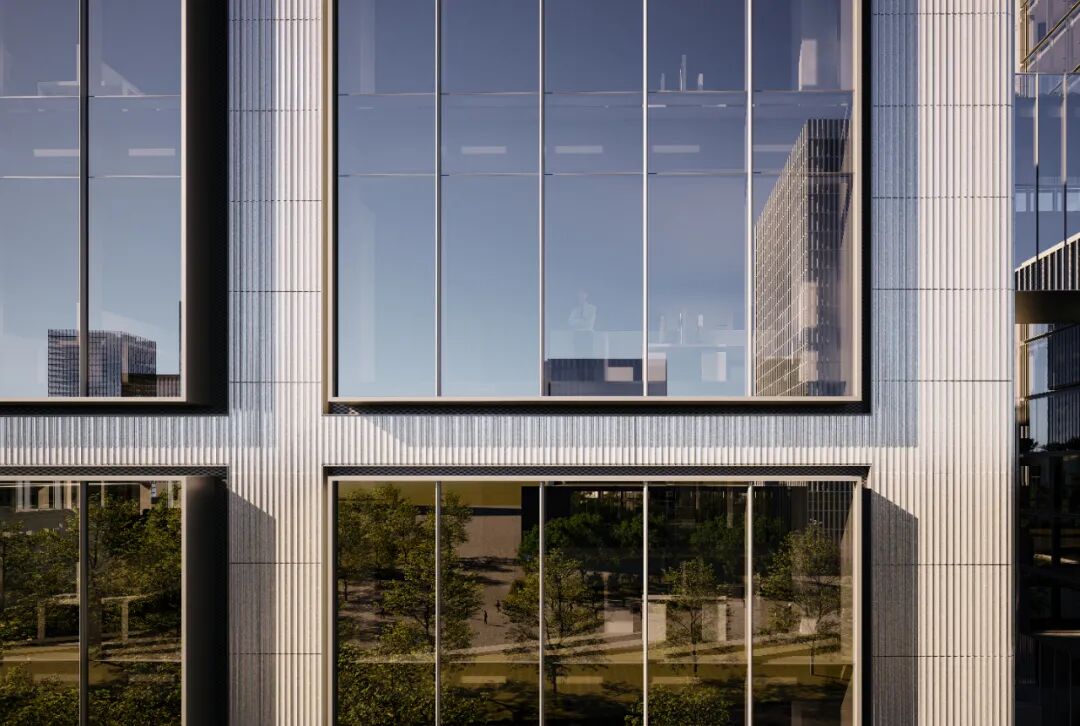
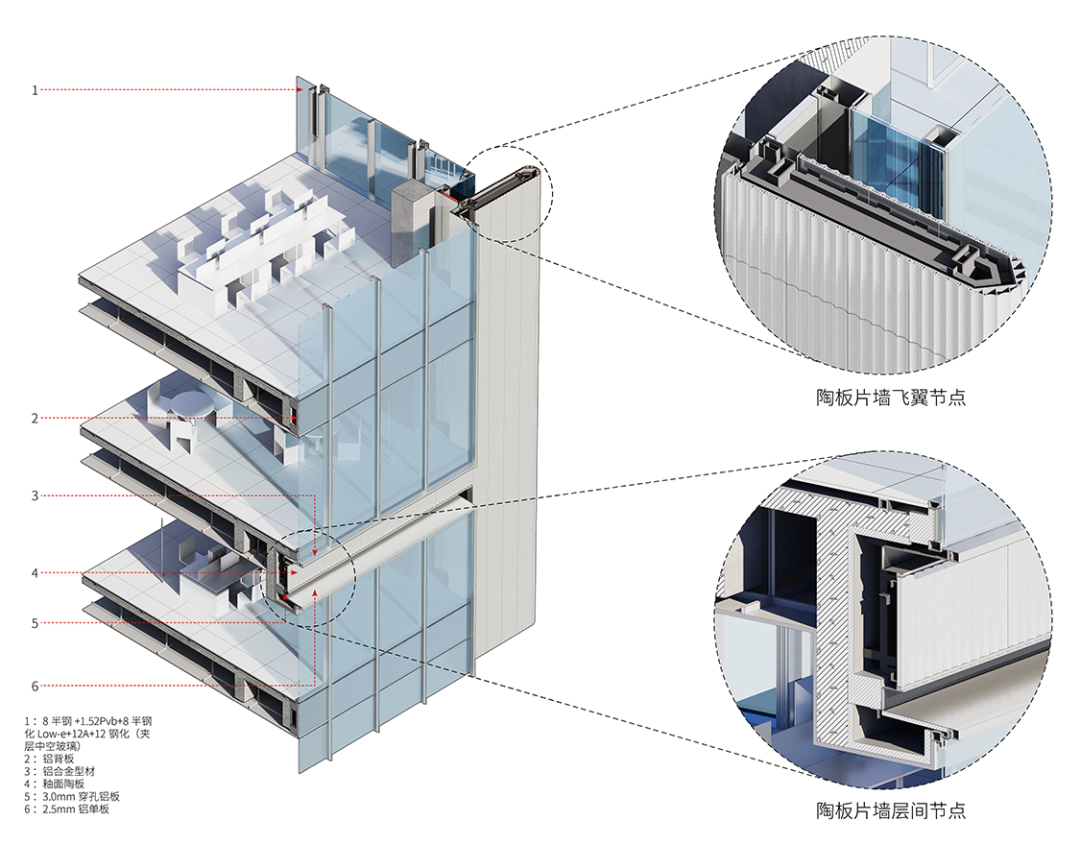
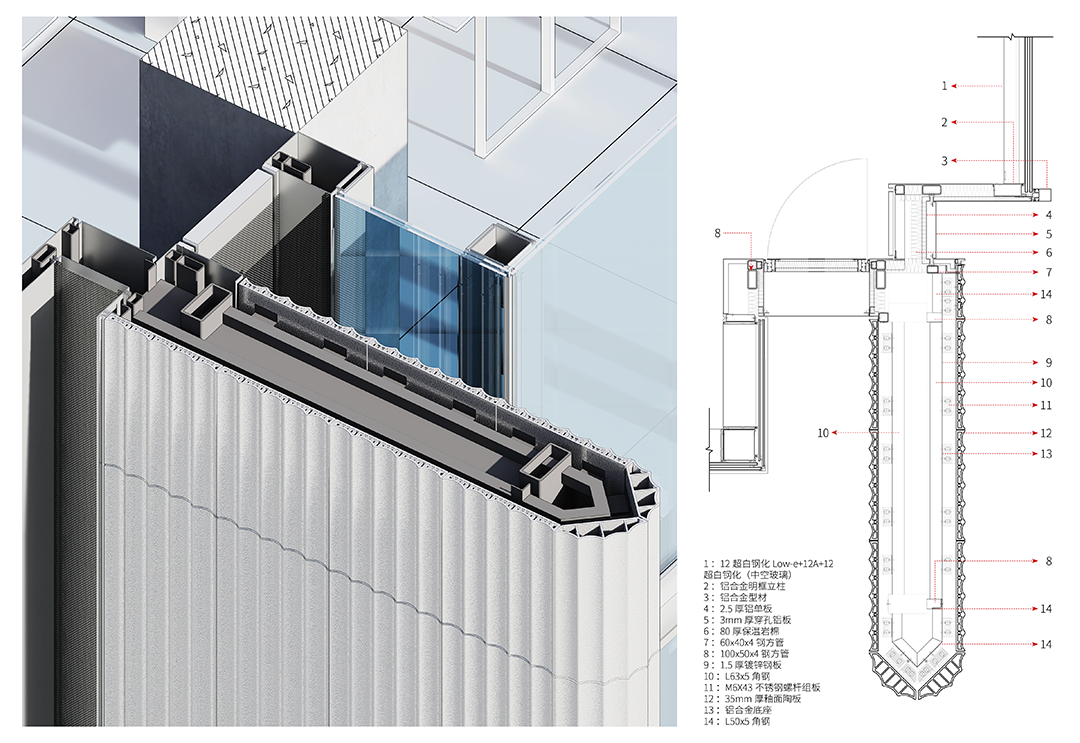
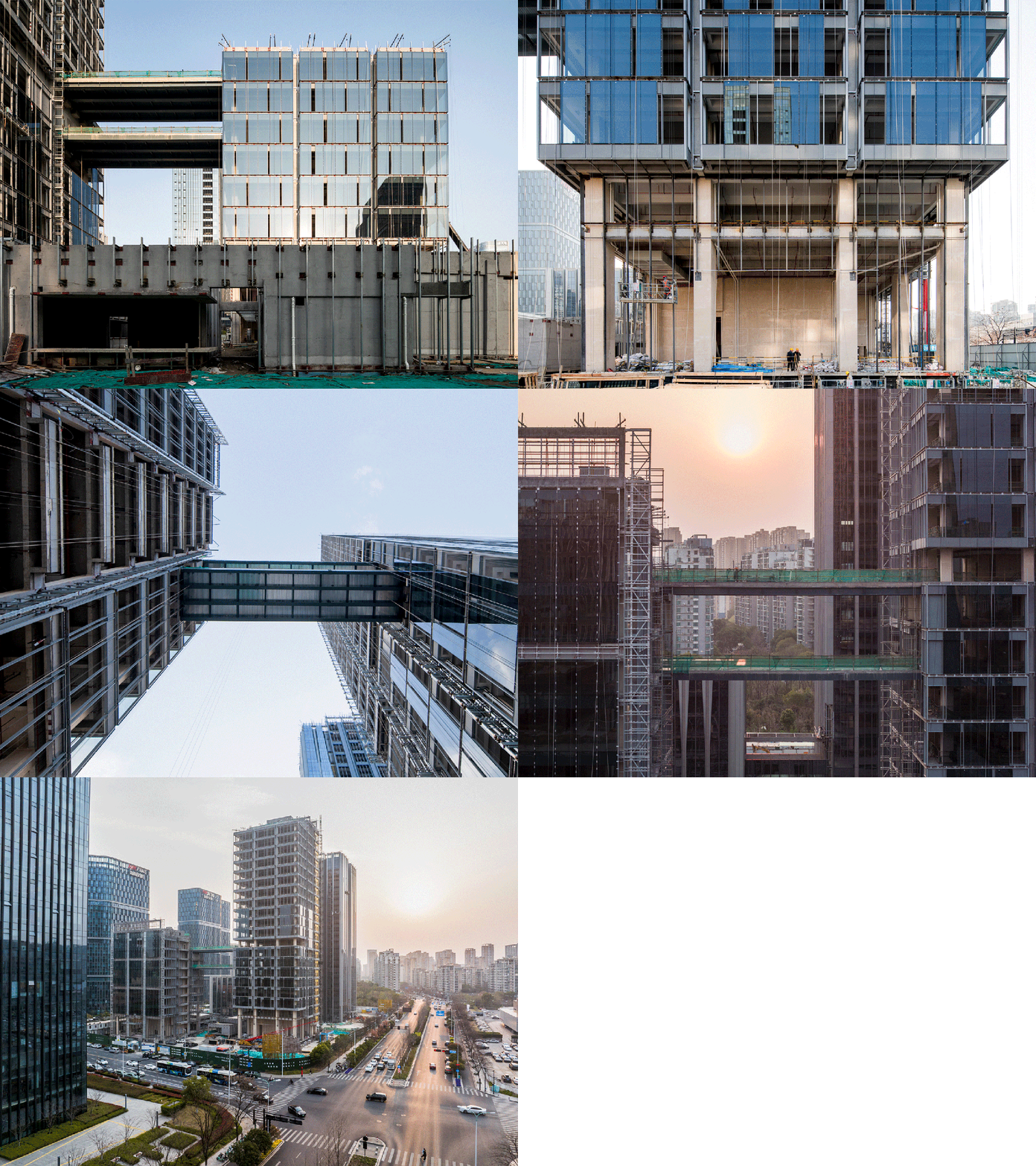
△ Curtain Wall System Details
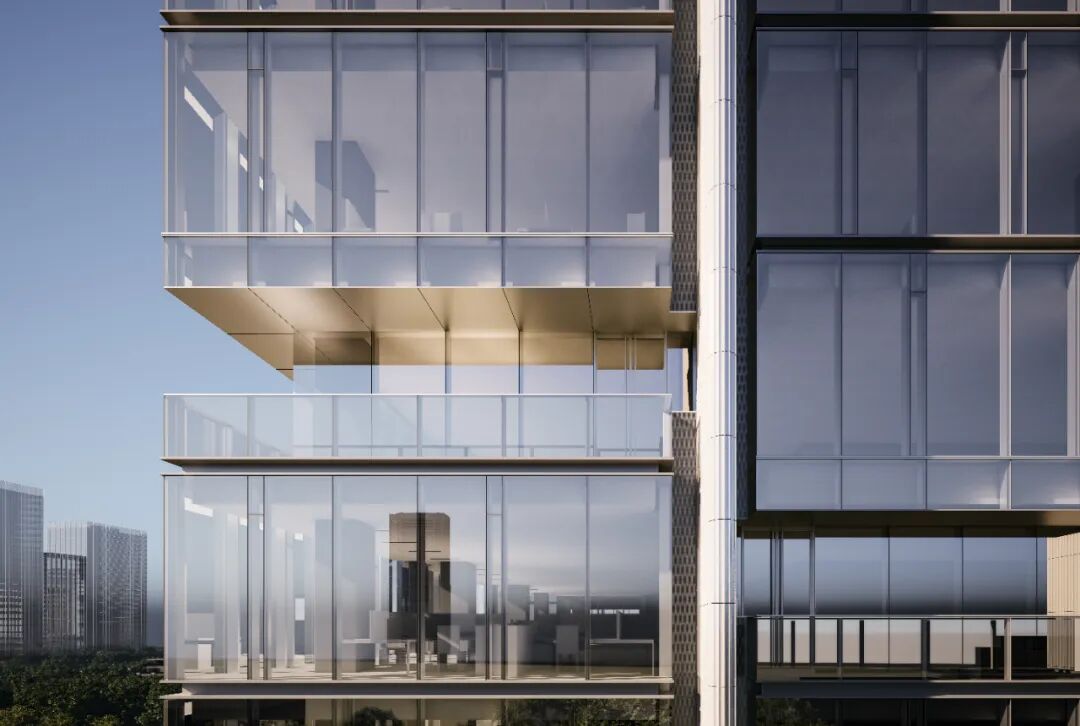
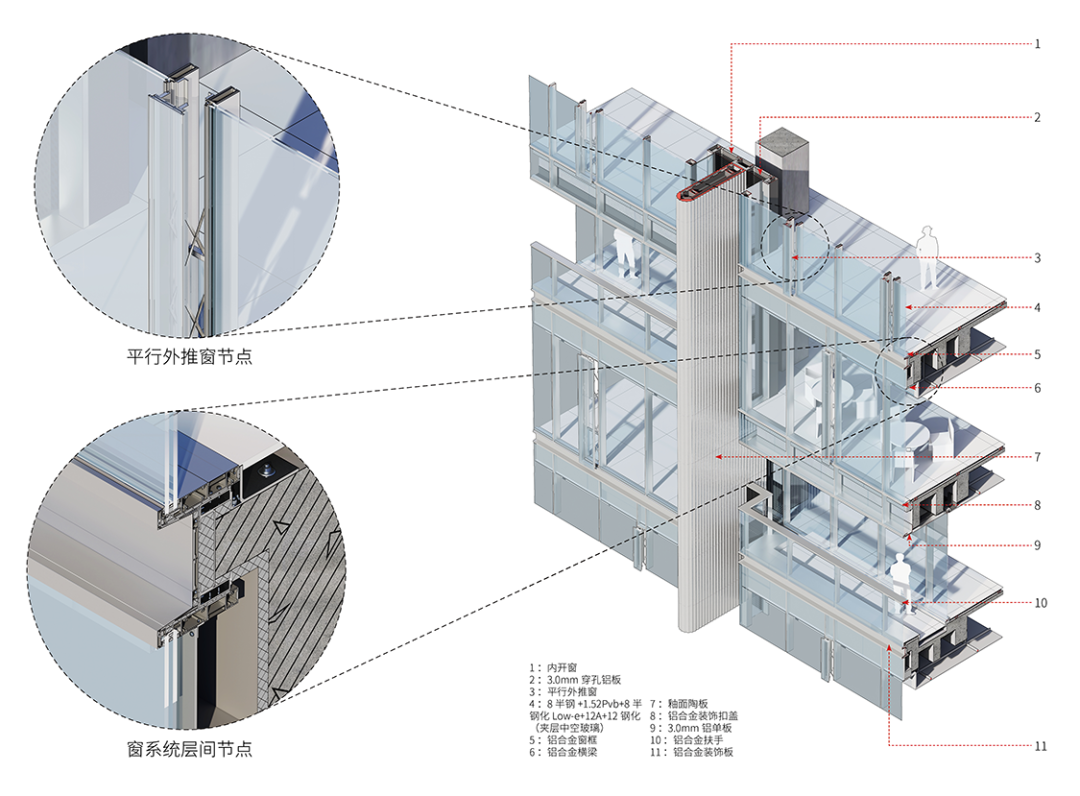
△ Window System Details
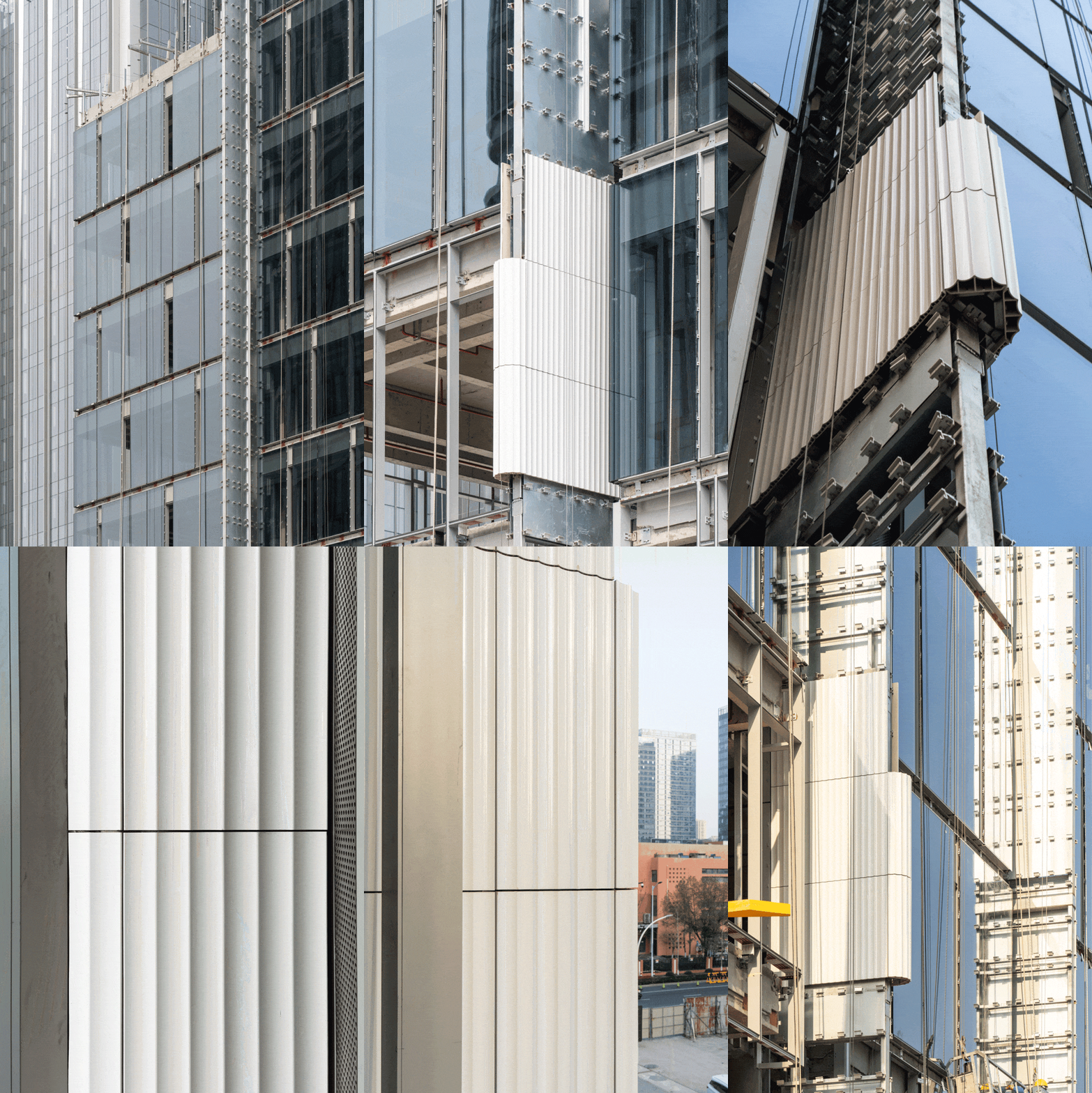
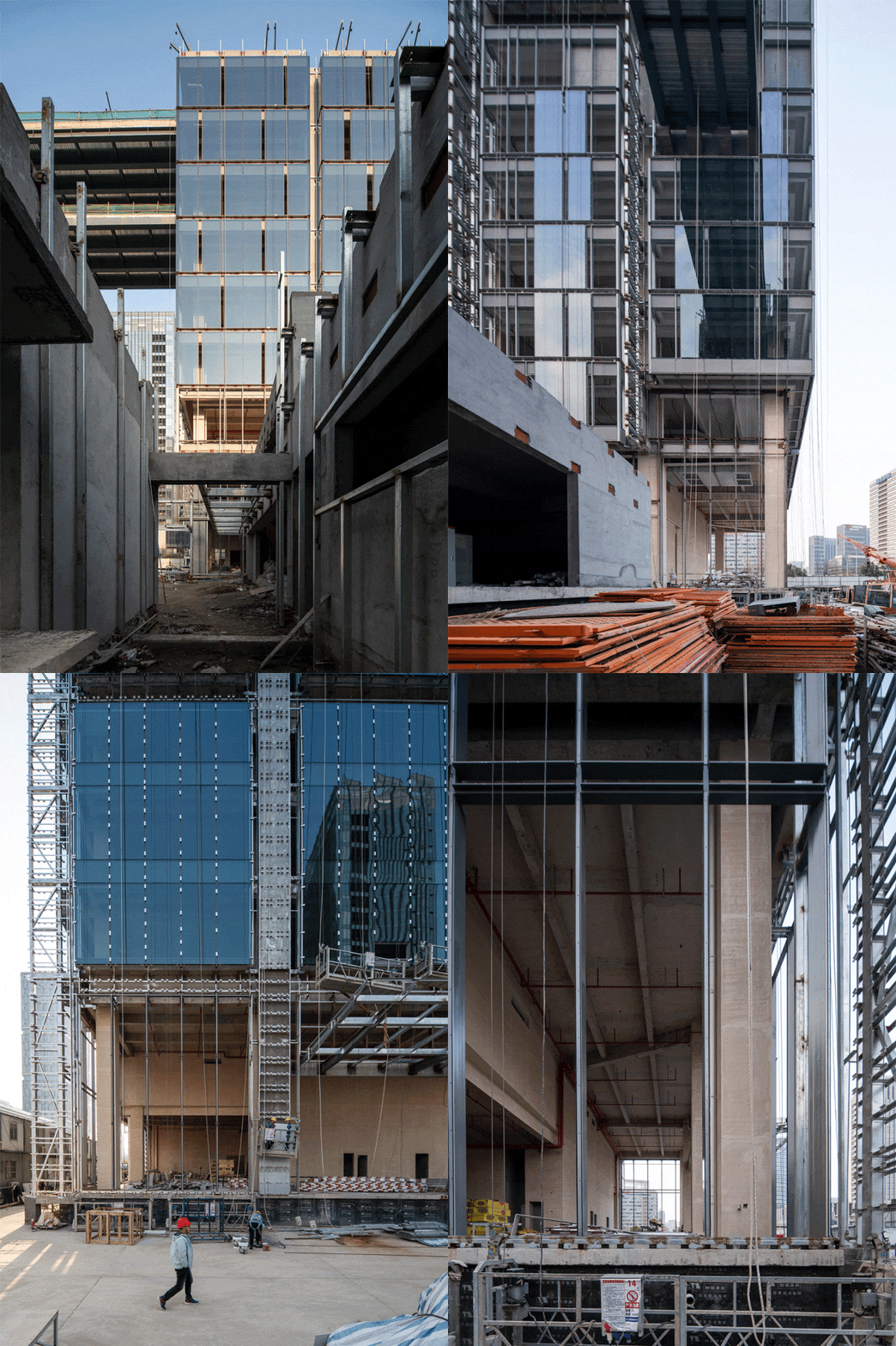
△ Construction Process
In terms of material selection, the three ascending walls are clad with cost-effective white glazed ceramic panels featuring a subtle wave texture, balancing construction economy with a distinctive architectural identity. Large areas of glazing adopt deep-toned coated glass, enhancing the overall visual coherence of the facade.
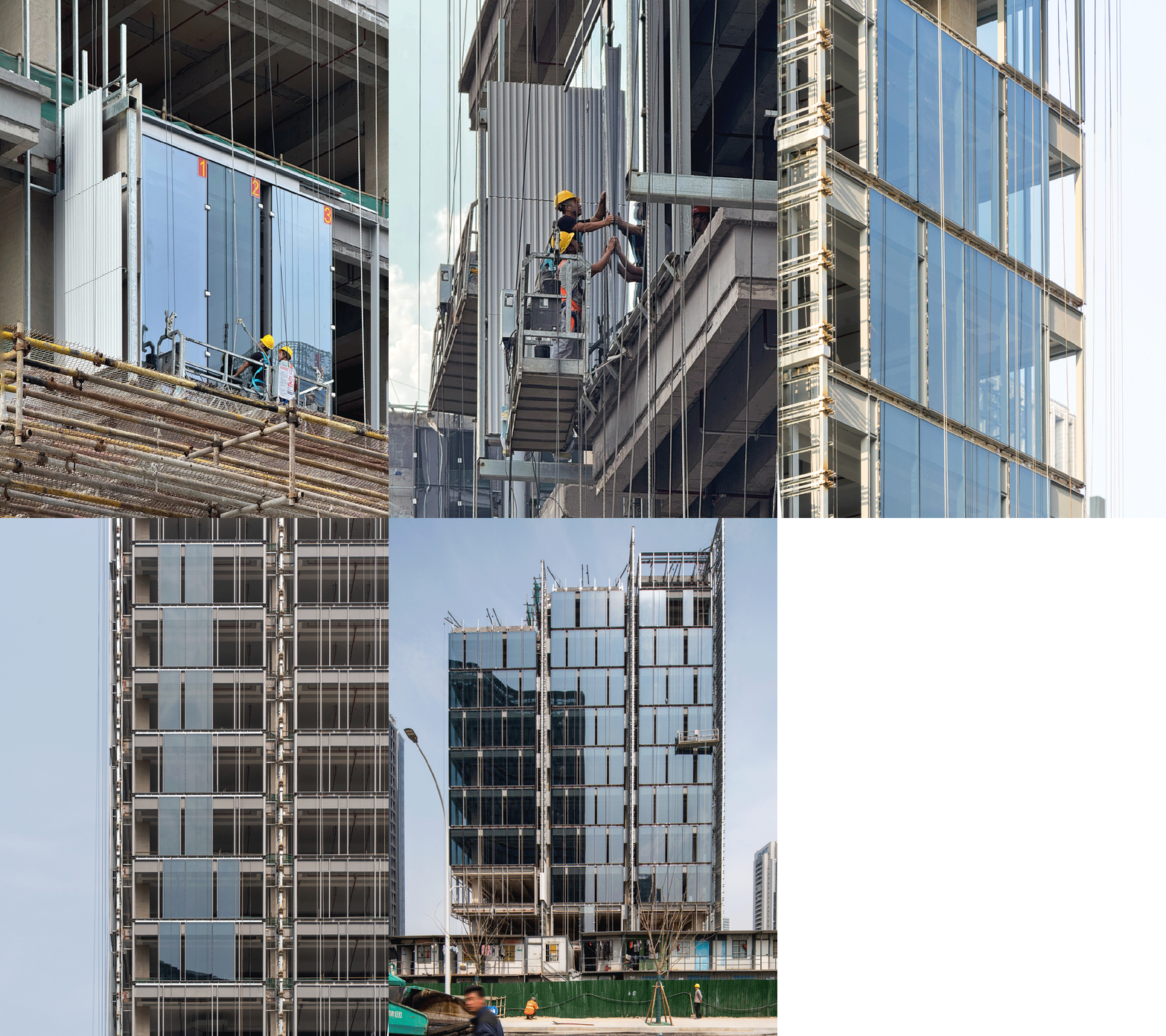
△ Curtain Wall Mock-up
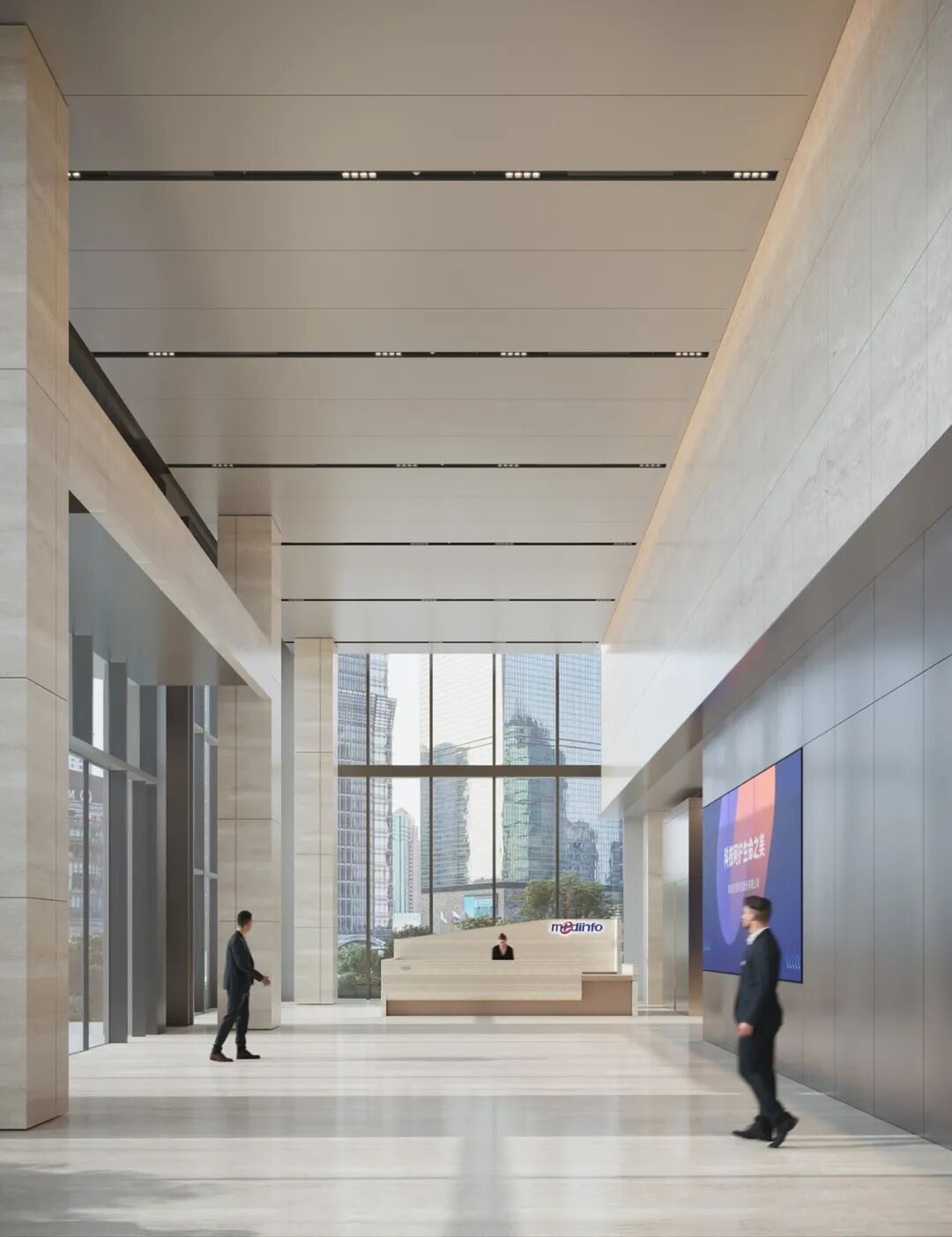
Ultra-clear low-iron glass is applied in key areas such as the entrance lobby, skybridge, and sky terraces, emphasizing programmatic specificity while reinforcing the building’s volumetric clarity.
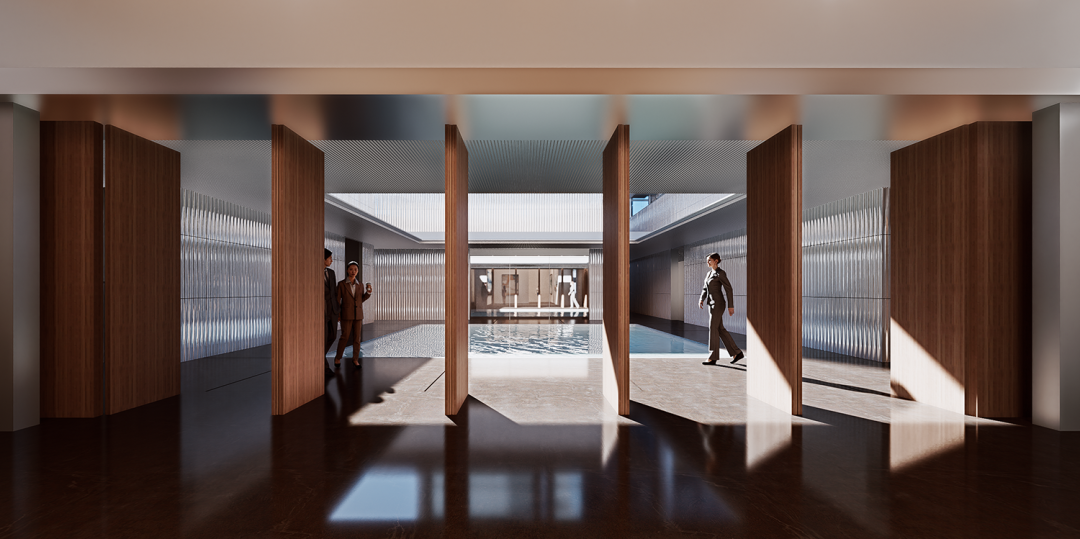
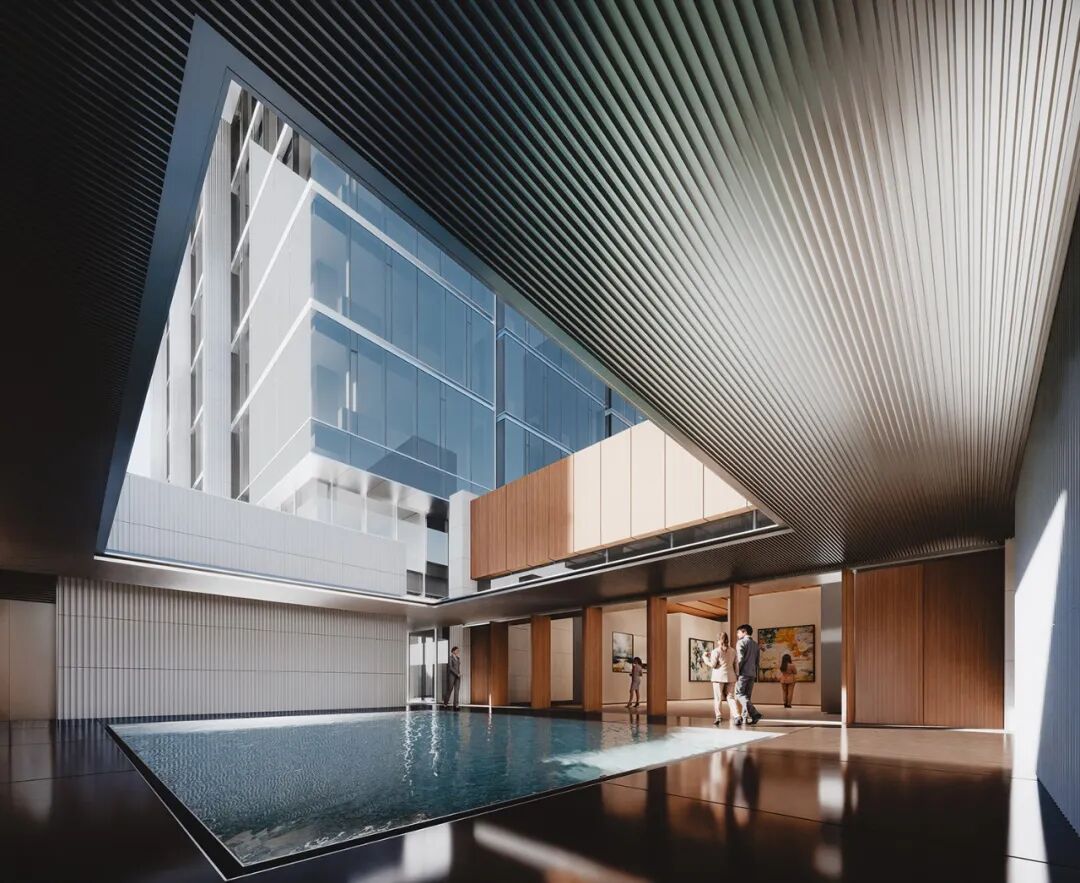
We believe that outstanding architecture does not arise from momentary inspiration, but from continuous responses to real user needs and site conditions.
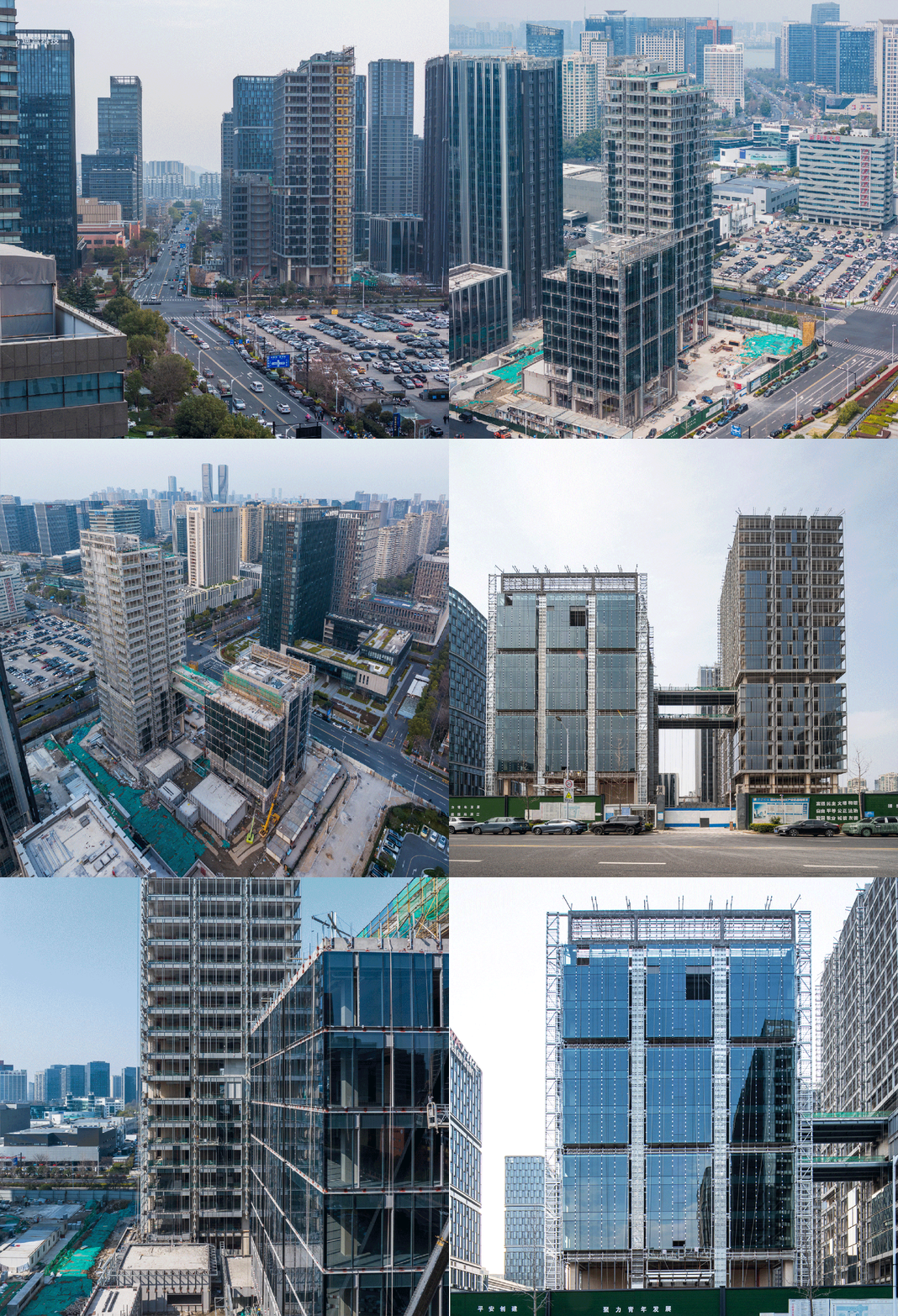
△ Under Construction
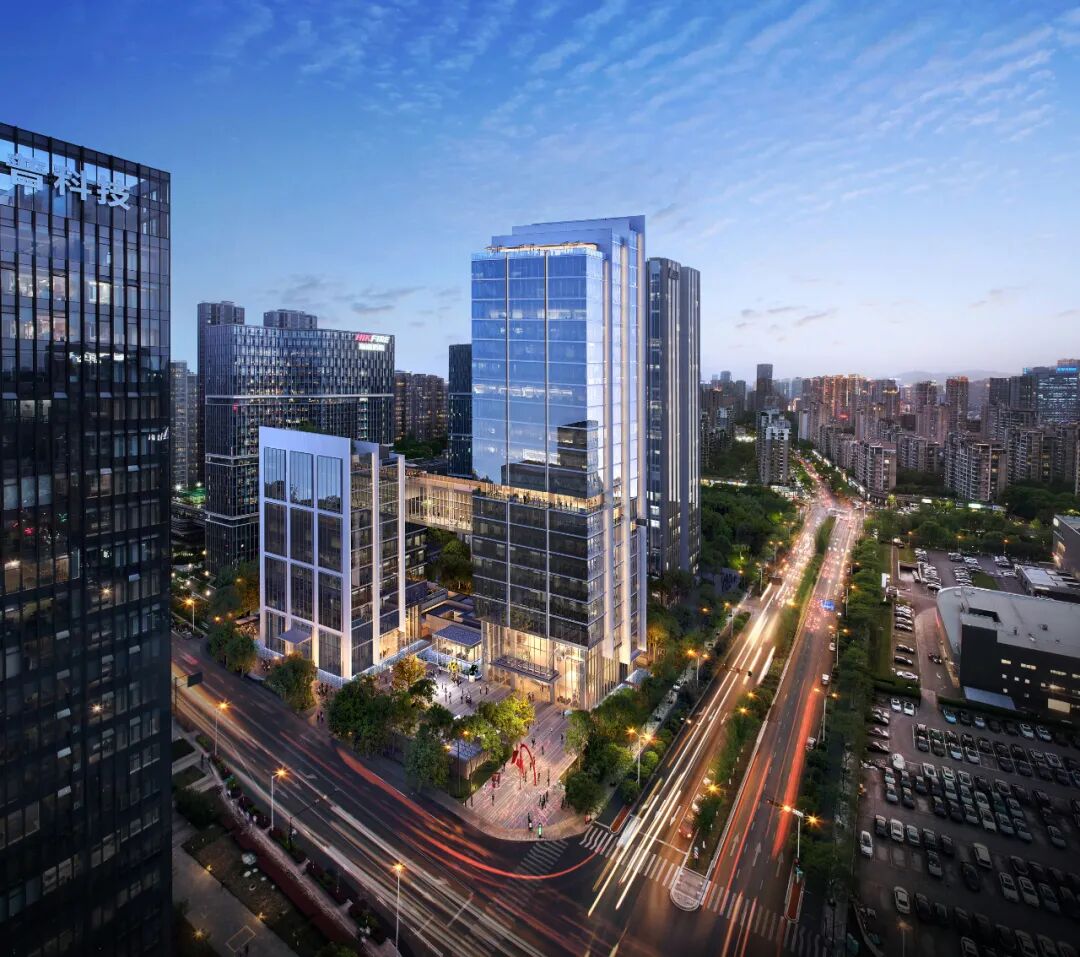
Throughout the nearly five-year design and construction process, the team has consistently worked within a framework of rational values, employing systematic methods to analyze, test, and refine each stage. This approach establishes a stable and clear internal logic across multiple variables.
For us, rationality is not a compromise, but a design attitude capable of withstanding the test of time.
Drawings
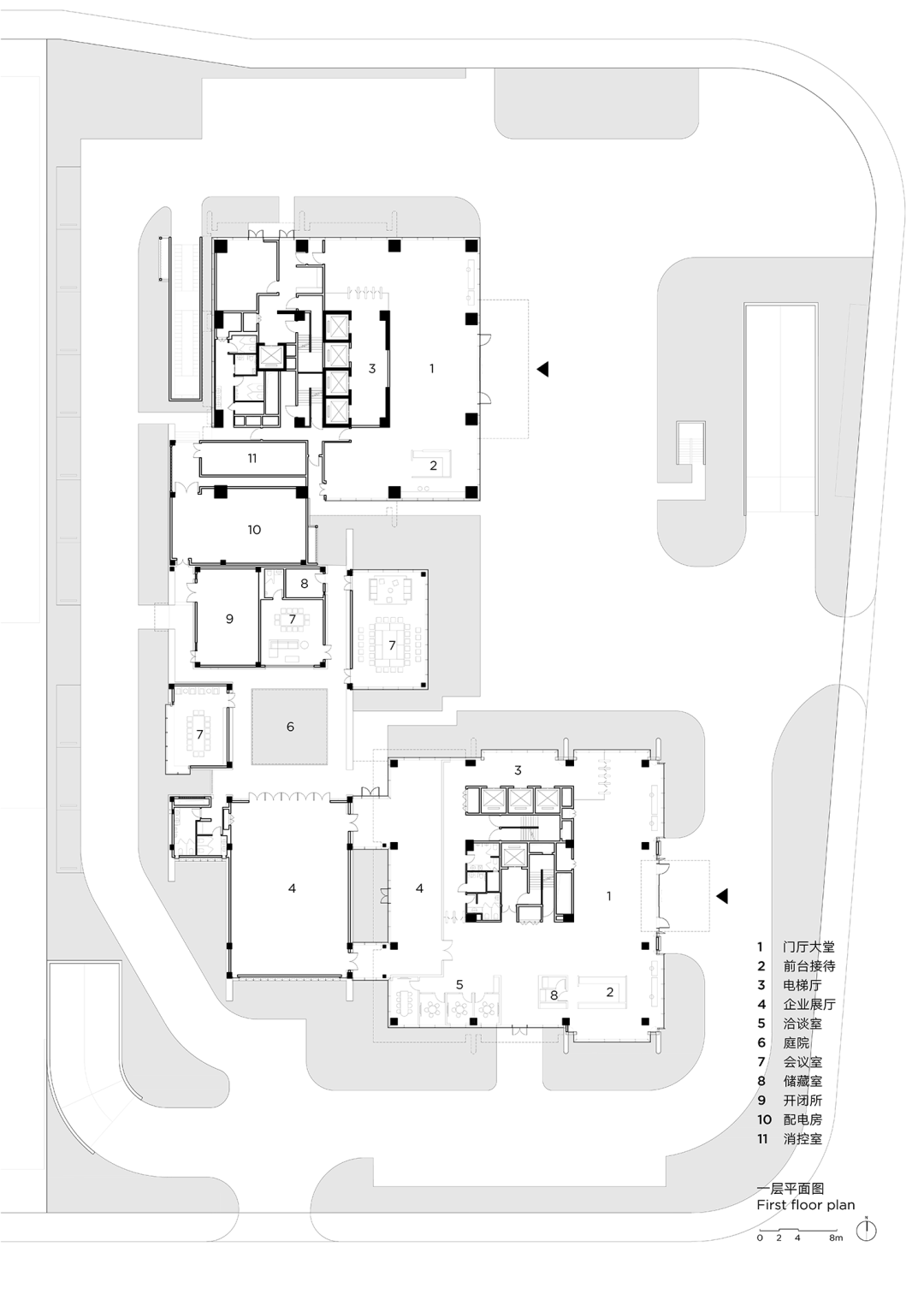
△ Ground Floor Plan
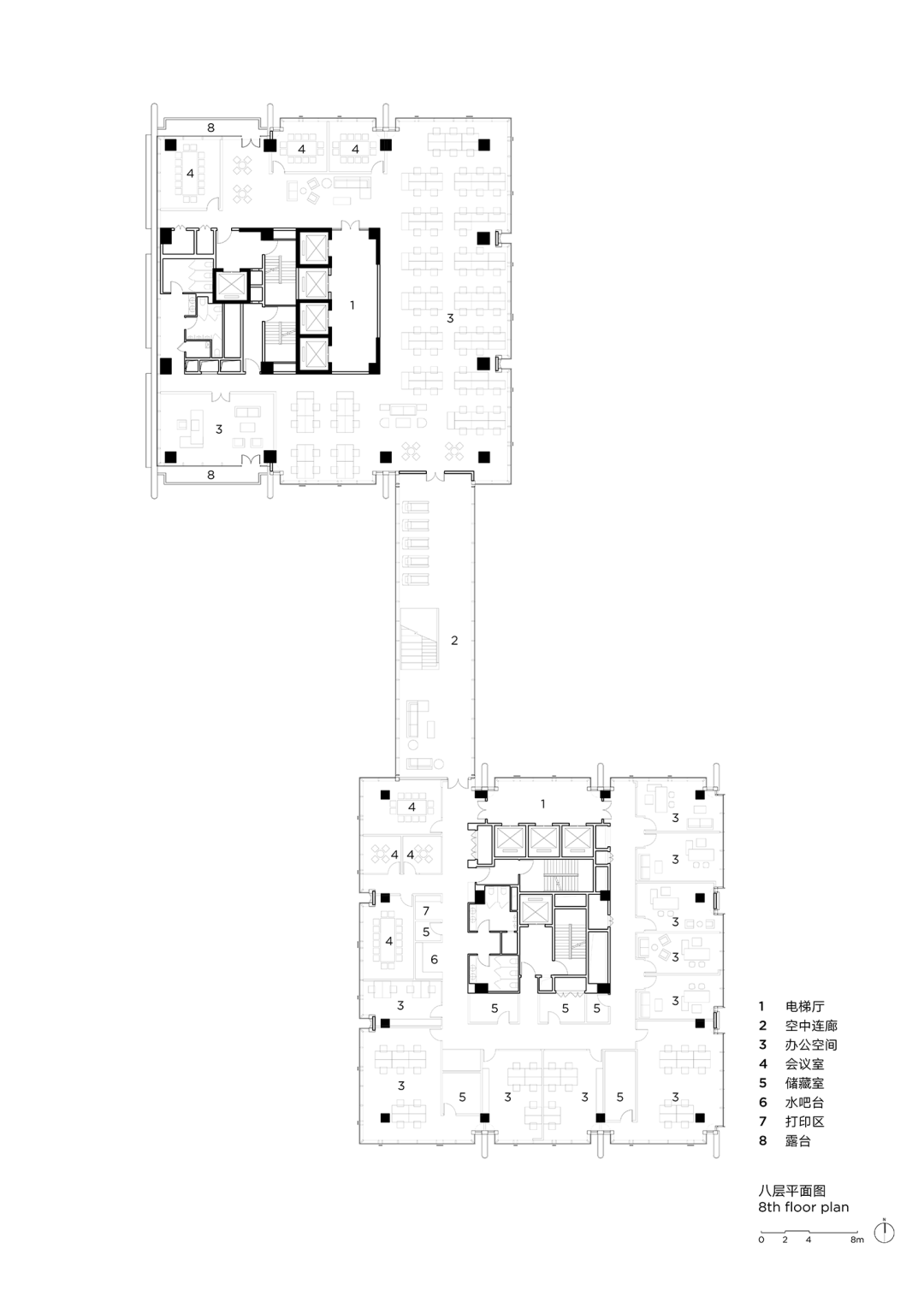
△ Eighth Floor Plan
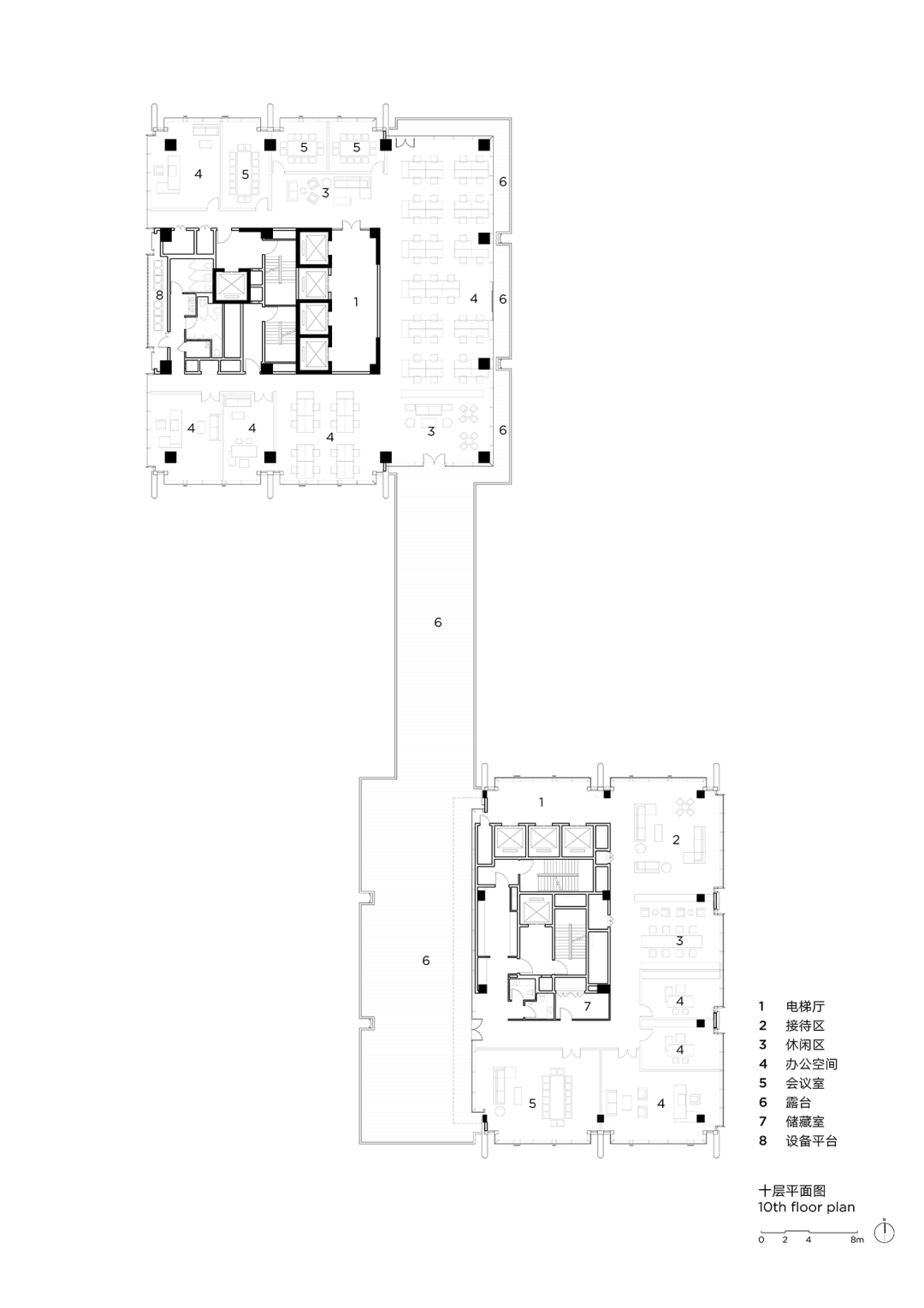
△ Tenth Floor Plan
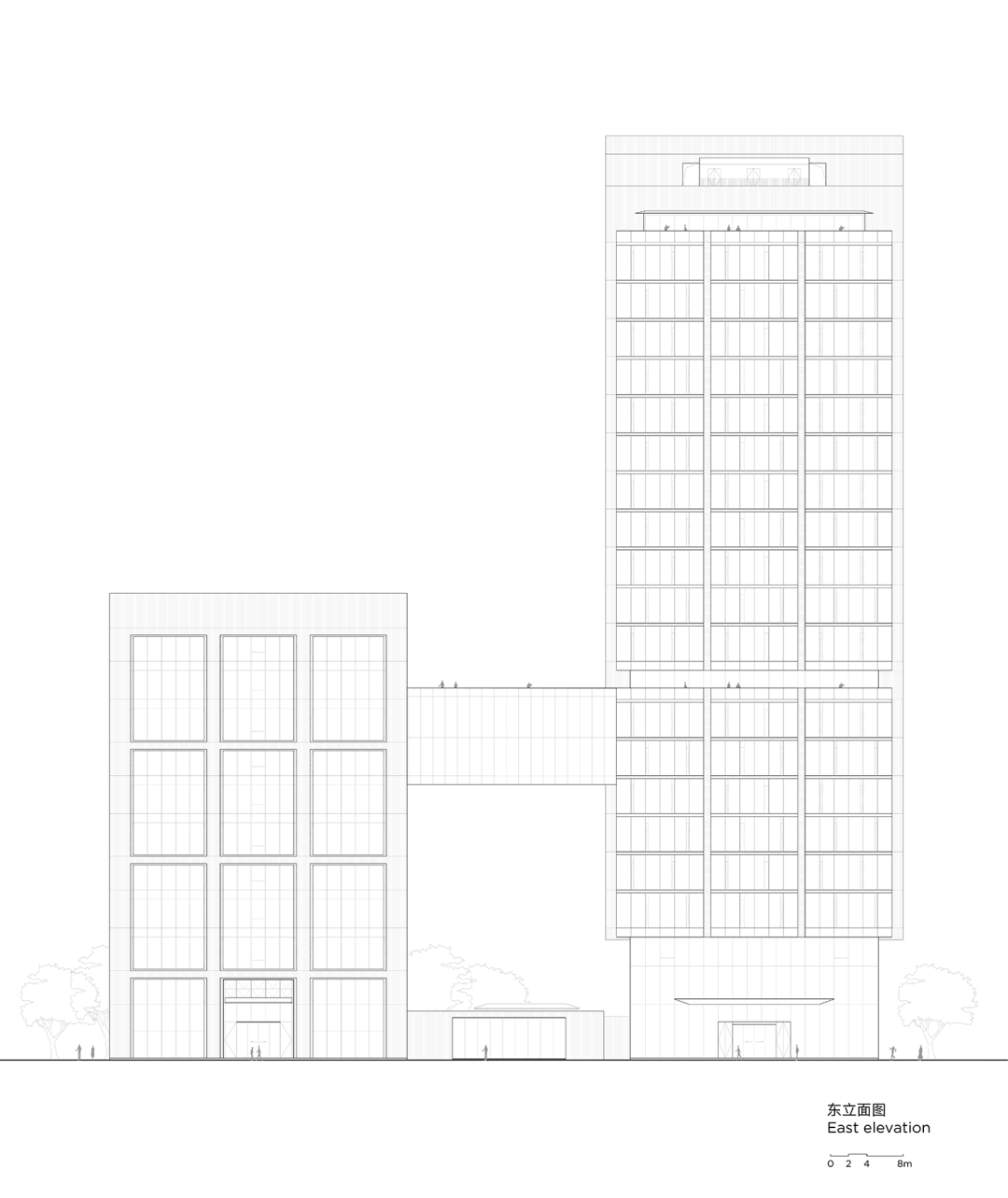
△ East Elevation
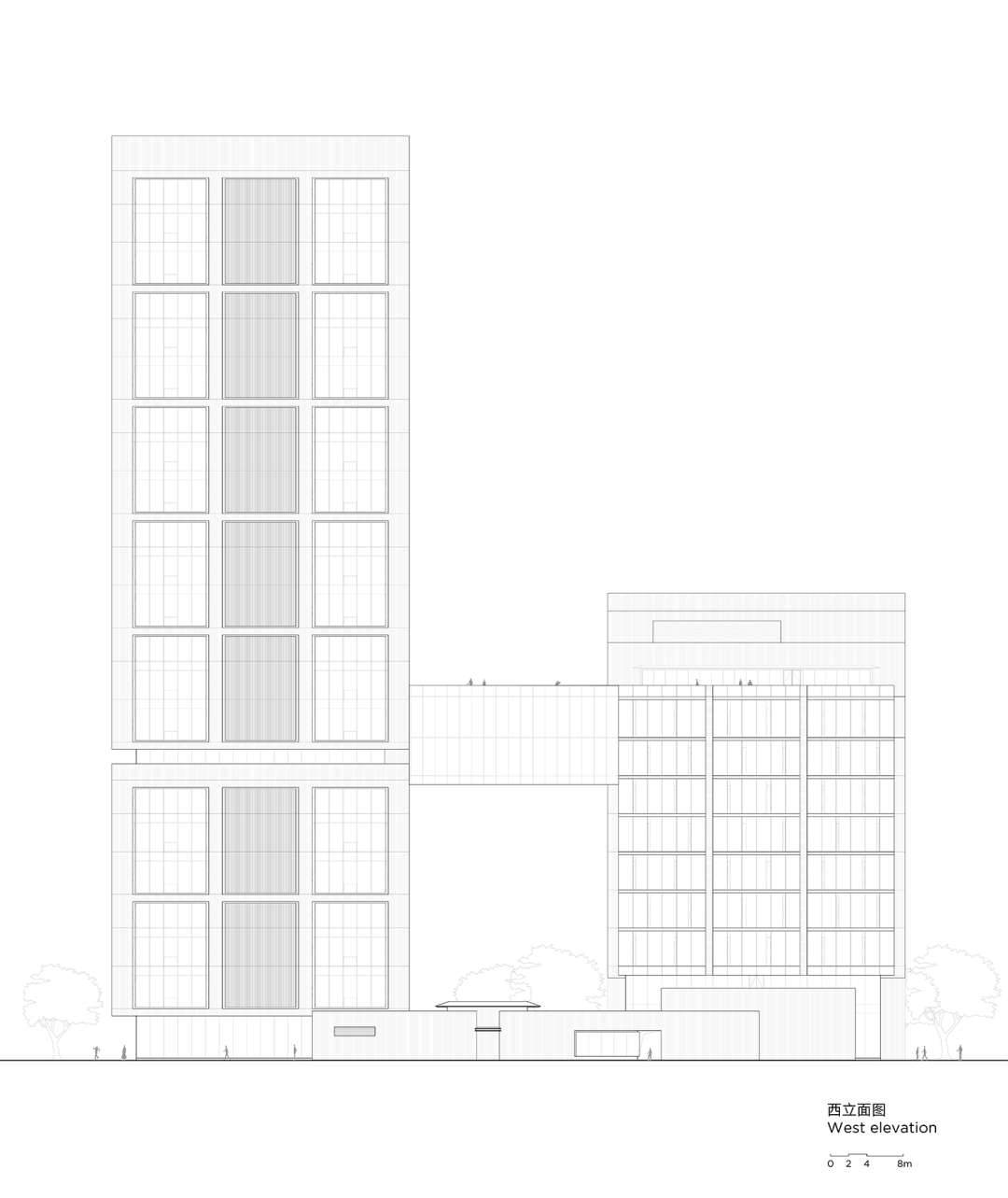
△ West Elevation

